





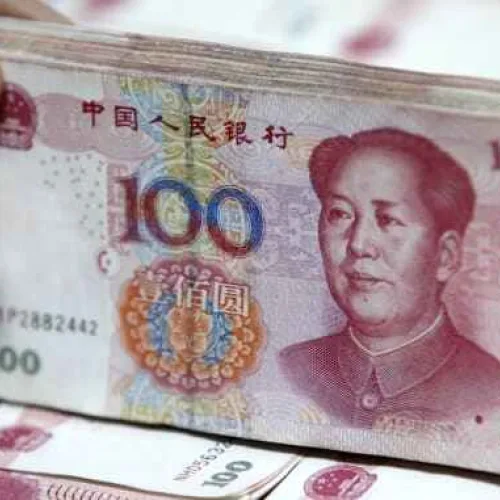
Standard Bank has processed more than eight billion yuan (approximately $1.2 billion) in cross-border payments since becoming the first African lender to join China’s Cross-Border Interbank Payment System (CIPS), underscoring the increasing use of the Chinese currency in Africa-China trade.
The continent’s largest bank by assets became the first African financial institution to gain direct access to CIPS in November, enabling businesses to settle transactions with Chinese counterparties directly in renminbi (yuan) without first converting funds into intermediary currencies such as the US dollar.
Since joining the network, Standard Bank has processed more than eight billion yuan in transactions, reflecting growing demand from African businesses seeking faster and more cost-effective ways to pay Chinese suppliers and receive payments from buyers in China.
The service is currently available in South Africa, Angola, Ghana, Kenya, Lesotho and Tanzania, with the lender planning to expand access to additional African markets before the end of the year.
The milestone comes as commercial ties between Africa and China continue to deepen, increasing demand for alternative payment channels beyond the dollar.
According to China’s General Administration of Customs, trade between China and Africa reached $158.3 billion in the first half of 2026, up 19.6 percent from the same period a year earlier. African exports to China rose 22.1 percent, while Chinese exports to the continent increased 17.3 percent, highlighting the growing importance of the trade corridor.
Part of that growth has been supported by Beijing’s decision to extend zero-tariff treatment to imports from all African countries except Eswatini from May, alongside faster customs clearance procedures and expanded recognition of sanitary certifications for African agricultural exports.
Kenya’s latest trade figures reflect the same trend. Data from the country’s National Bureau of Statistics show imports from China recorded the largest increase among the country’s major trading partners, rising 29.2 percent and adding approximately KSh43.4 billion ($335 million) in import value.
Standard Bank said its own research across 10 African markets indicates companies are increasingly looking east for trade opportunities, with 67 percent of surveyed businesses identifying China as their leading source of imports, citing competitive pricing, broader product ranges and more reliable supply chains.
“Standard Bank is focused on expanding CIPS access across Africa, unlocking more efficient cross-border transactions and deepening trade corridors for our clients,” said Ontiretse Modise, head of payments for Corporate and Investment Banking at Standard Bank. “As part of this commitment, we plan to extend CIPS access to more African countries by the end of 2026, further strengthening Africa-China trade connectivity.”
The bank further strengthened its role in facilitating Africa-China financial flows in June 2026, when it was jointly appointed by the People’s Bank of China and the Industrial and Commercial Bank of China (ICBC) as Africa’s renminbi clearing bank.
The designation makes Standard Bank the first Africa-based lender to hold renminbi clearing bank status. Working with ICBC, the bank will provide financial institutions across 19 African countries with direct access to China’s payment infrastructure, renminbi liquidity and capital markets, reducing settlement times and lowering transaction costs.
Although the renminbi’s role in African trade is expanding, it remains far behind the dollar in global finance. According to the Official Monetary and Financial Institutions Forum (OMFIF), CIPS processed about $26 trillion in transactions in 2025, compared with roughly $526 trillion handled by the U.S.-based Clearing House Interbank Payments System (CHIPS).
Unlike the freely traded dollar, the renminbi operates within a managed exchange rate regime overseen by the People’s Bank of China, with cross-border capital flows subject to regulatory controls.
Even so, for many African economies grappling with persistent dollar shortages, greater access to yuan settlement offers a practical alternative. By allowing businesses to settle trade directly in renminbi, companies can reduce their dependence on scarce dollar liquidity, lower foreign exchange conversion costs and improve the efficiency of trade with the continent’s largest trading partner.
This growing adoption also reflects a broader shift in the continet’s trade financing landscape, as banks and businesses seek payment systems that better align with the continent’s rapidly expanding commercial ties with China.
Bunmi holds a degree in Economics from the University of Lagos and has over eight years of experience in content writing and journalism. Her career spans roles as a financial and business journalist at BusinessDay Media and TechCabal, and as Head of Research at SBM Intelligence, an Africa-focused market intelligence and strategic consulting firm. She also served as Editor at Finance in Africa, a subsidiary of Businessfront and is currently Assistant Editor, Finance (Africa), at BusinessDay.

Comments
Start the conversation about this story.