





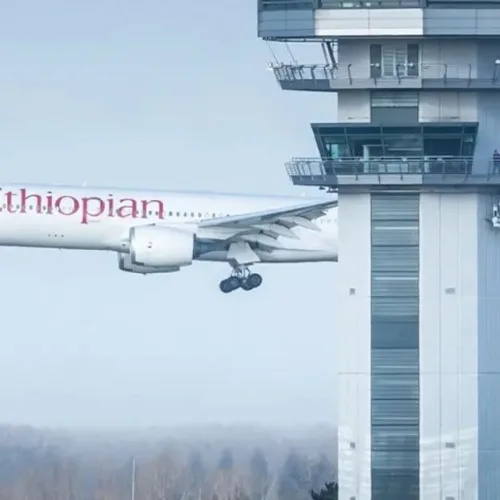
Ethiopian Airlines has officially surpassed $9.1 billion in annual revenue, cementing its status as Africa’s most dominant aviation player. This financial milestone is particularly significant given the turbulent operating environment the carrier faced throughout the year. From escalating conflicts in the Middle East to the complexities of managing network disruptions caused by the Ebola outbreak in the Democratic Republic of Congo, the airline’s ability to sustain growth demonstrates a masterclass in corporate resilience.
Strategic Diversification as a Hedge Against Crisis
The core of Ethiopian Airlines’ success lies in its sophisticated hub-and-spoke model, which effectively mitigates the impact of localized instability. When a specific region experiences a slowdown, the airline’s extensive reach allows it to pivot resources and capacity toward more stable markets. For African entrepreneurs and business leaders, this serves as a critical lesson: operational dependency on a single geographic market or supply chain route is a significant liability.
By maintaining a diverse network, Ethiopian Airlines ensured that total revenue remained on an upward trajectory despite the forced suspension or rerouting of flights in conflict-prone areas. Leaders looking to scale across borders should take note; building a business that can absorb localized shocks without compromising total group performance is the hallmark of a true pan-African powerhouse.
The Multi-Modal Approach to Market Dominance
Beyond passenger traffic, the airline’s focus on integrated logistics and cargo infrastructure has played a pivotal role in hitting this $9.1 billion target. While many carriers focus exclusively on the passenger experience, Ethiopian Airlines has aggressively expanded its cargo capabilities. This diversification into logistics creates a dual-revenue stream that buffers the business against the cyclical nature of travel demand.
Investors and startup founders can learn from this multi-modal strategy. When your core product faces a disruption—whether it is a supply chain bottleneck or a drop in consumer spending—having secondary revenue streams or service lines that operate under different market pressures can keep the company solvent and profitable.
Building for Long-Term Sustainability
The aviation industry is notoriously sensitive to external shocks, yet Ethiopian Airlines continues to scale. This performance suggests that the airline is not just responding to crises as they arise but is operating with a structural flexibility that is built into its DNA. The ability to navigate health scares like the Ebola outbreak alongside regional geopolitical tensions requires deep investment in crisis management and data-driven decision-making.
For any enterprise operating in Africa, the lesson is clear: volatility is not an anomaly, but a constant feature of the landscape. Success is not defined by the absence of challenges, but by the sophistication of the systems designed to handle them. As Ethiopian Airlines continues its expansion, it remains a blueprint for how indigenous African companies can achieve global standards of excellence while navigating the unique socio-political realities of the continent.
In conclusion, the $9.1 billion achievement highlights that agility and geographic diversification are essential tools for growth. Businesses that prioritize flexible logistics and resilient network management are better positioned to turn regional headwinds into long-term market leadership.
Comments
Start the conversation about this story.