





...as state government pledges business reforms
Ogun state manufacturers have renewed calls for the harmonisation of taxes and levies, improved infrastructure and a more predictable regulatory environment to boost industrial competitiveness.
They warned that rising compliance costs, multiple taxation and policy uncertainties continue to erode profitability despite recent fiscal reforms.
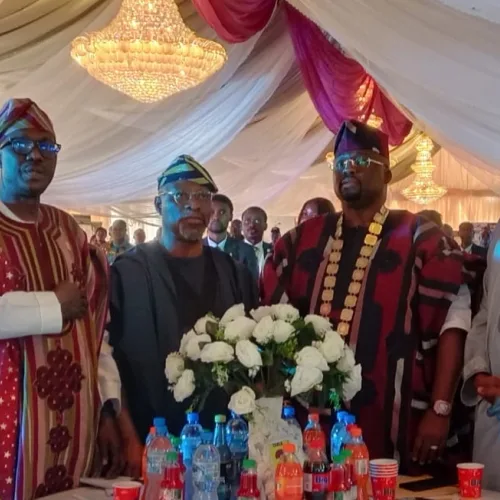
The concerns dominated discussions at the 41st Annual General Meeting of the Manufacturers Association of Nigeria, MAN, Ogun State Branch held Thursday in Abeokuta.
They urged governments at all levels to prioritise policy consistency, affordable energy and targeted infrastructure investments to sustain growth in Nigeria’s manufacturing sector.
Speaking at the event, George Onafowokan, outgoing chairman of MAN Ogun Branch, lamented that manufacturers continue to grapple with exchange rate volatility, persistent inflation, high borrowing costs, unreliable electricity supply, multiple taxation and overlapping regulatory demands that have significantly increased production costs.
Onafowokan noted that many manufacturers had been compelled to rely on self-generated power because of unreliable electricity supply, while difficulties in accessing foreign exchange for raw materials and machinery continued to constrain production and expansion.
According to him, multiple taxes, environmental levies and overlapping responsibilities among government agencies have created an unpredictable operating environment that discourages investment.
He urged the Ogun State Government to institutionalise regular consultations with organised private sector groups before introducing new taxes, regulations or legislation affecting businesses.
He also called for the revival of quarterly engagement between manufacturers and government agencies, describing continuous dialogue as critical to resolving operational challenges and improving investor confidence.
Responding to the concerns, Ogun State Commissioner for Industry, Trade and Investment, Adebola Sofela, who represented Governor Dapo Abiodun, pledged that the state would harmonise sub-national taxes before the end of the current administration.
“There cannot be multiple taxes,” Sofela said, adding that government would set up a committee to review duplicative charges and improve coordination among agencies.
Responding to the concerns, Adebola Sofela, Ogun State commissioner for Industry, Trade and Investment, who represented Governor Dapo Abiodun, acknowledged that multiple taxes and levies remained a challenge and pledged that the state would harmonise sub-national taxes before the end of the current administration.
“There cannot be multiple taxes,” Sofela said, adding that government would establish a committee to review duplicative charges and improve coordination among relevant agencies.
He also assured manufacturers that concerns over environmental charges, enforcement procedures and compliance costs would be reviewed to ensure regulations support investment without compromising environmental standards.
“At the national level, the Federal Ministry of Finance outlined ongoing fiscal reforms designed to improve the operating environment for manufacturers.”
In his keynote address, Basheer Abdulkadir, director of technical services at the ministry, highlighted that the government had introduced measures including the Nigeria Tax Act 2025, the National Single Window Project, Import Duty Exemption Certificates and concessionary tariffs on industrial inputs to reduce business costs and improve competitiveness.
According to him, the manufacturing sector contributed about eight per cent to Nigeria’s real Gross Domestic Product and recorded a real growth rate of 3.29 per cent in the first quarter of 2026 despite macroeconomic headwinds.
He added that government would continue balancing trade liberalisation with targeted tariff protection for strategic industries while encouraging manufacturers to position for opportunities under the African Continental Free Trade Area (AfCFTA).
In his address, Francis Meshioye,
MAN president, said fiscal reforms would deliver greater impact only if accompanied by predictable policies, affordable financing, improved infrastructure and reliable energy supply.
He corroborated that manufacturers still faced multiple taxation, regulatory duplication, poor industrial road networks and high logistics costs, particularly in major industrial clusters such as Agbara, Ota and Sagamu.
Meshioye urged the federal government to resolve outstanding foreign exchange obligations owed to manufacturers, clarify implementation of the 2025 tax laws and ensure stakeholder consultations before introducing policies that could increase the cost of doing business.
He also called on Nigerian manufacturers to strengthen local value chains, improve product quality and leverage opportunities under AfCFTA to expand exports across the continent.
Josephine Okojie-Okeiyi is a journalist with over five years’ reporting experience. She writes on industry, agriculture, commodities, climate change, and environmental issues. She is fellow of Thomson Reuters Foundation and Bloomberg Media Initiative for Africa.

Comments
Start the conversation about this story.