





Florida seems to have a leprosy problem, and armadillos might be playing a role.
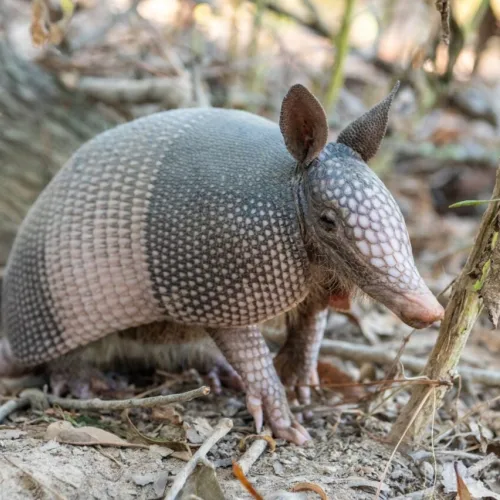
The state has seen dozens of reported cases in recent years, many of which were likely acquired locally. Though the infectious disease is still rare and hard to catch, it may be endemic in Florida. At least some cases have been traced back to contact with local nine-banded armadillos.
Leprosy in Florida
Leprosy is primarily caused by Mycobacterium leprae bacteria. These bacteria hijack certain cells in our body, particularly around the skin, to replicate. However, it can take years following exposure for symptoms like pale lesions and sores to emerge. If left untreated, the infection can also gradually destroy nerve and eye cells, leading to blindness and permanently disfigured limbs.
The arrival of antibiotics and improved sanitation has made leprosy a rarer threat in much of the world, including the U.S. However, it’s still widely prevalent in some countries, with more than 200,000 cases reported annually globally. Only about 200 cases are documented in the U.S. every year, with many cases involving people who caught the infection somewhere else. In recent years, evidence has suggested these bacteria have reestablished a foothold in parts of the southeastern U.S., Florida included.
According to the most recent data from the Florida Health Department, there have been 17 reported cases of leprosy, also called Hansen’s disease, in the state this year. 2025 saw an increase in cases relative to recent years, with 36 confirmed cases, 27 of which were likely domestic. Many of these cases have come from Central Florida.
Leprosy is typically caught through prolonged close contact with infected people, but populations of the nine-banded armadillo in the southeastern U.S. seem to have become a source of zoonotic transmission (animals to humans) as well, since they can naturally carry the bacteria.
A real but still rare issue
Despite long-standing fears about the threat posed by people infected with leprosy, we now know that it’s incredibly hard to contract the disease. About 95% of the population is naturally resistant to infection, and it usually takes months of prolonged contact even for the people who are susceptible to it. The risk of armadillo transmission also appears to be very low, according to the Centers for Disease Control and Prevention.
“This isn’t a problem of high incidents,” Joseph Ladopo, Florida surgeon general, told the press this month, according to local outlet WFTV.
That said, researchers have had ongoing concerns about leprosy. Some recent cases in Florida have no clear source of transmission, including direct armadillo exposure, leaving open the question of how people caught the infection. It’s possible the bacteria can be transmitted through frequent outdoor exposure, especially since some research has suggested the bacteria can survive inside soil-loving amoeba. Armadillos might still be contributing to these cases via their droppings left behind in soil.
Leprosy is far from the nightmare it once was. But it may remain something to keep an eye on for the foreseeable future, particularly in states like Florida, where the bacteria is likely now endemic.
Comments
Start the conversation about this story.