





RECENT economic reforms introduced by President Bola Ahmed Tinubu have continued to reshape governance outcomes across Nigeria’s sub-nationals, with Imo and Kogi states emerging as prime beneficiaries. Following an extensive multi-day inspection tour by the National Renewed Hope Ambassadors and the Presidential Communications Team, clear evidence has emerged showing how increased fiscal allocations and expanded federal-state synergy have directly translated into massive infrastructure development, improved healthcare delivery, enhanced educational advancement, and improved security across the two states.
This piece primarily summarised remarks and submissions made by key government officials in the two states on their achievements after the removal of fuel subsidy and increased monthly allocation.
The tour showcased a direct correlation between bold federal policy decisions-most notably the removal of the fuel subsidy-and a massive surge in infrastructural, educational, and healthcare investments.
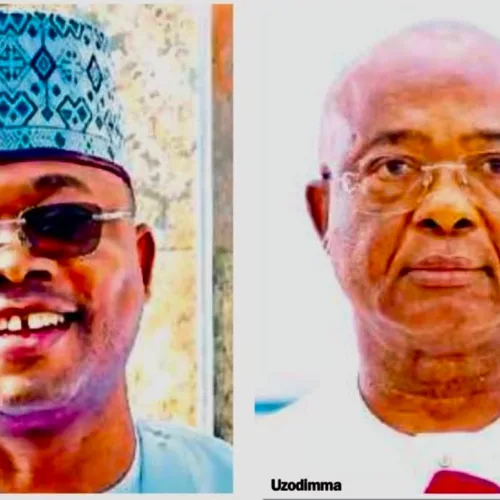
The foundational driver of Imo State’s recent development boom is the significant expansion of its fiscal space. According to Governor Hope Uzodimma, the state’s monthly FAAC allocation transformed drastically following the removal of the petrol subsidy in May 2023, jumping from a meager N100 million (post-Federation Account Allocation Committee (FAAC) and salary obligations) to N10.7 billion.
This unprecedented influx of freed resources fundamentally restructured the state’s fiscal health. Imo State’s total debt profile plummeted from N287 billion in 2020 to under N90 billion.
Internally Generated Revenue (IGR), through aggressive administrative efficiency and economic expansion, monthly IGR climbed from under N400 million in 2020 to nearly N6 billion.
These metrics converted a previously struggling state government into a solvent entity capable of self-financing capital-intensive infrastructure and partnering effectively with the Federal Government.
ALSO READ: INEC to Osun politicians: Let the ballot box alone decide
With increased fiscal latitude and strong synergy with President Bola Ahmed Tinubu’s “Renewed Hope” agenda, the Imo State government channeled these funds into high-impact capital projects across core sectors as healthcare infrastructure received a monumental upgrade, addressing both structural decay and specialised service delivery.
Federal Medical Centre, Owerri was converted into a Federal University of Technology Teaching Hospital, creating local employment while expanding regional healthcare capacity.
Projects under healthcare include an ongoing 2,000-bed ultramodern infectious disease center (built in partnership with NPCL and nearing 85 percent completion) alongside localised oxygen production plants; construction of a world-class Heart Transplant Centre at the Imo State University Teaching Hospital, Orlu, designed to reverse medical tourism.
Crucially, the state also resolved longstanding accreditation bottlenecks for medical graduates, allowing them to secure specialist recognition.
On education and human capital development, education reforms bridged historical gaps through federal-state alignments and social intervention frameworks. At Alvan Ikoku College of Education, Owerri, decades of stagnation were broken when the historic institution was successfully upgraded to a Federal University of Technology less than a year ago under the current political alignment, attracting TETFUND
- backing and generating local jobs. Indigent students across the state leverage the National Education Loan Fund (NELFUND), preventing dropouts due to financial hardship.
Imo State University of Innovation, Science and Technology, has been established to drive a knowledge-driven, tech-centric economy, aligned with national digital goals.
Transportation, and power generation underwent radical compression of transit times and economic expansion.
On road networks and regional integration, major arteries like the completed 56-kilometer Okigwe Owerri Road, the 36-kilometer Owerri-Obowo Umuahia Road, and the ongoing construction of the strategic 19-kilometre Orlu-Akokwa Uga Border Road, linking Imo and Anambra States would drastically reduce intra-state travel times from 2-3 hours to under 45 minutes while combating severe gully erosion.
On aviation hub infrastructure, the team noted the ongoing upgrade, construction of the standard runway, and the expansion of the Sam Mbakwe International Cargo Airport with eight modern warehouses to boost agricultural exports and logistics.
Validation of reform pain for long-term gain
Presidency officials, including Special Adviser to the President on Media and Public Communications, Sunday Dare and Senior Special Assistant to the President on Media and Special Duties, Tunde Rahman, repeatedly framed the initial economic shock of fuel subsidy removal as a necessary surgical intervention.
Dare said in Owerri that state and federal governments are working together in the delivery of development projects with the increase in monthly allocation.
He acknowledged that the projects inspected so far demonstrate the impact of the strong partnership between the Federal and Imo State Governments in delivering people-centred development.
“This wouldn’t have been possible without the increased FAAC allocation that comes monthly from the Federal Government to the state government providing extra fund for development projects.
“We have seen in a couple of other states in the North, how APC governors have been utilising these extra FAAC allocation funds for infrastructural development and we have seen how state and federal governments are working together in projects delivering,” he said.
Also speaking, Rahman said Nigerians will soon begin to see the full benefits of the reforms embarked upon by President Tinubu’s administration, stressing that the initial pains will give way to long-term gains.
He said that the successful execution of projects in Imo State, including the university upgrade and improvements to a federal teaching hospital, demonstrates the “beauty and significance” of a state aligning with the federal government for development purposes.
On the removal of fuel subsidy, Mr. Rahman, who doubles as Director of Media and Publicity, Renewed Hope Ambassadors, said the policy was deliberate and well thought out.
“Normally when you have reforms like that, it will be painful in the beginning, but ultimately, everybody will see the beauty, the gains of those reforms. As we have seen, whether in the North where we went to the other day when we started, or in Imo, Abia, Ebonyi and the one that we visited, all the governors were telling us there will be more money for them, more space for them to be able to implement other developments.
“So, with that policy, the full benefit has not come up. It will come,” he said.
Speaking during the inspection, the Imo State Commissioner for Information, Public Orientation and Strategy, Mr. Declan Emelumba, said the projects were the dividends of the strong partnership between the Federal Government and the Imo State Government.
According to the Commissioner, several of the landmark projects were financed by the Imo State Government through the expanded fiscal space available to subnational governments following the economic reforms of the President Bola Ahmed Tinubu’s administration.
Impact of investments in healthcare, education, security, infrastructure in Kogi
Also at the heart of Kogi State’s ongoing transformation is a significant boost in revenue allocation to state and local governments. Senior Special Assistant to the President on Media and Special Duties, while speaking in the state, noted that the bold economic policies initiated by President Tinubu have successfully freed up essential resources for sub-national entities.
This financial empowerment has allowed Governor Ahmed Usman Ododo’s administration to execute life-changing legacy projects across the state’s three senatorial districts, moving beyond mere rhetoric to tangible grassroots impact.
Education stands as a primary pillar of both the federal Renewed Hope Agenda and the Kogi State development blueprint.
The key milestones achieved in the state include expansion of tertiary education as Kogi now boasts of three state-owned universities—Prince Abubakar Audu University (PAAU) in Anyigba, the Confluence University of Science and Technology (CUSTECH) in Osara, and Kogi State University in Kabba-all experiencing rapid infrastructural growth. Institutions like PAAU and CUSTECH have witnessed massive transformations through the Tertiary Education Trust Fund (TETFund). Notable projects include a new N3.1bn Senate Building, a College of Health Sciences building, and multiple faculty complexes valued at over N2.3bn.
Over 20,000 students at PAAU have directly benefited from the Federal Government’s Nigerian Education Loan Fund (NELFund), receiving timely monthly stipends that ease financial pressures on parents.
On Model Secondary Schools, the Kogi State Government has heavily invested in Model Science Secondary Schools (such as the one in Okebukun and Nagazi, Adavi LGA) to supply local universities with top-tier talent and shift public preference back to public education.
Addressing past security vulnerabilities, the state government has integrated a multi-layered security framework featuring trained vigilantes absorbed into the civil service, local hunters, police collaboration, and advanced technology linked directly to a control room in Lokoja.
Speaking at the Model Science Secondary School, Okebukun, Commissioner for Information and Communications, Kingsley Fanwo, said the investment of the Kogi State Government in Model Science Secondary Schools is aimed at reversing the trend of parents moving their children to private schools.
Fanwo said the quality of facilities in the new public school now surpasses what is obtainable in most private schools in the area.
He added that the aesthetic and functional quality of the school is already influencing parents’ choices.
On security, Fanwo said the state has put in place a multi-layered architecture to protect students and staff, especially following past incidents.
He explained that the structure involves local government chairmen, trained vigilantes now absorbed into the civil service, local hunters, and the police.
Fanwo disclosed that technology is also being deployed, with monitoring linked to a control room in Lokoja.
On healthcare access and affordability,
Healthcare delivery in Kogi State has received a massive structural uplift, focusing heavily on grassroots access and financial protection for the vulnerable. Remodeled Primary Healthcare Centres (PHCs) have also been established in remote villages across the state to bring quality medical care closer to rural dwellers. Pregnant women and children aged zero to six years old enjoy completely free medical care, aligning with Governor Ododo’s vision to eliminate maternal and infant mortality.
The state’s health insurance scheme has expanded its reach significantly, recognised as one of the most effective and grassroot-focused frameworks nationwide.
On infrastructure and agricultural logistics, infrastructure development has broken historical records across Kogi, opening up long-abandoned corridors and boosting agricultural productivity.
Federal-state collaboration has revived critical arteries, including the multi-section Abuja-Lokoja Expressway and the approval/re-construction of the Kabba Egbe Omu-Aran Road, which had been abandoned for nearly three decades.
Historic milestones have been recorded, such as the construction of extensive internal township roads in Mopa-Moro, Yagba West, and Ankpa, alongside the 60-kilometer Iyale-Ogane-Enugu agricultural road in Dekina.
Through the Agro-Climatic Resilience in Semi-Arid Landscapes (ACReSAL) World Bank-backed project-backed by prompt state counterpart funding —Kogi has tackled severe erosion and land degradation, reclaiming land for agricultural productivity and disbursing over $2m in micro-loans to local farmers and cooperative groups.
Comments
Start the conversation about this story.