





Communities thrive when development is driven not by individuals alone but by strong institutions built to endure. With the inauguration of the Olokoro Development Trust Fund (ODTF), stakeholders are laying the foundation for a governance-driven institution designed to promote sustainable development, preserve community assets and improve the quality of life for present and future generations. Guided by a clear strategic vision and anchored on transparency, accountability and long-term planning, the Trust Fund aims to become a catalyst for inclusive and intergenerational development in Olokoro. Chiemelie Ezeobi writes
Communities often grapple with the challenge of sustaining development beyond the tenure of individual leaders or benefactors. While many interventions begin with lofty ambitions, they frequently fade due to weak institutions, poor governance and the absence of long-term planning.
It is against this backdrop that the Olokoro Development Trust Fund (ODTF) has set out on a different path—one built not around temporary projects but around the creation of a lasting institution designed to serve generations of Olokoro people.
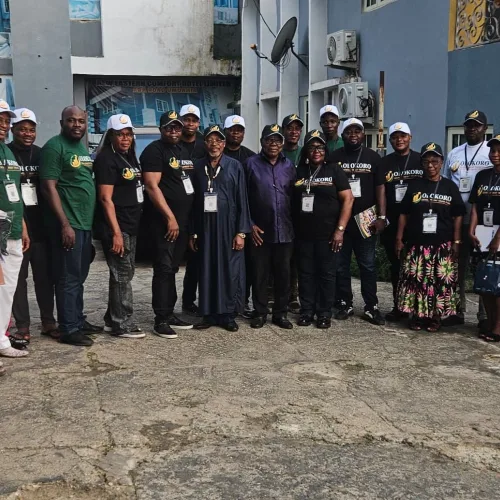
The inaugural Board Induction, Governance and Strategic Planning Workshop, held in Umuahia under the theme, “Building an Institution that Will Serve Olokoro for Generations,” signalled the beginning of what stakeholders hope will become a model for sustainable community-driven development.
From Philanthropy to Institutional Legacy
The establishment of the ODTF traces its roots to the visionary philanthropy of Engr. Oyibo Thompson, whose generosity formed the foundation of the Trust Fund as part of activities marking his 80th birthday.
However, participants at the workshop were unanimous that the initiative should transcend charitable giving and evolve into a permanent institution capable of preserving community assets while improving the quality of life of present and future generations.
The gathering brought together members of the Board of Trustees, governance committees, technical advisers, traditional rulers, youth organisations, professional groups, religious bodies and other community stakeholders.
Their shared objective was to lay a governance framework that would guarantee continuity, accountability and institutional excellence irrespective of changes in leadership.
Governance as the Foundation
Perhaps the most significant outcome of the workshop was the unanimous decision to establish governance as the cornerstone of the Trust Fund. Participants reaffirmed that ODTF would function as a permanent institution for sustainable community development rather than a short-term intervention vehicle.
To achieve this, the Board endorsed principles of accountability, transparency, ethical leadership, prudent financial stewardship, professionalism, community ownership and institutional independence. It also adopted the proposed Governance Charter as the foundational framework for managing the Trust Fund.
Participants further agreed on the need to maintain a clear distinction between governance and management, with the Board providing strategic oversight while an executive management team would oversee daily operations.
The emphasis on governance reflects an understanding that strong institutions, rather than personalities, remain the most reliable drivers of sustainable development.
Four Pillars for Community Transformation
Central to the strategic vision of the Trust Fund is the adoption of four development pillars that will guide all future interventions.
The first is Human Capital Development, focusing on empowering people through education, skills acquisition, scholarships, vocational training, youth mentorship and leadership development. Stakeholders also recognised the need to address social challenges such as unemployment, cultism, substance abuse and insecurity through preventive community programmes.
Infrastructure Development forms the second pillar. Participants identified the rehabilitation of roads and bridges, provision of potable water, installation of solar-powered streetlights, improved healthcare facilities, upgrading of schools and rehabilitation of the Ahiaukwu Central Market among priority projects capable of improving living standards across the community.
The third pillar, Enterprise and Economic Development, seeks to stimulate local prosperity through entrepreneurship development, vocational training, provision of production equipment, enterprise grants, improved market access and strengthened local value chains.
Rather than simply distributing financial assistance, the Trust Fund intends to promote sustainable wealth creation supported by structured monitoring and evaluation.
The fourth pillar centres on Strategic Partnerships and Institutional Sustainability. Participants agreed that lasting impact would require collaboration with governments, development partners, private sector organisations and philanthropic institutions, supported by effective communication, transparency and comprehensive institutional documentation.
Evidence-based Development Planning
Unlike many community projects driven largely by assumptions, the ODTF resolved that every intervention would be guided by evidence-based needs assessments, measurable outcomes, transparency and equitable distribution of resources across Olokoro communities.
This commitment was reinforced through a design-thinking exercise during the workshop, where participants collectively identified development priorities across the strategic pillars. Such an approach is expected to ensure that future investments address genuine community needs while delivering measurable impact.
Safeguarding the Future Through Financial Discipline
Another defining feature of the Trust Fund’s strategy is its focus on financial sustainability. The Board reaffirmed its commitment to prudent investment management, preservation of the Trust Fund’s capital, responsible spending policies and robust risk management.
Rather than exhausting available resources on immediate projects, the institution aims to protect its financial base to ensure benefits continue for generations.
This philosophy aligns with globally recognised community foundation models where investment income, careful governance and strategic partnerships enable institutions to outlive their founders.
From Planning to Implementation
While the workshop focused primarily on governance and strategy, participants also outlined immediate operational priorities required to move the institution from concept to reality.
These include the constitution of Board Committees, development of governance and operational policies, completion of legal and regulatory processes, recruitment of a Coordinator or Executive Director, establishment of a functional Secretariat, preparation of the inaugural Strategic Plan, conduct of a comprehensive community needs assessment and development of the first annual work plan and budget.
These early actions are expected to provide the administrative backbone necessary for effective programme implementation.
Strengthening the Vision
The Board also welcomed Engr. Oyibo Thompson’s indication of his willingness to make additional land and other philanthropic contributions available to strengthen the long-term sustainability of the Trust Fund.
Members agreed that appropriate governance, legal and investment mechanisms should be developed to maximise the value of these assets in advancing the objectives of the Foundation.
Beyond the financial value of the additional contributions, participants viewed the commitment as a demonstration of confidence in the governance structures being established.
A Blueprint for Intergenerational Development
At the conclusion of the workshop, participants expressed confidence that the inaugural induction had established a shared vision, strengthened institutional readiness and laid a solid governance foundation for the Olokoro Development Trust Fund.
They affirmed that disciplined governance, prudent stewardship, strategic partnerships and sustained community participation would position the Trust Fund as a model community foundation capable of driving inclusive, sustainable and intergenerational development.
In many communities, development initiatives often disappear once the enthusiasm of their founders wanes. The ODTF is attempting to chart a different course, one where transparent governance, strategic planning and institutional continuity become the true legacy.
If successfully implemented, the Trust Fund could offer a replicable blueprint for communities seeking to transform philanthropy into enduring institutions that continue serving their people long after today’s leaders have passed the baton.
Comments
Start the conversation about this story.