





Public health fears are mounting across Lagos as operational challenges at the Olusosun dumpsite leave heaps of refuse uncollected across communities, raising fears of a possible epidemic. CHIJIOKE IREMEKA writes that with the country still battling Lassa fever, the growing mountains of waste have become breeding grounds for rats, flies, mosquitoes and other disease-carrying vectors, heightening the risk of disease outbreaks
For 41-year-old nurse, Ify Chidiebere, the towering heaps of uncollected refuse littering Adelaja Close in Mafoluku, Oshodi, Lagos, are more than an unpleasant sight. To her, they are a ticking public health time bomb.
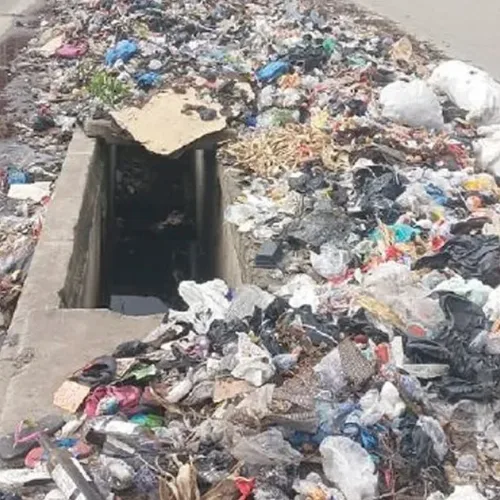
Each day, she walks past overflowing waste bins and mounds of decomposing garbage that line the streets, fearing that the worsening sanitation crisis could trigger outbreaks of water-borne and vector-borne diseases if urgent action is not taken.
As a healthcare professional, Chidiebere has seen firsthand how poor environmental sanitation fuels disease outbreaks, particularly during the rainy season.
She worries that the rotting waste has transformed parts of the neighbourhood into breeding grounds for mosquitoes, flies, rats and other disease-carrying vectors capable of spreading infections rapidly in densely populated communities like Oshodi.
“The situation is becoming alarming. The refuse is left unattended for days, sometimes weeks, and whenever it rains, dirty water from the waste flows into drains and surrounding areas.
“This increases the risk of diseases such as cholera, typhoid fever and diarrhoea. Mosquitoes also breed in the stagnant water around these refuse dumps, raising concerns about malaria and other mosquito-borne diseases.
“Everyone here shares the same fears because the waste keeps piling up despite repeated complaints. The foul odour hanging over parts of the neighbourhood has become a daily torment for many of us,” she told Saturday PUNCH.
Chidiebere added that the uncollected refuse has clogged drainage channels, worsening flooding whenever heavy rain falls.
According to her, residents have repeatedly appealed to the Lagos Waste Management Authority and the Private Sector Participation operators, popularly known as PSP operators, who have been evacuating waste, but all they have received are promises.
“If you look around, you will see heaps of refuse everywhere, on the streets and even inside compounds. Our refuse is outside, but look at the next building; almost half of the compound has been taken over by waste. It wasn’t like this before. We only started experiencing this a few months ago,” she said.
For many families, especially those with young children and elderly relatives, the worsening environmental conditions have heightened fears about their health and safety.
“I’m worried that children playing near these refuse dumps could be exposed to harmful bacteria and disease-causing organisms, leaving their parents to spend scarce money on treatment instead of food and other necessities,” Chidiebere lamented.
The nurse said the situation demands immediate intervention by the authorities responsible for waste management and environmental sanitation.
According to her, regular evacuation of refuse, improved waste management infrastructure and stricter enforcement of sanitation regulations would significantly reduce the health risks confronting residents.
“Keeping our environment clean should not be the responsibility of government alone. Residents must also support efforts to maintain proper sanitation because our health depends on it,” she added.
For Chidiebere and many of her neighbours, mounting refuse seen all around has become a daily reminder of the urgent need for a sustainable waste management system and stronger collaboration between government agencies and residents.
She fears that unless decisive action is taken soon, what began as a waste management problem could spiral into a major public health emergency.
Fears of disease outbreaks
About 20 kilometres away, residents of Agulajika Street in the Ijesha area of Lagos share similar fears.
For 54-year-old businessman, Bernard Johnson, the growing piles of refuse scattered across the community are signs of an environmental crisis waiting to happen.
He said waste generation in the area has continued to rise without a corresponding increase in evacuation, leaving overflowing waste bins and illegal dumpsites dotting several parts of the neighbourhood.
“The volume of refuse being generated continues to increase, but there has been no matching effort to remove it in recent times. We are appealing to the government to intervene before the situation gets out of hand. Everywhere smells,” Johnson said.
He warned that the persistent delays in evacuating refuse had not only turned the community into an eyesore but had also heightened fears of disease outbreaks and flooding during the rainy season.
Like Chidiebere, he expressed concern that residents had begun disposing of faecal waste at some refuse dumps because of the worsening sanitation crisis.
According to him, the decomposing waste attracts rats, flies and other disease-carrying pests, while blocked drainage channels caused by indiscriminate dumping increase the risk of flooding whenever heavy rain falls.
The father of four stressed that a cleaner environment would not only improve public health but also enhance the quality of life for residents.
Landfill crisis
Lassa fever fears
At the heart of the worsening waste crisis is the Olusosun landfill in Ojota, where a severe breakdown in waste management operations has left Lagos increasingly vulnerable to disease outbreaks.
Ageing equipment, frequent machinery failures and badly deteriorated access roads within the landfill have slowed waste disposal operations, leaving hundreds of compactor trucks stranded and unable to discharge their loads.
The disruption has created a backlog in refuse evacuation across the state, resulting in mountains of garbage accumulating in residential neighbourhoods, markets, roadsides, commercial districts and other public spaces.
Saturday PUNCH visited several locations across the state, including Lawanson, Charity in Oshodi, Sadiku, Iyana-Itire, Agulajika, Baderi, Mafoluku, Akinlawanson, Saubana, Cele in Ijesha, Festac, Mushin and Tom Jones Junction in Idumota on Lagos Island.
According to epidemiologists, the situation is particularly alarming as Lassa fever continues to spread across several states.
They explained that Lassa fever is primarily transmitted through contact with the urine and faeces of infected Mastomys rodents, commonly known as multimammate rats, which thrive around refuse dumps. The experts warned that the growing mountains of uncollected waste provide abundant food and breeding grounds for the rodents, increasing the likelihood of their migration into residential communities and heightening the risk of disease outbreaks.
Epidemiologists are public health experts who study how diseases spread within populations, identify those most at risk and develop strategies to prevent and control outbreaks.
According to the World Health Organisation, a disease outbreak occurs when the number of disease cases exceeds what is normally expected in a particular place or population. It noted that outbreaks may result from infections transmitted through person-to-person contact, animal-to-person contact or exposure to contaminated environments.
Public health and environmental health experts further warned that although Lagos has not recorded a confirmed case of Lassa fever this year, the unchecked accumulation of refuse could create favourable conditions for infected rodents to thrive, increasing the state’s vulnerability to the disease.
They added that the danger becomes even greater during the rainy season, when floodwaters spread decomposing refuse, sewage and other contaminants across residential communities.
An epidemiologist and consultant public health physician at the University of Ilorin Teaching Hospital, Kwara State, Professor Tanimola Akande, described poor waste management as one of Nigeria’s major environmental and public health challenges.
“The challenge starts from the point where waste is generated in households. Waste is often not properly collected into appropriate bins, and there is virtually no segregation.
“It is commonly dumped in open spaces and along streets, while collection from these points is often inadequate. As a result, many roads and public spaces are littered with refuse, creating serious health hazards.
“Rodents and insects, including mosquitoes, breed in such environments. During the rainy season, floodwaters carry disease-causing organisms from these sites into surrounding communities, including sources of drinking water,” he said.
Akande, a former President of the Association of Public Health Physicians of Nigeria, called for sustained public enlightenment on proper waste disposal, insisting that adequate waste bins should be provided in homes and communities.
 Tom Jones Junction on Lagos Island
“Waste should be evacuated regularly. Sanitary inspectors and Environmental Health Officers should routinely inspect homes and workplaces to ensure refuse is properly collected and disposed of.
“Relevant government ministries and agencies should be adequately funded to procure RORO bins and waste evacuation vehicles. Homes and workplaces with poor waste disposal practices should also be sanctioned,” he added.
Corroborating Akande’s position, an environmental and public health expert, Dr Rotimi Adesanya, described the persistent accumulation of refuse across Lagos as a failure of the authorities responsible for waste management.
According to him, the situation should be treated as a public health emergency because of its far-reaching environmental and health implications.
“The improper waste management we are witnessing reflects a failure on the part of the authorities responsible for waste disposal. They need to treat this as an emergency. These wastes must be evacuated immediately because this is already a public health emergency. The consequences will be enormous.
“It is not only a medical concern; there is also the environmental danger of flooding. When it rains, floodwaters will wash much of the refuse into drainage channels, particularly along major highways where underground drainage systems are already narrow. Once those channels become blocked, Lagos will experience more severe flooding,” he said.
Speaking on the health implications, Adesanya warned that decomposing refuse creates ideal conditions for the spread of several infectious diseases.
“Diseases such as cholera, dysentery and amoebiasis can easily spread in this kind of environment. Flies that feed on refuse later contaminate food and water, making these illnesses both food-borne and water-borne. These faeco-oral diseases will become more common if the situation persists.
“In many communities, locally baked bread and other food items are displayed in the open before they are packaged. Flies can perch on these foods after feeding on refuse dumps, contaminating them and increasing the risk of disease transmission.
“Rodents thrive where there is abundant waste because they have enough food to survive and reproduce rapidly. As their population increases, many eventually migrate into homes and other buildings in search of shelter and places to breed.
“That increases the likelihood of human contact with infected rodents, creating conditions that could facilitate the transmission of diseases such as Lassa fever. The more these rodents migrate into places where people live, the greater the public health risk,” he added.
Saturday PUNCH observed that, echoing the concerns raised by health experts, many residents fear that unless urgent action is taken, Lagos could become vulnerable to a Lassa fever outbreak, putting millions of lives at risk.
Why this version is stronger
Lassa fever spreads to 23 states
According to the Nigeria Centre for Disease Control and Prevention, Lassa fever is an acute viral haemorrhagic illness associated with high morbidity and mortality, with significant health and economic consequences.
The disease has already spread to 23 states, with at least one confirmed case reported in 114 Local Government Areas nationwide.
The NCDC’s Epidemiological Week 28 Situation Report showed that confirmed cases increased from 14 in Epidemiological Week 27 to 25 in Week 28. The new infections were recorded in Ondo, Bauchi, Edo, Kogi and Cross River states.
“Cumulatively, 229 deaths have been reported, with a Case Fatality Rate of 23.8 per cent, which is higher than the CFR recorded during the same period in 2025 (18.7 per cent).
“In total, 23 states have recorded at least one confirmed case across 114 Local Government Areas.
“Eighty-six per cent of all confirmed cases were reported from five states, Ondo, Bauchi, Taraba, Edo and Benue, while the remaining 14 per cent were reported from 18 states. Of the 86 per cent of confirmed cases, Ondo accounted for 31 per cent, Bauchi 25 per cent, Taraba 14 per cent, Edo 10 per cent and Benue six per cent,” the NCDC stated.
The NCDC stated that the most affected age group is 21–30 years (range: one to 93 years; median age: 30 years), while the male-to-female ratio among confirmed cases is 1:0.9.
It added that both suspected and confirmed cases had increased compared to the corresponding period in 2025, noting that one healthcare worker was infected in Epidemiological Week 28.
Waste crisis traceable to Olusosun dumpsite – Truck driver
A compactor truck driver, who identified himself simply as Sodiq for fear of victimisation, said the mounting refuse across Lagos could largely be traced to operational challenges at the Olusosun dumpsite, where waste disposal activities have slowed considerably in recent months.
According to him, flooding and badly deteriorated access roads within the landfill have made it difficult for many compactor trucks to discharge their loads, creating a backlog that has disrupted refuse evacuation across the state.
“Several trucks are unable to discharge their waste because of flooding and the bad roads within the site. As long as there is a queue at the dumpsite and trucks cannot offload, there won’t be enough vehicles available to collect fresh refuse from communities.
“Some residents have also stopped paying their waste bills because the trucks have not been coming. Before operators return to those areas, they will want to recover their outstanding payments first, but many residents are unwilling to pay,” he said.
Waste issue will soon be resolved – Ministry
When contacted, the Director of Public Affairs at the Lagos State Ministry of the Environment and Water Resources, Mr Kunle Adeshina, told Saturday PUNCH that LAWMA had commissioned a rehabilitated platform and access road at the Olusosun landfill.
According to him, the intervention will ease the congestion that has slowed refuse evacuation, while the state government is also intensifying efforts to prevent Lassa fever from gaining a foothold in Lagos.
“The rehabilitated platform and road will ease the congestion that has resulted in compactor trucks lining up on the access road into the landfill. The trucks will now have a quicker turnaround time in collecting refuse from homes and transporting it to the landfill. With time, there will be a noticeable reduction in the volume of waste on our streets and in our neighbourhoods,” he assured.
Responding to concerns over Lassa fever and other vector-borne diseases, he added:
“Although Lassa fever has been reported in many states, Lagos State has been proactive in ensuring that the disease does not gain a foothold here. It is only a matter of time before the waste situation is resolved.”
LAWMA reclaims access road to tackle waste crisis
The Managing Director of the Lagos Waste Management Authority, Muyiwa Gbadegesin, said the agency had reclaimed part of the Olusosun landfill to sustain waste disposal operations while gradually phasing out activities at the site.
Speaking during an inspection of the rehabilitated Road E and E2 platforms at the landfill on Tuesday, he said the intervention would help ease the waste evacuation backlog across Lagos.
Recall that Sunday PUNCH reported last month that the internal roads within the Olusosun landfill had deteriorated, preventing compactor trucks from reaching designated dumping points and forcing many to remain in queues for days without discharging their loads.
Gbadegesin’s explanation that LAWMA reclaimed part of the landfill to restore access corroborates the newspaper’s earlier report on the cause of the prolonged queues and delayed refuse evacuation.
“This will also help us clear the backlog of waste on our roads because it is unacceptable for refuse to remain on the streets,” he said.
He, however, attributed the state’s waste management challenges not only to limited access to disposal sites but also to residents’ waste disposal habits and the failure of some households to pay their PSP operators for waste collection services.
“A significant part of the challenge is our behaviour as residents. If people do not pay their PSP operators on time, how are the operators expected to buy diesel, maintain their trucks and pay their workers?” he said.
Gbadegesin added that the Lagos State Government was investing in transfer loading stations, material recovery facilities, waste-to-energy plants and biogas facilities to strengthen waste management and cater to the state’s growing population.
“Lagos will become cleaner when Lagosians collectively decide to keep it clean. If everyone stops dumping refuse by the roadside and hands it over to their PSP operators, we will not have this problem.
“If you experience delays in waste collection, report them directly to LAWMA. Do not take your refuse to the roadside. Once everyone plays their part, we will stop having waste littering our roads,” he added.
Reacting to the rehabilitation, the National President of the Association of Waste Managers of Nigeria, Lagos State Chapter, Olugbenga Adebola, described the restored access road as a major boost to waste management operations.
“We are pleased with this development and hope it will be sustained because the current waste challenge is largely about access to disposal sites. We believe this intervention will provide operators with much-needed relief.
“Once the transfer loading station becomes operational, we can fully resume efficient door-to-door waste collection. We assure residents that waste collection and disposal will improve significantly,” he said.
Comments
Start the conversation about this story.