





Africa is fast positioning itself as the world’s next great centre for travel, dialogue and discovery, where ancient cultures, breathtaking destinations and world-changing conversations are converging to redefine the continent’s place on the global stage.
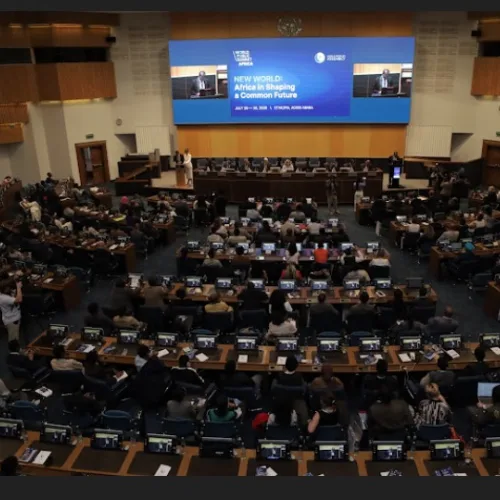
That transformation was vividly demonstrated at the World Public Summit at the UN Head office in Addis Ababa.
More than 700 government leaders, diplomats, business executives, academics, innovators, journalists, youth leaders and civil society representatives from Africa, Europe, Asia and Latin America gathered to exchange ideas, forge partnerships and explore solutions to some of the world’s most pressing challenges.
Far more than an international conference, the Summit showcased Africa’s growing ability to attract not only leisure travellers and investors but also policymakers, researchers, entrepreneurs and thought leaders seeking meaningful dialogue and lasting collaboration.
As business events become an increasingly important driver of global tourism, Africa is steadily emerging as one of the world’s most compelling destinations for conferences, innovation, cultural exchange and diplomacy.
Held under the theme “A New World: Africa in Shaping a Shared Future,” the Summit transformed Ethiopia’s capital into a vibrant crossroads of ideas and cultures, reinforcing Addis Ababa’s standing as the diplomatic heart of Africa and one of the continent’s leading destinations for international meetings and events.
The momentum extends well beyond Ethiopia. Across the continent, African destinations are redefining global travel. Rwanda has become synonymous with high-end conservation tourism and international conferences; Tanzania continues to captivate visitors with its wildlife, Mount Kilimanjaro and Zanzibar; Morocco blends imperial history with modern luxury; while The Gambia, Ghana, Botswana, Namibia and Kenya are attracting growing numbers of travellers seeking authentic cultural and nature-based experiences.
Nigeria, Africa’s largest economy, represents one of the continent’s most exciting untapped tourism frontiers. From the spectacular Obudu Mountain Resort and the wildlife of Yankari Game Reserve to the vast landscapes of Gashaka-Gumti National Park and other emerging ranches, reserves and eco-tourism destinations, the country possesses extraordinary natural and cultural assets capable of attracting adventure travellers, conservation enthusiasts and international investors alike.
The Summit’s opening plenary session, “Values, Development and Partnership as the Foundation for a Sustainable and Just World,” explored Ubuntu, humanistic leadership, youth empowerment, sustainable development, social responsibility and the importance of balancing tradition with innovation in building a more inclusive future.
Throughout the discussions, delegates agreed that Africa is increasingly becoming a source of ideas rather than simply a recipient of global solutions. They called for stronger South-South cooperation, deeper international partnerships and greater recognition of Africa’s intellectual, cultural and economic contributions to global development.
Other sessions examined scientific and educational cooperation, artificial intelligence, public diplomacy, humanitarian partnerships, cultural diplomacy, heritage preservation and strategies for preparing the next generation of African leaders.
The Summit concluded with the adoption of the African Communiqué, reaffirming a shared commitment to dialogue, stronger international cooperation and investment in people as the foundation of a more peaceful, prosperous and sustainable world.
Addressing delegates, Andrey Belyaninov, General Secretary of the World Peoples Assembly, said:
“The Summit is not just a meeting—it is a space for unity. A space where the values that unite us come to life: respect for people, openness to the world, responsibility for the future and a commitment to creation.
“Today, we understand more clearly than ever: the future cannot be built alone. It is born in dialogue, in trust, in the ability to listen to one another and to act together.”
The World Public Summit is seen as the beginning of a long-term global movement that will continue bringing nations, institutions and communities together while strengthening Africa’s position as the world’s next centre for travel, dialogue, discovery and international cooperation.
As delegates departed Addis Ababa, one message resonated above all others: Africa is no longer simply inviting the world to visit—it is inviting the world to think, collaborate, invest and shape the future together.
Ifeoma Okeke-Korieocha is the Aviation Correspondent at BusinessDay Media Limited, publishers of BusinessDay Newspapers. She is also the Deputy Editor, BusinessDay Weekender Magazine, the Saturday Weekend edition of BusinessDay. She holds a BSC in Mass Communication from the prestigious University of Nigeria, Nsukka and a Masters degree in Marketing at the University of Lagos. As the lead writer on the aviation desk, Ifeoma is responsible and in charge of the three weekly aviation and travel pages in BusinessDay and BDSunday. She also overseas and edits all pages of BusinessDay Saturday Weekender. She has written various investigative, features and news stories in aviation and business related issues and has been severally nominated for award in the category of Aviation Writer of the Year by the Nigeria Media Nite-Out awards; one of the Nigeria’s most prestigious media awards ceremonies. Ifeoma is a one-time winner of the prestigious Nigeria Media Merit Award under the 'Aviation Writer of the Year' Category. She is the 2025 Eloy Award winner under the Print Media Journalist category. She has undergone several journalism trainings by various prestigious organisations. Ifeoma is also a fellow of the Female Reporters Leadership Fellowship of the Wole Soyinka Centre for Investigative Journalism.

Comments
Start the conversation about this story.