





Team Nigeria continued its impressive medal surge at the 2026 Commonwealth Games in Glasgow, Scotland, as Samuel Ogazi stormed to a landmark gold in the men’s 400 metres on Saturday, helping the nation reach 10 gold medals, seven silvers and seven bronzes for a total of 24.
The 19-year-old NCAA champion powered home in 44.25 seconds at Scotstoun Stadium to claim Nigeria’s first-ever Commonwealth Games men’s 400m title, finishing well clear of Trinidad and Tobago’s Jereem Richards (silver) and South Africa’s Zakithi Nene (bronze).
The victory marked Ogazi’s first senior international gold and Nigeria’s 10th gold of the Games, underlining the country’s status as Africa’s top-performing nation on the medal table.
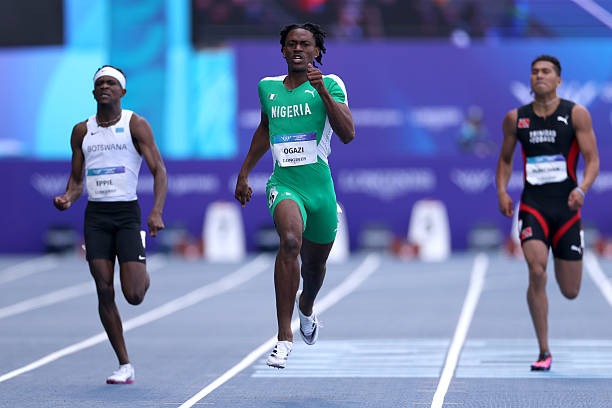 Samuel Ogazi during the Glasgow 2026 Commonwealth Games. Photo | Getty Images
Ogazi’s breakthrough came on the back of strong athletics results.
Samuel Ogazi during the Glasgow 2026 Commonwealth Games. Photo | Getty Images
Ogazi’s breakthrough came on the back of strong athletics results.
Ezekiel Nathaniel had earlier secured gold in the men’s 400m hurdles, while Chukwuebuka Enekwechi delivered Nigeria’s first Commonwealth Games men’s shot put gold with a throw of 21.07 metres.
Para athlete Goodness Nwachukwu defended her title in the women’s discus throw (F42-44), smashing her own world record with a mark reported around 39.66 metres to claim gold.
Weightlifting and para powerlifting provided the early foundation for Nigeria’s success.
Gold medals came from Esther Nworgu (women’s lightweight para powerlifting), Folashade Oluwafemiayo (women’s heavyweight para powerlifting, with a world-record lift).
Riluwan Idris (men’s heavyweight para powerlifting), Edidiong Umoafia (men’s 71 kg weightlifting), Onome Didih (women’s 53 kg) and Rafiatu Lawal (women’s 58 kg).
On the silver medal front, teenager Jessica Oji shone in her international debut, taking silver in the women’s shot put with 17.87 metres — the first such medal for a Nigerian woman in the event since 2006.
Udodi Onwuzurike added silver in the men’s 200 metres, while Ruth Usoro claimed silver in the women’s long jump with 6.87 metres behind England’s Jazmin Sawyers.
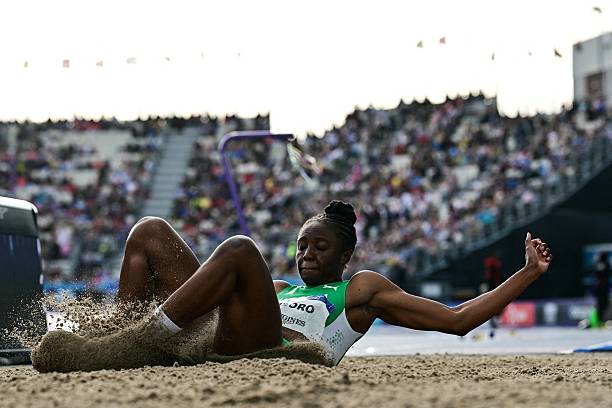 Ruth Usoro competes in the women’s long jump final. Photo | Getty Images
Additional silvers came in para powerlifting (Roland Ezuruike, Esther Oyema and Rita Ferdinand) and weightlifting (Ruth Nyong).
Amid the celebrations, national long jump champion Prestina Ochonogor’s Games experience was marked by significant frustration.
The United States-based athlete, who won the national trials with a leap of 6.57 metres, initially faced rejection from organisers after Nigeria sought to enter both her and Ruth Usoro following the withdrawal of Ese Brume.
Technical officials ruled that only one replacement was permitted, barring Ochonogor because she had not been on the original entry list.
After days of uncertainty and appeals, organisers reversed the decision and cleared her to compete.
Ochonogor advanced and finished fifth in the final with a best jump of 6.28 metres, falling short of the podium despite her status as national champion.
Also read: Ajayi Snags Historic Bronze as Nigeria Holds Strong on Glasgow 2026 Medal Table
The administrative hurdles and limited preparation window left the young jumper expressing disappointment over the handling of her entry, highlighting ongoing challenges with late substitutions and federation processes that affected her campaign.
Nigeria’s strong showing in Glasgow — featuring world records, historic firsts and consistent podium finishes across athletics, weightlifting and para powerlifting — has reinforced its position among the leading nations at the Games.
As competition winds down, the focus remains on the athletes who delivered under pressure and the lessons from administrative setbacks that nearly sidelined talents like Ochonogor.
Team Nigeria’s gold and silver medalists have given the country plenty to celebrate while underscoring the depth of its emerging stars on the Commonwealth stage.

Comments
Start the conversation about this story.