





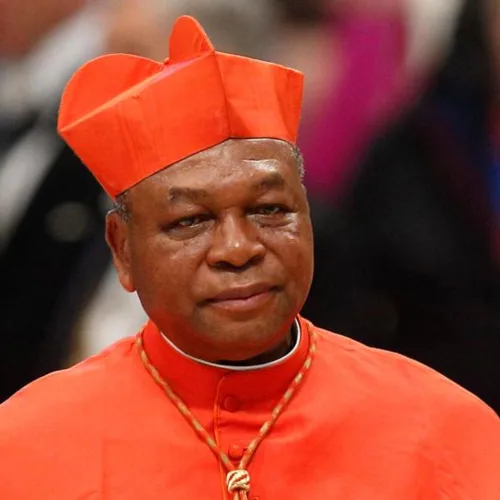
The Presidency has criticised Cardinal John Onaiyekan’s television interview on the meeting between President Bola Tinubu and the Catholic Bishops’ Conference of Nigeria, describing it as inappropriate and a breach of the privilege attached to clerical office.
Senior Special Assistant to the President on Media and Publicity, Temitope Ajayi, stated this in a statement personally signed and posted on the X platform of the President’s Special Adviser on Information and Strategy, Bayo Onanuga, on Saturday.
Ajayi said the bishops had requested an audience with President Tinubu, who granted their request and listened to their concerns on the nation’s economic, social and security challenges before responding to the issues raised.
He argued that the discussion should have remained private, adding that the bishops’ assessment of the country’s situation was a perspective that could be subjected to scrutiny and rebuttal.
According to him, President Tinubu responded to the concerns raised by the bishops with facts, including issues bordering on economic reforms, security and the return of mission schools.
On the issue of schools, Ajayi said the President explained that ownership of schools was a matter within the jurisdiction of state governments under the Constitution, urging the bishops to engage governors on the matter.
He added that Tinubu reminded the delegation that he returned mission schools in Lagos State while he was governor of the state.
The presidential aide said the President acknowledged the difficulties facing Nigerians but argued that his administration had laid the foundation for economic recovery and that efforts were ongoing to ensure more citizens benefit from the reforms.
“President Tinubu did not pretend that Nigeria’s problems had disappeared. He acknowledged that significant economic and security challenges remain. His point was that the country has emerged from a dark tunnel, that his administration has laid the foundations for recovery and that the next phase is to ensure the greatest number of Nigerians feels the gains,” he said.
Ajayi also defended the administration’s economic policies, saying the government inherited a serious fiscal crisis and had taken steps to restore stability.
He claimed that improved fiscal management had helped many states meet their obligations, including the regular payment of salaries and pensions, which he said had previously been a challenge in several states.
On security, he said President Tinubu did not deny existing challenges but highlighted progress recorded by the military and intelligence agencies in various areas.
Ajayi said the President, as Commander-in-Chief, had access to operational briefings and intelligence reports that provided a broader view of the security situation beyond public reports.
He further argued that the Catholic Bishops were an important stakeholder but not the only group capable of speaking on the state of the nation.
According to him, President Tinubu receives information from various sources, including government agencies, media platforms and individuals across different sectors of society.
“The suggestion that President Tinubu somehow needs only the Catholic Bishops to acquaint him with the truth is an overreach. They are an important constituency, but they are by no means the exclusive custodians of the national mood or the nation’s conscience,” he said.
Ajayi maintained that the meeting between the President and the bishops demonstrated the civility expected in a democracy, but insisted that the confidentiality of such engagements should have been preserved.
He said clerical office comes with responsibilities, including restraint and discretion, particularly when dealing with matters of national importance.
Comments
Start the conversation about this story.