





Several women have taken to social media to share how they became pregnant after using GLP-1 medications, saying the drugs helped them conceive after years of infertility, although medical experts caution that the drugs are not fertility treatments, ABC News reports.
One of the women sharing her experience is Molly Orr.
Speaking during an interview on “Good Morning America” aired on Thursday, Orr said she was diagnosed with polycystic ovary syndrome (PCOS), a hormonal condition that often affects a woman’s ability to conceive.
According to Orr, she had previously been informed that she would not be able to become pregnant naturally. After hearing accounts from other women who said GLP-1 medication eased their PCOS symptoms, she decided to begin treatment. About a year later, she discovered she was pregnant.
“I really didn’t have my hopes up, but when that test turned positive for like, I was ovulating, I was just floored,” Orr said. “I remember getting so excited.”
She said the medication provided benefits beyond weight loss.
“Just a medication that not only helped me lose weight – that’s really hard to do with PCOS – things that my body wouldn’t do on its own,” she said.
Orr’s experience is similar to that of other women.
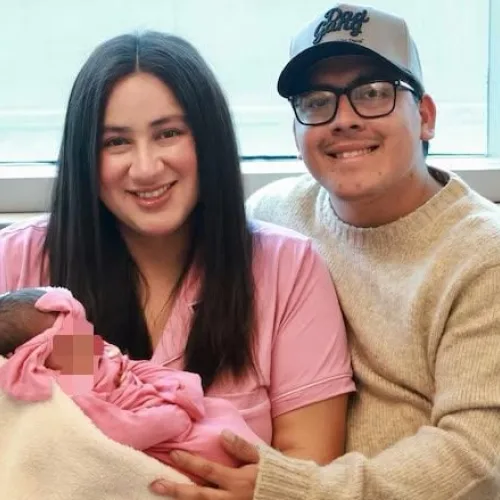
Areli Ruiz told “GMA” she was diagnosed with secondary infertility after giving birth to her first daughter 17 years earlier. She later started taking a GLP-1 medication and said she conceived eight months afterwards.
“Eight months later I got pregnant. And then that was my first one,” Ruiz said. “I was like, I’m going to get on the GLP again … got pregnant six months later, did it another time, got pregnant one month after again. So three GLP babies.”
Ruiz said she began hearing from many women with similar experiences after sharing her story on TikTok, with several posting photos of their children in the comment section.
“They’re posting their babies in my comments, my GLP twins, my GLP baby,” Ruiz said. “A lot of them went through infertility, the same exact journey and they have their GLP babies. It’s crazy.”
Medical experts, however, caution that such experiences should not be interpreted as evidence that GLP-1 drugs are fertility treatments.
ALSO READ: Nigeria had 4 million more births than entire European Union in 2025 — Elon Musk
Dr. Katherine Saunders told “GMA” the medications are not designed to treat infertility but may improve fertility in some women by addressing underlying metabolic conditions linked to obesity and insulin resistance.
“It’s not that these medications are fertility medications per se,” Saunders said. “But for women who have insulin resistance, once they treat the metabolic pathways that have been dysregulated because of obesity and because of insulin resistance, women can actually improve their fertility whether they realize it or not.”
She explained that the effect of GLP-1 medications on fertility varies from one individual to another and advised women to consult their healthcare providers before making decisions about treatment.
“There’s so much information spreading about everything related to GLP-1s right now,” Saunders explained. “These situations are very personal decisions that depend on a woman’s medical condition, depend on the timing and the choice of medication that she’s taking, and these should always, always, always be discussed with that woman’s own prescribing clinician.”
Saunders also noted that tirzepatide, marketed under the brand names Mounjaro and Zepbound, carries a U.S. Food and Drug Administration (FDA) warning regarding its use alongside oral contraceptives.
The FDA advises women using the medication to either use an additional method of contraception or switch to a non-oral birth control option during the first four weeks after starting treatment and for four weeks following every dosage increase.
(ABC News)
Comments
Start the conversation about this story.