





…warns capital market not a casino
…says gains remain concentrated in large capitalisation names
When global financial markets look for world-beating returns, the paths to the top can be starkly contrasting. While South Korea’s recent stock surge was propelled by the high-stakes, hyper-focused wave of artificial intelligence (AI), Nigeria’s explosive bull run to world’s best-performing stock market anchored entirely in domestic economic restructuring, banking sector recapitalisation, and stabilising local currency dynamics.
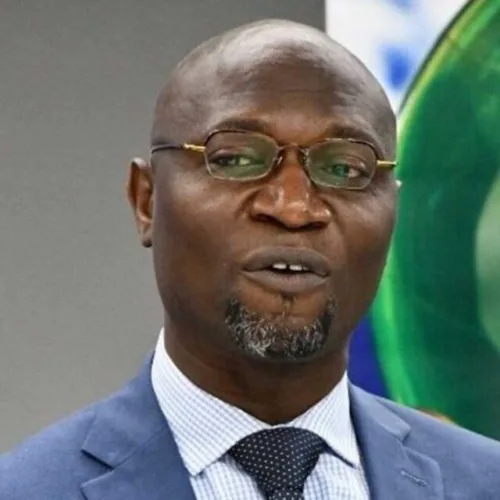
“The market we surpassed is an instructive comparison. A single investment theme, artificial intelligence, drove almost all of South Korea’s surge in 2026. When that theme soured globally, the Kospi plummeted more than 20 percent from its June highs in a matter of weeks, falling into technical bear market territory. A one-legged market falls when that leg breaks,” said Emomotimi Agama, Director General, Securities and Exchange Commission (SEC).
“Nigeria’s rally has multiple legs. The single most important commodity in any frontier market is an investor’s belief that money brought in can be taken out. Three years of macroeconomic reform, spanning exchange rate liberalisation, fiscal consolidation and the restoration of orthodox monetary policy, have rebuilt that belief,” said Agama, adding that reform, currency stability, oil-linked confidence and strong domestic institutional liquidity are fundamentals, “and fundamentals do not vanish overnight when a global trend turns”.
“The naira has appreciated by about four percent against the dollar this year, which means gains on local equities are now gains in dollars rather than being eaten away by depreciation. Improved foreign exchange liquidity has removed the anxieties over capital repatriation that deterred portfolio investment for years. And the rise is being driven not by a speculative theme but by real earnings, with banks and insurers in our financial services sector posting some of the best results in their history,” he added.
This fundamental divergence explains why, as South Korea’s Kospi index faced sharp corrections amid cooling tech sentiment, the Nigerian Exchange Limited pressed forward to claim top global rankings.
Nigeria transitioned to T+1 settlement on June 1, a faster cycle than many developed markets operate, reducing counterparty risk and aligning the country’s infrastructure with global best practice.
Agama noted further, “Nigeria does not have the largest stock market in the world; it has the best performing one. Our market remains small compared to the heavyweights of global finance, with equity capitalisation of roughly N156 trillion. The correct statement, and it is remarkable enough without exaggeration, is that Nigeria has delivered the best dollar-denominated performance among all tracked exchanges in 2026. We are not yet the biggest in scale. But we have momentum on our side, and that is where every great market story begins”.
“Nigeria has earned the world’s attention. That was the hard part, or so we thought. The harder part is what comes next: earning the world’s trust, permanently, through consistent regulation, transparent markets, credible institutions and disciplined reform. That is the work the Securities and Exchange Commission wakes up to every day. The world’s best performing stock market is in Lagos. Our ambition is that, a decade from now, no one will find that surprising,” the SEC DG said.
In his message to the Nigerian investor, he said “Come in, but come in wisely. Invest through operators registered with the Commission. Diversify across sectors and instruments. Think in years, not weeks. And be exceptionally wary of anyone promising guaranteed returns on the strength of this news. A rising market is precisely when fraudsters shout loudest, and I assure you our enforcement machinery is fully engaged.
“The capital market is not a casino; it is the most powerful wealth-building institution available to a patient people. This year, it has rewarded Nigerian patience spectacularly”, he added.
The SEC DG was honest about risks in the market. He said, “No credible regulator declares victory in a bull market. I will therefore say plainly what our own surveillance tells us: gains remain concentrated in a handful of sectors and large capitalisation names. Concentration is a risk even in a rising market, perhaps especially in one. The market remains exposed to oil prices, inflation, interest rate dynamics and, above all, to the consistency of reform execution. A market that rises on fundamentals can still correct, and anyone who suggests otherwise is selling something”.
“A further risk no forward-looking entity should ignore is sustainability, including climate exposure, resource dependency and social pressures. Sustainability-related risks and opportunities run through the value chains and sit within the supply chains of the very companies driving this rally. Markets do not fear risk; they fear the risks they cannot see. The Commission is therefore embedding sustainability disclosure into our regulatory architecture, so that investors have decision-useful information and resilience is built into value chains and supply chains before stress arrives,” Agama noted.
Get Newsletter Updates
Enjoying our column?
Subscribe to our specialised **Tax 360** feed to receive fresh reports and analyses directly in your inbox.
Iheanyi Nwachukwu, is a creative content writer with almost two decades journalism experience writing on banking, finance, capital markets, and tax. The multiple awards winning journalist is Assistant Editor, BusinessDay. Iheanyi holds BSc Degree in Economics from Imo State University; Master of Science (MSc) Degree in Management from University of Lagos. Iheanyi has attended several work-related trainings including (i) Advanced Writing and Reporting Skills (Pan African University, Lagos); (ii) News Agency Journalism (Indian Institute of Mass Communication {IIMC}, New Delhi, India); and (iii) Capital Markets Development and Regulations (International Law Institute {ILI} of Georgetown University, Washington DC, USA). Other trainings Iheanyi attended include: Economic/Political Risk Analysis (By Thomson Reuters Foundation); International Financial Journalism (IFJ) (By PMA Media Training, UK); Effective Business Writing Skills (By Phillips Consulting); Reporting on Corporate Governance (By International Finance Corporation (IFC) & Thomson Reuters Foundation UK); etc. In addition, he has participated in high-level economy & markets events in Dubai, South Africa, Morocco, and other African countries like Zambia, Ghana and Gambia.

Comments
Start the conversation about this story.