





…Unveils safeguards
…Political officeholders cannot direct arrest of opponents, the suppression of lawful political activity, selective enforcement
The Presidential Working Group on the National Policing Bill, on Monday, unveiled timelines for the passage and eventual take off of State Police in Nigeria.
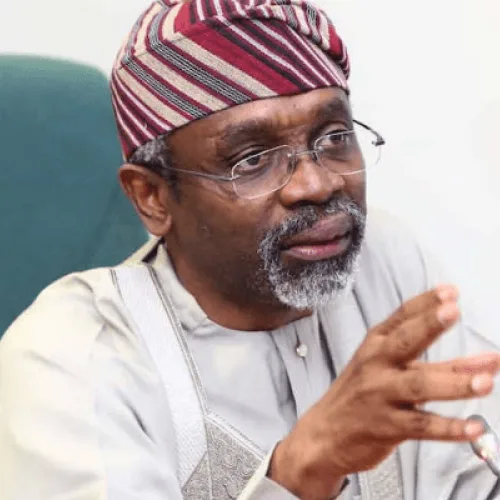
The Committee, Chaired by Femi Gbajabiamila, Chief of Staff to the President, also unveiled a virtual platform for members of the public who may want to contribute to the proposed Bill.
Femi Gbajabiamila, while briefing State House Journalists after their meeting on Monday, said members of the public can contribute to the debate via a portal www.nigeriapolicebill.com.
He revealed that the meeting dwelt on the implementation of the work plan, its principal milestones and the outcomes expected at each stage.
The approved work programme is a seven-week, milestone-driven exercise, that is expected to terminate on 14 September 2026.
Gbajabiamila, while announcing that “Administrative and technical preparations have been underway, added that” today’s meeting formally mobilises the next stage”
The resulting Executive Bill package is scheduled for presentation to the President on 3 September.
“Subject to his approval, a national consultation on the completed draft will follow, after which the text and supporting materials will be revised and prepared for formal transmission to the National Assembly.
He described the timetable as ” demanding, but it is not a shortcut. Legal drafting, policy research, data analysis and implementation modelling will proceed in parallel, with fixed review gates.
“The final package will comprise more than a Bill. It will include schedules, an explanatory memorandum, a legal audit and consequential-amendments matrix, a clause-by-clause analysis, a State readiness framework, a fiscal and implementation note, an implementation workplan, a validation report, a risk register and a controlled digital archive”
Read also: The degree Nigeria keeps misjudging
He noted that these are the materials required to make the reform defensible, auditable and capable of implementation
Speaking on safeguards, he stated that ” Political officeholders will not able to direct the arrest of an opponent, the suppression of lawful political activity or the selective enforcement of the law”
“The question before the country is how we transform our policing architecture to become more responsive to the realities of our communities”
The Committee which was inaugurated on the 7th of July, is expected to design a lawful, professional and sustainable federal and state policing system that places greater capability closer to the people while preserving national standards, national security and the rights of every Nigerian.
Already the Senate approved the State Police constitutional proposal on 24 June 2026, and the House of Representatives passed the Executive State Police Bill on 23 July 2026.
The constitutional amendment can only be in force if the Bill is approved by the State Houses of Assembly as prescribed under the Constitution.
When the process is completed, the necessary implementing laws are also expected to be enacted, before the State Police can be implemented
Gbajabiamila stated that “the constitutional amendment creates the authority and broad architecture for federal and state policing.
“However, it does not, by itself, provide the complete operating system. It does not settle the questions on standards, certification, recruitment, training, funding, command, jurisdiction, complaints, data, firearms, pensions, transition or cooperation.
“Those matters must be addressed in the National Policing Bill and in the consequential laws and instruments that will accompany it”
He added that the President established the Presidential Working Group so that Nigeria will be ready to act responsibly when the constitutional process is completed.
“Our mandate is to produce a technically robust, implementation-ready draft National Policing Bill and supporting legislative package”
The Gbajabiamila-led group is expected to build the legal and operational framework required to move from one federal police institution to a workable dual-policing architecture.
“The assignment includes a preliminary audit of the Police Act 2020, the Police Service Commission framework, police regulations and other laws and instruments affected by the reform. It includes provisions on national minimum policing standards; objective analysis of State readiness and certification;
The group will also determine the “federal-state and inter-state cooperation; clear jurisdictional rules; independent personnel and complaints institutions; human-rights, custody and use-of-force safeguards; rank equivalence analysis, transfer, secondment and pension portability; criminal information, forensics and interoperable data systems; firearms control; funding and grant conditions; federal intervention structures; and the orderly treatment of existing security outfits, assets, liabilities, records and pending cases.”
According to him ” the Working Group brings together the institutions that must own and implement these decisions: the Presidency, the Federal Ministry of Justice, the Office of the National Security Adviser, the Nigeria Police Force, the Nigeria Governors’ Forum and the Nigerian Bar Association. Its Secretariat will conduct the research, legal audit, policy analysis, drafting, data processing, consultation, document control and preparation of the final transmittal package.”
President Tinubu also approved a multidisciplinary Policy Advisory Committee, chaired by Justice Mohammed Abdullahi Liman, with members draws from the judiciary, academia, police and security agencies, justice-sector reformists, public policy experts, technology and data experts.
Other members include the National Assembly, the Office of the National Security Adviser, the Nigeria Police Force, the Nigerian Bar Association, the Nigeria Governors’ Forum and State Attorneys-General.
This Committee includes direct subnational perspectives, including State Attorneys-General drawn from across the six geopolitical zones.
The Policy Advisory Committee is to provide high-level policy and technical oversights, test assumptions, identify gaps, review the policy outline and successive versions of the Bill, and validate the supporting fiscal, transition and implementation materials before they move to executive consideration.
Gbajabiamila stated that ” in a reform of this sensitivity, independent oversight and a documented record of comments and dispositions are essential to both quality and public confidence”
With the unveiling of the timelines, the government is now proceeding on a clear principle, where local policing capability must be matched by national safeguards.
He however noted that although State Police cannot mean thirty-six state militias, just as national standards cannot become a disguised method of re-centralising day-to-day State policing, but “States must have a legitimate policy voice on public safety, but no political officeholder should be able to direct the arrest of an opponent, the suppression of lawful political activity or the selective enforcement of the law.
As part of the safeguards, “Federal intervention must remain exceptional, evidence-based, proportionate, time-limited and reviewable. Officers must answer to the Constitution and the law, not to personal or partisan instruction.
“Operational commencement must also be based on readiness, not announcement. A proposed State Police Service must demonstrate that it has credible arrangements for recruitment, vetting, training, pay, pensions, equipment, custody, complaints, discipline, data, firearms control, independent oversight and financial sustainability before it begins policing.
He noted that a national standards will be the baseline, while states may establish higher standards; “however, no Nigerian should receive a lower standard of protection because of where they reside.
Public participation is an integral part of this process.
“To that end, I am announcing an open call for memoranda, position papers and practical proposals from Nigerians at home and abroad, professional bodies, civil society, security institutions, State and local actors, experts and other stakeholders to inform and improve the legislative proposals and other deliverables that the Working Group will produce”
He assured that those submissions will be organised by theme and recorded. When the completed draft is ready, the national consultation will allow Nigerians to engage with the actual clauses, safeguards, funding proposals and transition arrangements.
“The process will show not only what was submitted, but how material proposals were considered.
Read also: Nigeria’s oldest bank crosses N6trn market capitalisation for the first time
“We recognise the concerns that accompany this reform: the fear of political abuse, unequal State capacity, duplication of commands, poor funding, ethnic or sectional capture, and the possibility that new institutions could reproduce old failures.
“Those concerns are legitimate. They are precisely why the constitutional amendment cannot be treated as self-executing and why the National Policing Bill must be comprehensive”
Gbajabiamila agrees that this reform will not, by itself, solve every security problem in Nigeria, as no law can substitute for good leadership, competent officers, reliable intelligence, adequate resources, professional discipline and public trust.
He however noted that ” Nigeria has an opportunity to build a policing system better matched to the scale and diversity of the country: a strong Federal Police Service for federal, inter-State and national-security responsibilities; capable State Police Services for State and local responsibilities; and common standards that protect the Republic and its citizens.
” Mr President recognises this opportune moment and is determined that we, as a country, will rise to meet this moment together, capably and responsibly.”

Comments
Start the conversation about this story.