





Tapioca is a humble product derived from cassava.
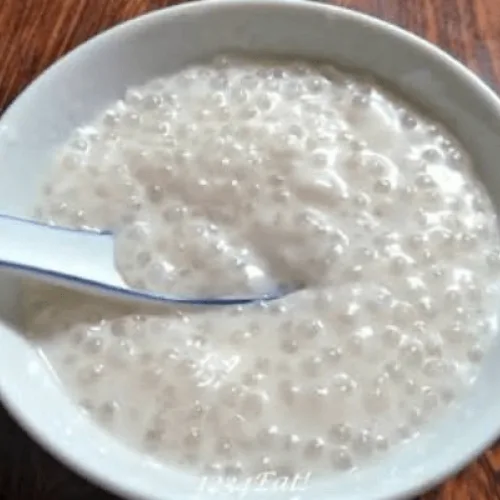
It is a warmly prepared breakfast cereal that pours like a white whisper into a bowl, steam curling upward and promising nothing but warmth and the softest comfort.
Tapioca can be described as another type of pap in Nigeria’s quietest staple.
It is a porridge that has so smoothly registered itself on the tongue and has gently soothed many bellies.
Tapioca’s story is not one of glamour, but of survival, adaptation, and peace.
Its journey reportedly started from the bitter heart of the Amazon, where the cassava root as a plant was so toxic that it could kill with a single bite. It was however, transformed by indigenous ingenuity into edible starch.
The cyanide-laced flesh was then peeled, grated, pressed, and toasted until the poison drained away, leaving behind a coarse flour that would sustain empires.
Reports say l the Portuguese carried this cassava meal to West Africa, and when freed enslaved Brazilians returned to Lagos in the late 19th century, bringing with them not just a food, but a recipe for resilience.
That Brazilian coconut pudding called mingau became, in Nigerian hands, something simpler: a fine white powder that, when stirred into boiling water, thickened into a translucent, gelatinous pap, looking simple, humble, cheap, and adaptable.
Today, that pap is poured into bowls across the nation, from the bustling markets of Isale Eko and Ibadan to the quiet kitchens of village grandmothers.
The food comes in handy as the first solid food given to infants, the restorative meal served to the elderly, the bland but necessary comfort offered to anyone whose stomach has declared war on digestion.
Its preparation is a ritual of patience: fine tapioca flour dissolved in cold water to prevent lumps, then poured into simmering liquid and stirred without rest until the mixture swells and turns glossy, like a clear, milky river captured in a pot. Plenty of sugar to taste, as well as a splash of milk, mostly evaporated or fresh, is the breakfast conclusion.
Tapioca ontains roughly one hundred and forty calories, and almost all of those calories come from carbohydrates, with thirty to thirty-five grams of pure starch, broken down into glucose the moment it hits the digestive tract.
There is virtually no protein, no fat, no fibre, no vitamins, and only the faintest whisper of calcium and iron
It is, in the most honest terms, an empty canvas, a bowl of quick energy with no nutritional baggage.
Though widely recognized today for its use in bubble tea, desserts, and gluten-free baking, tapioca represents far more than a fashionable ingredient.
This creative, off-white food embodies centuries of indigenous knowledge, traditional food processing techniques, cultural resilience, and community identity.
Tapioca can comfortably be described as one of the global simple foods well known for having extraordinary cultural significance.
Produced by extracting starch from cassava roots, tapioca has become a staple in many tropical countries.
These include Nigeria, Brazil, Ghana, Thailand, Indonesia, and several parts of Asia and South America.
In Nigeria, cassava has long been one of the nation’s most important food crops, supporting millions of farming households and contributing significantly to food security.
The transformation of cassava into tapioca therefore reflects generations of inherited knowledge passed from one generation to another through observation, practice, and oral tradition.
The preparation of tapioca is a careful process that involves harvesting cassava, extracting and washing the starch, drying it, and processing it into granules, pearls, or flour.
These methods have been preserved within families and local communities for decades, demonstrating the living heritage that UNESCO seeks to safeguard through its Intangible Cultural Heritage (ICH) List.
Beyond its production, tapioca has become deeply woven into everyday life.
In Nigeria, it is commonly prepared as a comforting porridge with coconut milk, sugar, spices, and evaporated milk.
Elsewhere, it is transformed into puddings, desserts, bubble tea pearls, and gluten-free baked products.
While recipes vary across cultures, the underlying knowledge of cassava processing remains a shared heritage that continues to unite communities.
Economically, tapioca provides income for thousands of smallholder cassava farmers, processors, market women, and food entrepreneurs.
It creates employment opportunities along the agricultural value chain while promoting local food industries and reducing dependence on imported starch products.
Its naturally gluten-free nature has also increased its global demand among consumers seeking healthier dietary alternatives.
Recognising tapioca on UNESCO’s Intangible Cultural Heritage List would acknowledge not merely a food product but an enduring cultural practice.
This recognition would ultimately encourage the documentation and preservation of traditional cassava-processing knowledge before it is lost to industrialisation and changing lifestyles.
It would also celebrate the ingenuity of rural communities whose skills have sustained food security for generations.
UNESCO recognition would further promote sustainable agriculture by highlighting cassava as a climate-resilient crop capable of thriving under difficult environmental conditions.
As climate change threatens global food systems, traditional cassava processing offers valuable lessons in resilience, local resource utilisation, and sustainable food production.
Inscribing tapioca on the UNESCO ICH List would also stimulate food journalism and tourism, cultural tourism, culinary education, academic research, and international appreciation of indigenous food traditions.
Visitors would gain opportunities to experience authentic cassava-processing demonstrations, traditional recipes, and the rich cultural stories surrounding one of Africa’s most versatile crops.
Perhaps most importantly, such recognition would inspire younger generations to value and preserve ancestral knowledge rather than allowing these traditions to disappear.
In many communities, the skills required to process cassava into tapioca are learned through family participation, making the practice a living classroom where culture, agriculture, and identity intersect.
Tapioca is starch extracted from cassava and a symbol of resilience, innovation, food security, and cultural continuity.
As nations increasingly seek to preserve their culinary heritage, tapioca stands out as a compelling candidate for UNESCO Intangible Cultural Heritage recognition.
Protecting this tradition would honour the communities that have safeguarded it for centuries while ensuring that future generations continue to benefit from its cultural, economic, and nutritional value.

Comments
Start the conversation about this story.