





Organisers of a campaign aimed at preserving the history of Nigerian women, HerStory of Nigeria, have said that exposing young girls to the stories of trailblazing women will equip them with the confidence, identity, and values needed to excel and contribute meaningfully to national development.
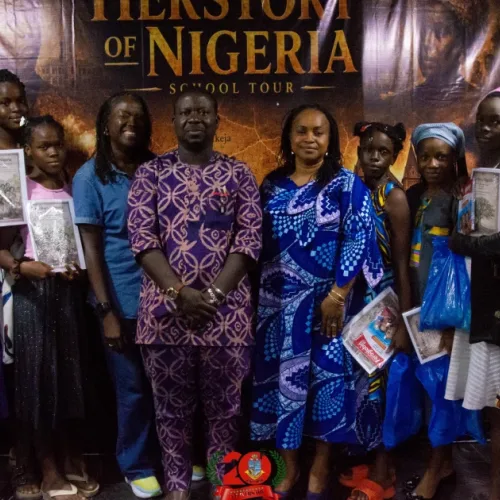
The project team lead and archivist, Dr Oludamola Adebowale, disclosed this on Friday during the third edition of the HerStory of Nigeria project held at the St Jude Cathedral Church, Ebute Metta, Lagos, where over a hundred girls participated in a history-focused educational programme.
Adebowale said the initiative was designed to take history beyond textbooks and classrooms by documenting, preserving, and promoting the stories of remarkable Nigerian women, while providing young girls with role models capable of inspiring leadership and national development.
According to him, the project seeks to preserve the sometimes overlooked contributions of women to Nigeria’s history and ensure that younger generations understand their place in shaping the country’s future.
“The project is such that it’s a legacy project where we are trying to archive, document, and spread the history of Nigerian women, and also allow these young girls to have a worthy role model of people that they can emulate and they can strive to be great,” he said.
Adebowale lamented that the history of Nigerian women had not received adequate attention despite their significant contributions to nation-building.
Speaking on the importance of history to national development, the archivist argued that many of Nigeria’s present-day problems stem from the country’s failure to learn from its past.
“The impact is enormous, because if you do not know where you are coming from, you cannot figure your way out. A lot of situations that we face in Nigeria and a lot of problems that we face are because we are actually repeating history. And because we have not learned from history, we are bound to repeat the same history,” he said.
He noted that history goes beyond academic learning, saying it also promotes cultural identity, civic responsibility, and psychological development.
Explaining why the project specifically targets girls, he said the initiative was created to address the historical neglect of women’s achievements and to inspire the next generation of female leaders.
Adebowale also called on governments at all levels to introduce policies that would strengthen girls’ education and improve the quality of learning both within and outside the classroom.
“I think the government should just sit down and draft policies that will empower these girl children. Education should be inter and intra.
“There should be policies to encourage proper education at every level, vocational studies, and making the entire educational system very qualitative and quantitative,” he said.
According to him, the initiative is expected to extend to federal schools across Nigeria next year, subject to funding and logistics.
Adebowale noted that the programme had continued to receive positive feedback, with some participating schools requesting the establishment of after-school history clubs, while encouraging the participants to dream beyond societal limitations and strive to become agents of change.
Also speaking, the wife of the Archbishop of the Anglican Diocese of Lagos Mainland, Olabo Johnson, stressed the need to preserve and promote the stories of Nigerian women, saying history remains incomplete when the contributions of women are overlooked.
She urged the girls to reject self-imposed limitations, reminding them that greatness is not determined by gender or background.
She added that today’s girls could become future scientists, entrepreneurs, lawyers, doctors, politicians, technology experts, and leaders if they remained focused on their goals.
Johnson also charged parents, teachers, and other stakeholders to create an enabling environment for girls to thrive through education, mentorship, and character development.
She emphasised that discipline, perseverance, and integrity were essential virtues that would help young people achieve excellence and fulfil their potential, while noting that investing in the girl child was an investment in the future of families, communities, and the nation.
While commending ASIRI Magazine for taking history directly to schools and young people, she expressed optimism that the initiative would strengthen the identity, confidence, and aspirations of Nigerian girls and inspire them to contribute meaningfully to national development.
Delivering the keynote address, actress and media personality, Eyiyemi Rogbinyin, urged the girls to build confidence and reject fear, stressing that no one is born afraid.
She encouraged them to speak up, ask questions, and never allow the fear of making mistakes to limit their potential, adding that confidence is developed through action, while silence only prevents people from discovering and improving their abilities.
Rogbinyin also challenged the participants to identify and nurture their talents, noting that every young person possesses unique gifts that can become future careers or businesses.
The highlight of the event included a quiz competition with participants getting certificates and cash rewards.
Comments
Start the conversation about this story.