






The incoming world is asking critical new questions that Africa must answer by its practice, in order to fully realise the fruitful benefits of the next few decades. A significant part of that is a critical process of decolonisation. We must realise what Africa can do without the corrupting influence that fetters the critical and eclectic exploration of its possibilities. Afrilition explores these possibilities, highlighting the keys to this new world. It is time to stop being a brand new second-hand of the after-effects of colonialist leftovers.
In writing Afrilition, I had to engage the colonial mind map that has been given to me since childhood. A well-structured framework was instilled in the basic understanding that we cannot modernise without Westernising. The essence of certification is to concur with this mental model and then be validated into it. So many have submitted to this model and the system of Afropessimism that it holds up; that their rationale for everything, including their ethnic traditions, has gone through colonial validation before they are even engaged in any conversation.
For me, the danger is that the nations which are descending or ascending from my line are already co-opted into Western socialisation by virtue of birth and upbringing; hence, where do they go to find the mission of African evolution? My work was and is multiple in its challenges, and whether I succeed even marginally will be how the next two generations understand and take up their challenges more authentically.
The Tomorrow of all of humanity is increasingly dependent on how courageous the African world is in embracing its emerging future with authenticity, honesty, and love. The Africa of today, as a proxy for its Diaspora, is home to 1.5 billion people. It is just a little over the population of China or India, with a landmass that swallows both countries, along with the US and large parts of Europe. It is currently underpopulated. It also has the highest dependency ratio of all the continents, with the population currently skewed towards under-15-year-olds.
In the early 1980s when Africa was at the peak of dependency, for every 100 persons at work, there were 93 dependents. It was a time we ought to have invested in the care and development of the incoming population. Unfortunately, it was the time that the IMF and other Western-dominated institutions drove the brutal socio-development disinvestment called the Structural Adjustment Programme, ensuring things like education and social care would no longer be government priorities. Accompanying this was a severe privatisation process whereby government commonwealths were sold to private corporations and individuals as part of a fire sale.

As the highest concentration of young people in recorded human history, the clarity and values that are instilled now will make the critical difference tomorrow. By the 2070s, the dependency of the continent is projected to be about 54 per cent, bringing the worker-dependent ratio to a balance that is not only extremely beneficial to the continent but also favourable to the world.
So, in a nutshell, we severely reduced investment in the future across the continent. In 2026, the African dependency ratio of 78 per cent – 78 for every 100 workers – is still very high, accompanied by consequential poverty, as the labour market can barely resource the responsibilities and obligations of family and communal care, especially for the young.
The optimal balance that drove the Asian Tigers in the 1970s and 1990s, and China between the 1990s and 2010, is 40-45 per cent dependency, translating to 45 dependents for every 100 workers. The effect of this on the ability to save and invest, as well as risk tolerance, was huge. As well as the impact on options for women to engage in labour and entrepreneurial opportunities, rather than just the obligation to care for children. The transformative economic effects of this demographic profile is immense. The current global average in 2026 is 54 per cent, and Africa has the highest dependency ratio.
Using the medium population growth projection into the 2070s, the African population will be at least 3.8 billion people on the continent alone, without counting its Diasporas. This number alone will be 40 per cent of the total world population. Unlike China and the Asian Tigers, whose demographic growth was in step with global population growth, Africa is growing, even as the rest of the world slows. It will simply be the engine of humanity’s growth. It will be home to 30 per cent of the world’s under-28s; providing not just the lens but also passion and creativity for the future of the world.
The new world demands originality and open problem-solving. A new world that is not confusing certification with excellence and is not trapped in titles from schooling but unashamed to creatively problem solve and explore designs that produce the abundance of human interdependence, not material obsessions and false scarcity. These are the explorations that Afrilition raises and the aspirations it will trigger so that tomorrow is not written as a byproduct of others, but by clear and distinctive African intentions.
As the highest concentration of young people in recorded human history, the clarity and values that are instilled now will make the critical difference tomorrow. By the 2070s, the dependency of the continent is projected to be about 54 per cent, bringing the worker-dependent ratio to a balance that is not only extremely beneficial to the continent but also favourable to the world.
The incoming world is asking critical new questions that Africa must answer by its practice, in order to fully realise the fruitful benefits of the next few decades. A significant part of that is a critical process of decolonisation. We must realise what Africa can do without the corrupting influence that fetters the critical and eclectic exploration of its possibilities. Afrilition explores these possibilities, highlighting the keys to this new world. It is time to stop being a brand new second-hand of the after-effects of colonialist leftovers.
The new world demands originality and open problem-solving. A new world that is not confusing certification with excellence and is not trapped in titles from schooling but unashamed to creatively problem solve and explore designs that produce the abundance of human interdependence, not material obsessions and false scarcity. These are the explorations that Afrilition raises and the aspirations it will trigger so that tomorrow is not written as a byproduct of others, but by clear and distinctive African intentions.
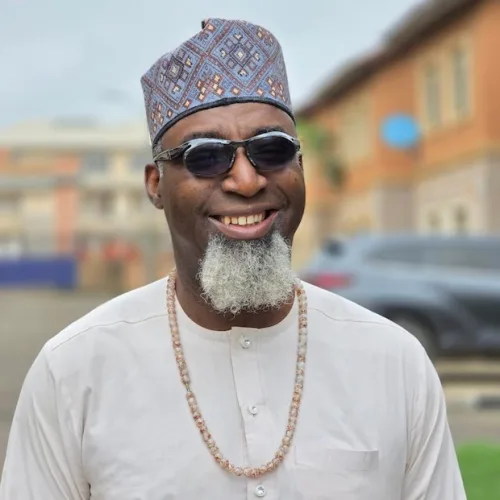
Adéwálé Àjàdí, a lawyer, creative consultant and leadership expert, is author of the newly released Afrilition: 21st Century African Manifesto, and Omoluwabi 2.0: A Code of Transformation in 21st Century Nigeria.
Discover more from Premium Times Nigeria
Subscribe to get the latest posts sent to your email.
Comments
Start the conversation about this story.