





Miva Open University has concluded the second edition of the Miva AI Hackathon, bringing together students from across Nigeria to develop artificial intelligence solutions for challenges affecting communities and industries across Africa.
The three-day programme, held from July 21 to 23, 2026, was organised under the theme, “AI for Africa’s Real Challenges.” Students participated both physically and virtually, working in teams to design AI-powered products focused on sectors including agriculture, healthcare and technology.
The hackathon combined keynote sessions, a fireside chat, panel discussions, workshops, mentorship, collaborative product development and a final pitch competition. Throughout the programme, participants refined their ideas with guidance from academics, founders, industry professionals and AI practitioners before presenting their solutions on Demo Day.
Speaking during the opening session, Obadare Peter Adewale, Founder and Chief Visionary Officer of Digital Encode and Professor of Practice at Miva Open University, urged participants to focus on solving practical problems rather than developing AI applications simply because the technology is available.
He said, “When you’re thinking about what you need to build, think about what is dangerous, what is dull, what is dirty, and what is difficult.
“We have started with the hackathon, but guess what? We can introduce an AI-lympics—an AI startup competition in Africa—to really bring about the next generation of innovation. Because we start to attract innovators from across.”
His remarks encouraged students to identify everyday challenges and build solutions that can improve lives in areas such as agriculture, healthcare, finance and education.
The programme also featured a fireside chat between AI policy expert David Timis and Udochi Obiukwu, Chief Academic Officer at The uLesson Group. Their discussion examined how artificial intelligence is changing work, education and society, while addressing concerns about the future of employment.
Timis encouraged participants to prepare for change by developing new skills and remaining adaptable as AI adoption continues to grow.
He said, “It’s important to use these moments of transition, while we still have time, to position ourselves as individuals and as a society on the path that would better insulate both individuals and society from the more negative scenarios that you hear about in the media or read in the press.”
A panel discussion moderated by Binta Gali, Senior Manager of the Career Advancement Centre at Miva Open University, focused on the topic, “Can AI Solve Africa’s Biggest Challenges?”
Panel members included Davidson Amedu, Chief Executive Officer of Upportune International; Paul Ehiagbonare, Chief Technology and Innovation Officer at The uLesson Group; Yemisi Ajeojo, Founder of Zenith Social Enterprise Limited; Olaoluwa Adewusi, Communications and Community Manager at NASENI; and Chisom Nwokwu, Software Engineer and Executive-in-Residence at Miva Open University.
The speakers agreed that the future of AI in Africa depends on solving practical problems rather than following technology trends. They encouraged innovators to understand the needs of the people they are building for, invest in local data and infrastructure, communicate the capabilities of AI clearly and use the technology responsibly.
The discussion also highlighted the role of leadership and higher education in preparing graduates with the skills needed to develop AI solutions that respond to local challenges while competing internationally.
During the hackathon, participants worked closely with mentors to improve their products, test their ideas and strengthen their presentations. The mentorship sessions also provided opportunities for teams to receive feedback, exchange ideas and refine their business models before the final judging session.
On the final day, digital transformation leader Akanni Isaac delivered a workshop on how to pitch AI products. He encouraged participants to think beyond building technology by considering customer needs, market validation and storytelling when presenting their ideas.
Five teams reached the final stage of the competition, each presenting an AI-powered solution linked to the hackathon theme.
Team Nexus developed Murraq, a platform that connects farmers with verified buyers to improve market access. Team Vertex introduced Huzzler, a platform designed to connect aspiring technology professionals with engineering projects that provide practical experience.
Team Matrix presented SpatialCare, a solution aimed at improving awareness of healthcare services and existing healthcare policies. Team Cipher developed OpenFarm, an AI-powered farming assistant that supports farmers with crop management, disease detection and harvesting decisions. Team Vector unveiled Medlink, an AI-powered patient triage solution designed to reduce waiting times and improve patient prioritisation in healthcare facilities.
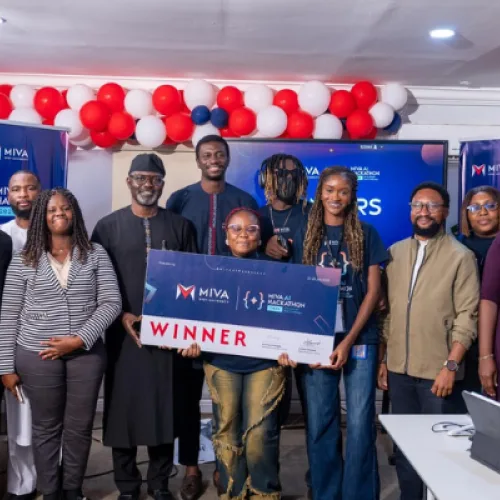
After the final presentations, Team Vector emerged as the overall winner of the competition. Team Cipher finished in second place, while Team Vertex secured third place.
Chisom Michael is a data analyst (audience engagement) and writer at BusinessDay, with diverse experience in the media industry. He holds a BSc in Industrial Physics from Imo State University and an MEng in Computer Science and Technology from Liaoning Univerisity of Technology China. He specialises in listicle writing, profiles and leveraging his skills in audience engagement analysis and data-driven insights to create compelling content that resonates with readers.

Comments
Start the conversation about this story.