





- Advertisement -
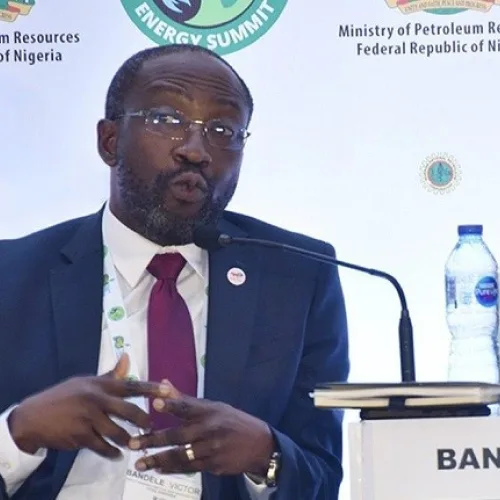
Nigeria’s improving fiscal environment and policy reforms are beginning to translate into real investments, with TotalEnergies advancing new gas and deepwater projects, expanding exploration activities, and creating fresh opportunities for Nigerian companies, the company’s Deputy Managing Director, Deepwater District, Mr. Victor Bamidele, has said.
Speaking during a high-level panel discussion at the ongoing 49th Nigeria Annual International Conference and Exhibition (NAICE 2026), organised by the Society of Petroleum Engineers (SPE) in Lagos on Tuesday, August 4, Bamidele said the country’s energy sector has entered a new phase where improved fiscal incentives are restoring investor confidence and accelerating project development.
he panel session, titled “Policy in Practice: Aligning Fiscal Strategy, Foreign Investment and Local Content for Sustainable Growth in Nigeria,” examined how government policies, investment frameworks and local content initiatives can collectively unlock sustainable growth across the petroleum industry.
Bamidele described the current period as a turning point for Nigeria’s oil and gas sector, noting that industry conversations have shifted from celebrating past achievements to discussing new investments that are becoming realities.
Reflecting on the industry’s recent history, he recalled that TotalEnergies had previously highlighted landmark projects such as Akpo and Egina, noting that while Akpo has continued production for more than 17 years and Egina achieved first oil in 2018, no new deepwater project had been brought onstream in Nigeria since then.
“Today, I am happy to speak about projects that have matured because of the shift in processes,” he said, attributing the renewed momentum to government reforms that strengthened fiscal incentives, particularly for natural gas development.
According to him, TotalEnergies responded by taking the Final Investment Decision (FID) on the Ubeta gas project in 2024, following improvements in the investment climate.
He disclosed that construction of the project is progressing steadily and is expected to commence production next year.
Bamidele also noted that Ubeta represents one of the company’s strongest demonstrations of Nigerian content, with numerous indigenous companies actively participating in its execution.
“The incentive improved, the project was sanctioned and the project will be delivered. This is the trend we are desperate to see in Nigeria,” he said.
Beyond Ubeta, he revealed that TotalEnergies is nearing the Final Investment Decision on the Ima project alongside its partners, with first production targeted for the fourth quarter of 2028.
The company is also intensifying work on the Preowei deepwater development while reviving offshore exploration after years of limited drilling activity.
Highlighting the renewed exploration drive, Bamidele announced that TotalEnergies will drill one deepwater exploration well before the end of this year and plans to drill two additional exploration wells in 2027.
The renewed exploration programme, he said, demonstrates growing confidence in Nigeria’s upstream potential and signals a return to long-term investment in offshore resources.
He urged Nigerian companies to position themselves strategically for the wave of projects expected to follow as more Final Investment Decisions are reached.
“This is your moment,” he told indigenous service providers and contractors.
“If you have projects that are taking FID, people just need to take position and be prepared for the big time.”
Bamidele stressed that the success and profitability of future developments will depend heavily on strong local participation, noting that several critical aspects of project execution can no longer rely on imported capabilities.
“There is no way to develop these projects profitably if we don’t have local participation,” he said, adding that the quality and competitiveness of Nigerian companies will play a decisive role in the delivery of future investments.
He also explained that favourable fiscal policies do more than improve project economics; they significantly strengthen Nigeria’s competitiveness when multinational companies seek internal approval for capital allocation.
According to him, securing funding for projects such as Preowei requires competing directly with investment opportunities in countries including Namibia, Angola and Uganda.
“When fiscal terms are improved and there is more visibility, we are empowered,” he said.
“Our projects compete with others across Africa. The outlook of the country is one of the most significant factors in attracting funding.”
Bamidele noted that Nigeria’s improved economic and investment outlook has positively influenced the willingness of shareholders, parent companies and project partners to commit capital to new developments.
“We are perceived to be in a healthier situation than we were a couple of years back,” he said.
He also commended the Society of Petroleum Engineers for sustaining professional engagement across the industry over the years, praising the association for continually attracting experienced professionals while nurturing industry growth.
His remarks reinforced the central message emerging from NAICE 2026 – that policy consistency, competitive fiscal incentives, strategic foreign investment and strong local content implementation are collectively restoring confidence in Nigeria’s petroleum industry and laying the foundation for a new cycle of upstream investment, exploration and sustainable growth.
Comments
Start the conversation about this story.