





In every successful economy, effective regulation provides confidence for investors and reassurance for consumers, and regulation is an essential responsibility of the government. It protects consumers from unsafe products, ensures fair competition, safeguards the environment and promotes accountability in business.
However, regulation stops being a public good when it becomes excessive, duplicative and expensive. Instead of protecting citizens, it begins to punish businesses, discourage investment and, ultimately, transfer the burden to consumers through higher prices and fewer choices, which is part of the dilemma confronting Nigeria today.
For years, manufacturers and business owners have complained about multiple taxes, overlapping agencies, conflicting directives and endless compliance requirements that consume time, money and managerial attention. According to the Manufacturers Association of Nigeria (MAN), some manufacturers contend with more than 60 different taxes and levies, alongside multiple registrations, duplicate tax stamps and repeated inspections by agencies performing similar functions.
The Federal Government’s recent commitment to simplify regulations and reduce administrative bottlenecks is therefore a welcome development. The promise to eliminate multiple taxation, simplify compliance and leverage technology represents an important shift in policy direction. But Nigerians have heard similar promises before, and what matters now is implementation.
The greatest victims of regulatory excess are often assumed to be businesses. While companies certainly bear the initial cost, the ultimate victims are consumers.
No manufacturer absorbs rising compliance costs indefinitely. Every additional permit, licence, inspection fee, delayed approval or duplicated levy eventually finds its way into the final price of goods and services. Consumers unknowingly pay for government inefficiency each time they purchase household products or other essentials. This partly explains why locally produced goods continue to become more expensive despite efforts by manufacturers to improve productivity.
Excessive regulation also reduces competition, as small and medium-sized enterprises (SMEs), which should be driving innovation and job creation, are often unable to cope with the financial and administrative burden of multiple regulatory requirements. Many remain informal, while others simply close shop.
When fewer businesses survive, consumers are left with fewer choices, reduced product innovation and weaker competition. Prices rise because there are fewer producers competing for customers, with consequences extending beyond supermarket shelves.
Investors, both local and foreign, are attracted to nations where rules are predictable, approvals are timely and compliance costs are reasonable. When Nigeria develops a reputation for regulatory uncertainty and administrative delays, investment naturally flows elsewhere. Factories that could have been established in Nigeria are built in competing African economies instead. The result is fewer jobs, lower industrial output and weaker economic growth.
“Consumer protection should equally evolve beyond revenue generation. Regulatory agencies should be measured by how effectively they improve product quality, food safety, environmental standards and market fairness, and not by the volume of penalties or fees they collect.”
Sadly, the government also loses, as excessive regulation often discourages business expansion and reduces profitability, thereby shrinking the very tax base the government seeks to expand. A company struggling under compliance costs pays less company income tax, generates less value-added tax and employs fewer workers who would otherwise contribute pay-as-you-earn taxes. In trying to regulate everything, the government may ultimately collect less revenue.
The ideal regulatory environment is not one without rules but one where regulations are smart, transparent, proportionate and predictable. Businesses should know exactly which agency regulates them, what standards they must meet and how long approvals will take. There should never be situations where multiple agencies demand separate registrations, conduct identical inspections or issue conflicting directives.
Technology should also eliminate unnecessary physical interactions between businesses and regulators. A single digital compliance portal, where companies can complete registrations, pay statutory fees, obtain approvals and monitor applications, would significantly reduce costs while limiting opportunities for corruption.
Equally important is stronger coordination among federal, state and local governments. Tax reforms introduced at the federal level cannot achieve their objectives if states continue imposing additional levies that defeat the spirit of simplification. Regulatory harmonisation must become a national priority rather than a federal aspiration.
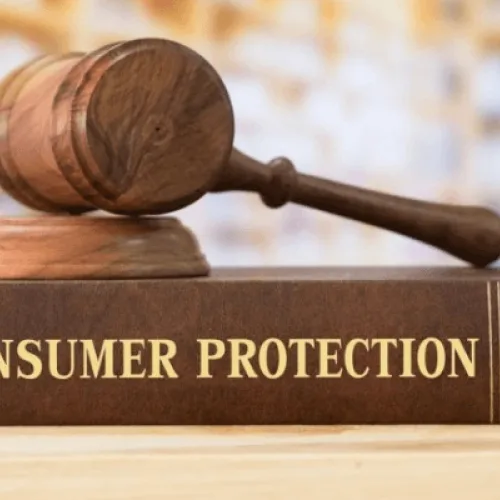
Consumer protection should equally evolve beyond revenue generation. Regulatory agencies should be measured by how effectively they improve product quality, food safety, environmental standards and market fairness, and not by the volume of penalties or fees they collect.
The government must also institutionalise regular regulatory impact assessments before introducing new rules. Every proposed regulation should answer: Will it improve public welfare? Will it increase production costs? Can existing agencies perform the same function without creating another layer of administrative bottleneck? If the costs outweigh the benefits, such regulations should not proceed.
Nigeria cannot regulate its way into prosperity, as the nation’s economic future depends on building an environment where businesses spend more time producing than filling forms, more money on innovation than compliance, and more energy serving customers than navigating bottlenecks.
For consumers, successful regulatory reform means more affordable products, greater competition, improved quality and stronger consumer protection. That is the ideal balance every modern economy should strive to achieve.

Comments
Start the conversation about this story.