





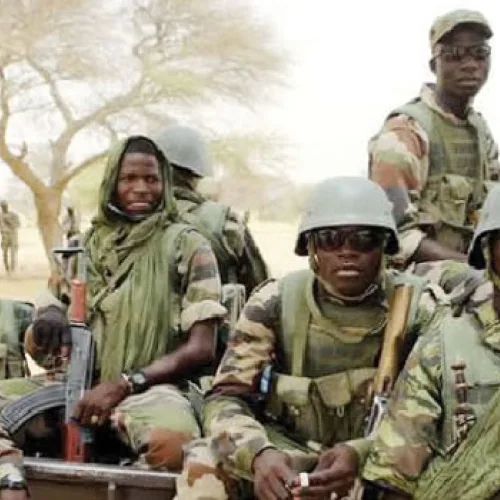
President Bola Ahmed Tinubu has approved a new salary structure for members of the Nigerian Armed Forces, increasing the pay of military personnel by between 30 and 80 percent in what the Federal Government describes as a major investment in troop welfare and national security.
The salary adjustment, announced by the President’s Special Adviser on Information and Strategy, Bayo Onanuga, is scheduled to take effect from September 1, 2026. The review will affect about 250,000 active military personnel, with junior ranks receiving the highest percentage increase.
Under the new structure, soldiers from the rank of Private to Staff Sergeant will receive an 80 percent salary increase, while mid-level officers, including Warrant Officers to Colonels, will receive a 50 percent adjustment. Senior officers, from Brigadier-General to General, will see their salaries increase by 30 percent.
Government estimates indicate that the review will raise the annual military wage bill from about ₦660 billion to approximately ₦924 billion, representing an additional ₦264 billion in personnel costs.
The Federal Government said the pay review is aimed at improving the welfare of military personnel, particularly those serving in frontline operations against insurgents, terrorists and armed bandits across different parts of the country.
President Tinubu said the administration remains committed to supporting members of the Armed Forces and strengthening Nigeria’s security architecture.
“The men and women who help to keep us safe in our homes must be supported and appreciated in the course of their duties to our nation,” the President said. “Our administration will continue to prioritise troop welfare and modernise the armed forces.”
Security experts have largely welcomed the salary increase, describing it as a positive step toward improving morale, retaining experienced personnel and reducing financial pressures that often affect soldiers and their families.
According to analysts, better remuneration could help reduce attrition within the military and minimise the temptation for corrupt practices, particularly among personnel deployed in high-risk operational areas.
However, many experts argue that improved salaries alone will not significantly alter Nigeria’s security situation without corresponding investments in operational capacity.
They note that the Armed Forces continue to face challenges such as inadequate surveillance technology, shortages of modern equipment, limited armoured vehicles, intelligence gaps and logistical constraints that affect the effectiveness of military operations.
Retired military officers say improving troop welfare must go hand in hand with sustained investment in weapons procurement, intelligence gathering, reconnaissance drones, medical evacuation systems and inter-agency coordination.
“Better pay is important because it improves morale and gives soldiers confidence that their welfare is being considered,” said retired military strategist Col. James Danjuma. “But salary increases alone cannot defeat insurgency or banditry. Troops also need modern equipment, reliable intelligence and efficient logistics to carry out their duties effectively.”
Public affairs analysts also believe the success of the policy will ultimately be measured by improvements in security across the country rather than the size of the salary increase.
As the September implementation date approaches, many Nigerians will be watching closely to see whether the enhanced welfare package translates into improved military performance, safer highways, reduced attacks on rural communities and greater progress in the fight against insurgency, banditry and other security threats.
While the pay review has been widely welcomed as long overdue, observers say its full impact will depend on whether it is accompanied by broader reforms aimed at strengthening the operational capacity of the Nigerian Armed Forces and improving the country’s overall security architecture.
Comments
Start the conversation about this story.