





- Advertisement -
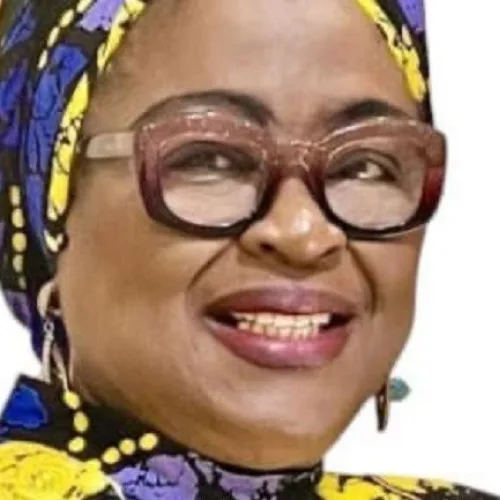
Africa’s maritime and Blue Economy future will be determined not by the abundance of its ocean resources but by its ability to develop investment-ready, environmentally responsible and commercially viable projects, leading Blue Economy expert, Dr. Felicia Chinwe Mogo, declared during a high-level international webinar ahead of the Strategic Green Maritime and Blue Economy Training Workshop scheduled for October in Accra, Ghana.
Addressing policymakers, regulators, investors, development practitioners and maritime professionals from across Africa, Dr. Mogo challenged governments and private sector stakeholders to move beyond policy declarations and embrace Environmental, Social and Governance (ESG) principles as the foundation for transforming marine assets into sustainable economic opportunities.
The webinar marked the second in a strategic pre-workshop knowledge series designed to prepare stakeholders for the Executive Management Training Workshop on “Navigating the Future of Maritime Sustainability for African Development,” taking place from October 14–16, 2026, in Accra, Ghana. It builds on the momentum of the inaugural webinar headlined by renowned maritime policy expert Dr. Dakuku Peterside, who established Green Maritime as a strategic business imperative – a competitive advantage rather than merely a compliance obligation.
While the first engagement challenged governments and industry leaders to rethink the future of maritime competitiveness, the latest webinar advanced the conversation by demonstrating how ESG frameworks, strategic partnerships and bankable business models can transform that vision into investable projects capable of accelerating sustainable Blue Economy development across Africa.
Opening the webinar, Professor Chidi Magnus Onuoha – a United Nations accredited expert, Professor of climate change and green economics – described the Blue Economy as Africa’s next major frontier for economic transformation; noting that the continent possesses enormous untapped marine resources capable of driving inclusive growth, employment and industrial development if managed sustainably.
Delivering the keynote presentation, Dr. Mogo – an internationally recognised authority on marine environmental governance and Blue Economy development – explained that the Blue Economy should no longer be viewed as a single sector but as an integrated development platform that connects environmental stewardship, investment, innovation and economic prosperity.
“Environmental, Social and Governance frameworks are no longer optional, they are becoming the language of investment,” she said. “Countries and businesses that fail to integrate ESG into their maritime development strategies risk being left behind in the emerging global Blue Economy.”
She stressed that investors increasingly seek projects that demonstrate sound governance, environmental responsibility and measurable social impact, making ESG integration critical to attracting finance for ports, coastal infrastructure, fisheries, shipping, marine tourism and other ocean-based industries.
According to Dr. Mogo, successful Blue Economy development depends on strong collaboration between governments, private investors, development institutions and coastal communities, with each playing complementary roles in creating sustainable value while protecting marine ecosystems.
She further urged African governments to shift from isolated infrastructure development towards integrated business models capable of generating multiple revenue streams, creating quality jobs and attracting long-term investment.
Drawing lessons from countries such as Seychelles and Indonesia, Dr. Mogo highlighted how credible governance structures, strategic planning and ESG-aligned financing have enabled nations to secure innovative funding mechanisms, including Blue Bonds, while strengthening ocean resilience and economic competitiveness. She noted that Africa possesses similar opportunities but must improve project preparation, institutional coordination and investment readiness to unlock them.
The webinar represented the next phase of the strategic dialogue initiated during the inaugural session. Having established that Green Maritime is not simply about regulatory compliance but a strategic driver of competitiveness, innovation and long-term business resilience, the discussion shifted to the practical question confronting governments and businesses alike: How can that vision be translated into commercially viable projects capable of attracting investment, creating jobs and delivering measurable environmental and economic value?
Dr. Mogo’s presentation answered that question by demonstrating how ESG-centred governance, multi-stakeholder collaboration and disciplined project structuring provide the pathway from policy ambition to sustainable economic outcomes.
A major outcome of the webinar was a proposition to allocate a session of the October Executive Management Workshop for deep-dives into helping participants transform marine resources into bankable business models capable of attracting investors and development finance.
Participants will work directly with an international consortium of experts to identify viable maritime investment opportunities, structure commercially sustainable projects, strengthen ESG integration, develop financing strategies and improve implementation frameworks.
The workshop will also provide a platform for governments, businesses, entrepreneurs and project developers to present live projects for technical review, refinement and strategic guidance from leading Blue Economy specialists.
Speaking at the close of the webinar, moderator and Convener Sam Nwosu described the programme as a deliberate journey from thought leadership to implementation.
“The webinar series has been intentionally designed as a strategic learning journey,” he said. “Our inaugural session established Green Maritime as a strategic business imperative and a source of competitive advantage. This second engagement has focused on the governance, investment and business frameworks required to translate that vision into commercially viable opportunities. By October, participants will move beyond theory to practical project development – equipped with the tools, expert guidance and strategic partnerships needed to structure bankable projects, mobilise investment and deliver measurable impact.”
Participants described the session as a timely intervention that reinforced the importance of bold leadership, innovation, strategic partnerships and institutional capacity in positioning Africa’s maritime sector for sustainable growth and global competitiveness.
The October Executive Management Training Workshop is expected to bring together policymakers, regulators, maritime authorities, investors, development finance institutions, academics and private sector leaders from across Africa for intensive executive-level sessions, live project clinics and practical case studies designed to accelerate sustainable maritime transformation.
Together, the pre-workshop webinar series is evolving into far more than a sequence of conversations. It is building a continental community of practice committed to repositioning Africa’s maritime sector as a globally competitive, investment-ready and sustainability-driven engine of economic growth. From establishing Green Maritime as a strategic business imperative, to embedding ESG into investment and governance frameworks, and ultimately to developing bankable Blue Economy projects, the initiative is laying the intellectual, institutional and commercial foundation for a new era of African maritime leadership.
Comments
Start the conversation about this story.