





- Advertisement -
A coalition of more than 50 environmental and civil society organisations has called on the Federal Government of Nigeria to abandon any plans to resume oil exploration in Ogoniland, insisting that the region’s priority should be environmental restoration rather than renewed petroleum production.
The groups issued the call amid reports that Dutchford Exploration and Production Company Limited had emerged as the successful bidder for the Yorla South oil field in Khana Local Government Area of Rivers State. They described the development as a dangerous step that could reopen decades-old environmental wounds in the Niger Delta instead of addressing the pollution and ecological devastation left by previous oil operations.
In a strongly worded statement titled “Don’t Reopen the Wells – Decommission, Clean Up and Restore Ogoniland,” the organisations argued that reopening dormant oil wells before completing remediation efforts would amount to sacrificing the health, livelihoods and future of Ogoni communities for short-term economic gains.
“We are unequivocal: Do not reopen the wells. Decommission them. Clean them up. Restore the land. Protect the people. Ogoniland has suffered enough,” the coalition declared.
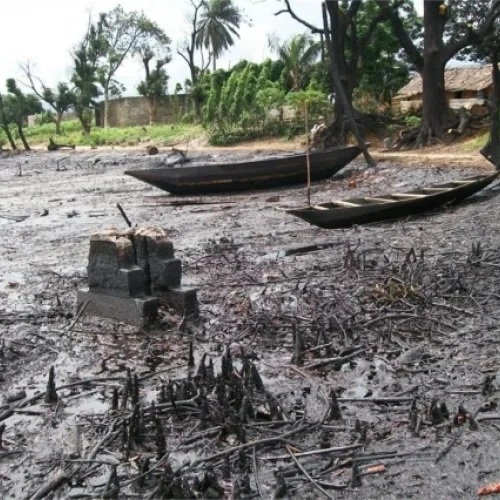
The activists recalled that Ogoniland has endured decades of oil pollution, contaminated farmlands and rivers, degraded ecosystems, gas flaring and social conflict arising from petroleum extraction. They maintained that the solution to the region’s environmental crisis is restoration rather than a return to oil production.
According to the coalition, the reported move to resume production at Yorla South contradicts the landmark findings of the United Nations Environment Programme (UNEP), which documented widespread environmental contamination across Ogoniland and recommended comprehensive clean-up and remediation before any further development.
The organisations also cited the unresolved oil spill in Kpean community, host to several Yorla oil wells, as evidence that existing environmental liabilities remain unattended. They alleged that crude oil escaping from a dormant wellhead in August 2025 contaminated farmland, streams and sources of drinking water, while a subsequent spill further worsened conditions for residents.
They said many affected communities continue to face loss of livelihoods, polluted water sources and health concerns without meaningful clean-up, compensation or medical support. Restarting production under such circumstances, they argued, would expose ageing infrastructure to additional risks and increase the likelihood of fresh spills and environmental disasters.
Drawing parallels with other pollution incidents in the Niger Delta, the coalition warned against creating “another Ororo-1” or extending the environmental impacts associated with prolonged gas flaring and hydrocarbon pollution witnessed in communities such as Okrika and Bille.
“The Niger Delta has seen what happens when warnings are ignored,” the statement noted, cautioning that Ogoniland must not become another example of environmental neglect caused by ageing and poorly managed oil infrastructure.
Instead of approving new oil production, the groups urged the Federal Government to prioritise full implementation of environmental restoration programmes, including remediation of contaminated soils, rehabilitation of creeks, protection of public health, restoration of livelihoods and accountability for polluters.
The coalition further demanded an immediate moratorium on any attempt to restart production at Yorla South until several conditions are met. These include an independent environmental assessment of the oil field and surrounding communities, complete remediation of the Kpean spill, public disclosure of licence details and ownership, comprehensive environmental and social impact assessments, meaningful consultation with affected communities, assessment and decommissioning of ageing infrastructure, transparent environmental monitoring and a legally enforceable framework for addressing historical and future environmental liabilities.
Referencing the international “Ogonize and Yasunize” campaign championed by Oilwatch International and the Health of Mother Earth Foundation (HOMEF), the organisations argued that Ogoniland has become a global symbol of community resistance against environmentally destructive fossil fuel extraction.
They warned that reopening the Yorla wells would undermine decades of advocacy and send the wrong signal to communities worldwide seeking to protect ecologically sensitive territories from fossil fuel development.
The statement concluded with a call on government, industry and the international community to invest in environmental restoration rather than renewed oil extraction.
“Ogoniland has given enough. Its people have suffered enough. Its rivers have carried enough oil. Its soil has absorbed enough poison. The future of Ogoniland must not be another oil boom—it must be a restoration boom. Ogoniland does not need another barrel of crude. Ogoniland needs justice,” the coalition stated.
The statement was jointly endorsed by 51 organisations, including Oilwatch International, the Health of Mother Earth Foundation (HOMEF), Environmental Rights Action/Friends of the Earth Nigeria (ERA/FoEN), Corporate Accountability and Public Participation Africa (CAPPA), Policy Alert, Amazon Watch, Oilwatch Africa, Oilwatch Nigeria, Kebetkache Women Development and Resource Centre, and several other environmental justice organisations across Africa, Latin America and Europe.
Comments
Start the conversation about this story.