






A major milestone has been recorded with the successful introduction of premium food products into the United Kingdom market, marking a significant step in the company’s international expansion and projecting the rich agricultural heritage of Ogoja, Cross River state, into the global stage.
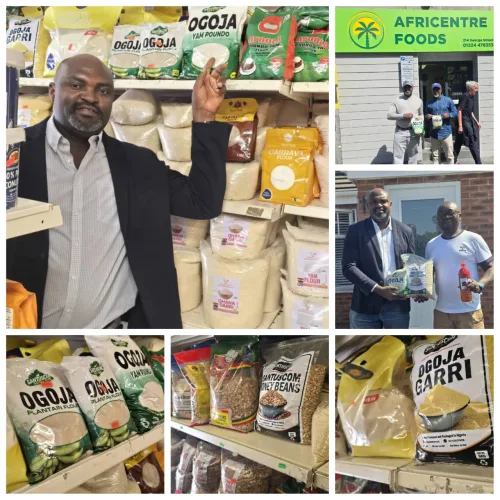
The official launch commenced in England, was subsequently extended to Wales, Scotland and Northern Ireland, with Santuscom Foods products now available in major departmental stores across the United Kingdom.
The products making their debut in the UK market include Ogoja Yam Pando, Ogoja Garri, Ogoja Plantain Flour, Ogoja Palm Oil and Santuscom Honey Beans, all processed and packaged to meet international standards.
Chairman and Chief Executive Officer of Santuscom Foods Ltd, Chief Paul Santus Ofana, described the successful exportation of the company’s products as a landmark achievement for the business and a proud moment for the people of Ogoja, Cross River State and Nigeria.
He said the reception in the UK had been encouraging, particularly for the company’s unripe plantain flour, which has attracted considerable interest among health-conscious consumers.
“At Dulwich Hospital in South East London, our unripe plantain flour is already in high demand because of its recognised health benefits. It is particularly sought after by elderly people and others managing high blood pressure, diabetes, gastrointestinal disorders, indigestion and weight management. The market here is responding very positively to our Ogoja unripe plantain flour,” Chief Ofana said.
He reaffirmed Santuscom Foods’ commitment to maintaining the highest quality standards while expanding access to wholesome and nutritious food products from Ogoja to international markets.
Beyond celebrating a business success, the company’s entry into the United Kingdom market represents an important example of Nigeria’s growing capacity to add value to agricultural produce and compete in international markets. The development aligns with the country’s drive to diversify its economy, reduce dependence on crude oil and increase non-oil exports as a sustainable source of foreign exchange earnings.
Experts have consistently maintained that export-led industrialisation remains one of the most effective pathways for strengthening the Nigerian economy. As Director-General of the World Trade Organisation, Dr Ngozi Okonjo-Iweala, aptly observed, “Trade is the engine of growth. If we do not export, we will continue to import poverty.”
The export of processed agricultural products such as Ogoja Garri, Yam Pando, Plantain Flour, Palm Oil and Honey Beans demonstrates how local agricultural value chains can generate foreign exchange while creating employment opportunities across farming, processing, packaging, transportation and logistics.
Economists note that increased exports contribute to foreign exchange inflows, helping to ease pressure on Nigeria’s external reserves and supporting long-term currency stability. While no single company can determine the value of the naira, sustained growth in non-oil exports from businesses such as Santuscom Foods adds to the broader effort to strengthen the country’s export base and improve its balance of trade.
For Cross River state, the breakthrough presents enormous opportunities. Greater international demand for locally processed food products has the potential to stimulate agricultural production, attract private investment into agro-processing, create jobs for young people and women, improve rural incomes and position the state as a leading agro-export hub in Nigeria.
The success of Santuscom Foods also highlights the enormous untapped potential of Ogoja’s agricultural economy. With fertile land and abundant production of cassava, yam, plantain, palm produce and other crops, the area is well positioned to become a major centre for value-added food processing serving domestic and international markets.
Analysts believe that replicating such success across the country could significantly boost Nigeria’s non-oil exports. If more indigenous companies are supported to process agricultural products for export, the country stands to earn more foreign exchange, expand its manufacturing base and reduce dependence on imported goods.
To unlock this potential, stakeholders have called for improved access to affordable financing through institutions such as the Bank of Industry, Bank of Agriculture and the Nigerian Export-Import Bank, alongside faster product certification, improved transport infrastructure, efficient port operations and export-friendly policies that enable Nigerian businesses to compete globally.
Cross River state could further consolidate its comparative advantage by strengthening agro-processing infrastructure, improving road networks linking farming communities to export corridors, enhancing electricity supply and promoting investment in storage and logistics facilities. Such measures would enable more locally produced goods to reach international markets while increasing incomes for farmers and processors.
The African Continental Free Trade Area (AfCFTA) also presents a vast opportunity for companies such as Santuscom Foods to expand beyond Europe into Africa’s integrated market of more than 1.3 billion people. Success in the United Kingdom could provide a springboard for future expansion into other international markets, including North America and continental Europe, where demand for authentic African food products continues to grow.
Industry observers say the achievement sends a strong message that Nigerian businesses can compete successfully on the global stage when they invest in quality, innovation, modern processing and international certification.
For thousands of farmers supplying raw materials, the company’s expansion translates into increased market opportunities, higher demand for agricultural produce and improved livelihoods. As exports grow, the benefits extend beyond individual businesses to local communities through job creation, increased household incomes and stronger economic activity.
The successful debut of Santuscom Foods in the United Kingdom therefore represents more than the international launch of a food brand. It is a testament to the power of entrepreneurship, value addition and export-driven growth. It demonstrates that products cultivated and processed in Ogoja can earn global recognition, contribute to Nigeria’s non-oil export earnings and reinforce Cross River State’s growing reputation as a centre for quality agricultural production.
This has shown that when local enterprise is matched with international standards, Nigerian products can compete confidently on the shelves of the world’s leading markets, offering fresh hope for economic diversification, sustainable job creation and long-term national prosperity.
Comments
Start the conversation about this story.