




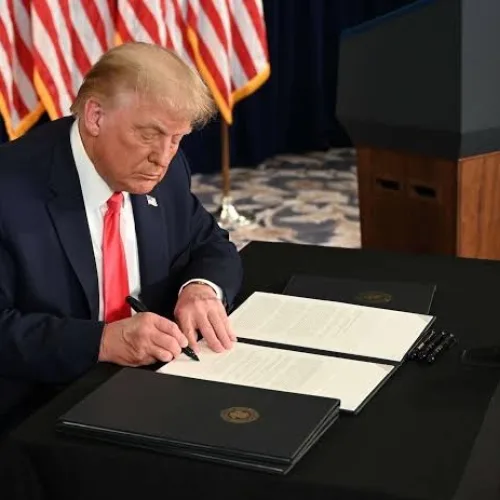
US President Donald Trump has signed two executive orders in a second attempt to scale back American birthright citizenship.
The move comes weeks after the Supreme Court shot down his previous attempt to eliminate the right.
The executive orders, signed on Thursday, include one that expands the existing definitions of non-citizens whose children are not eligible for birthright citizenship while the second order bans what the Trump administration calls “birth tourism” — the practice of pregnant mothers going to the US using non-immigrant visas to give birth so that their babies will be citizens.
The first order restricts birthright citizenship for children born in the US even to legal foreign residents, including diplomats and employees of international organisations.
The order could also affect people born in US territories, should congress enact a proposed law to end automatic citizenship there. Birthright citizenship for people born in US territories such as Puerto Rico is codified by federal statute.
Ending birth tourism has long been a priority of the Trump administration since the president came into power last January. Though the US has repeatedly issued warnings against the practice, the second executive order attempts to legalise the ban.
Birth tourism, according to the White House, is also any effort by any foreign national to facilitate the entry of another foreigner into the US for the purpose of giving birth on American soil.
The executive order empowers the Secretary of State to enforce actions that prevent birth tourism, including a permanent entry ban for erring foreigners.
“This should have happened years ago, but we’re taking care of it now,” Trump said.
On June 30, the US Supreme Court struck down Trump’s previous executive order seeking to limit birthright citizenship.
In a 6-3 ruling, the court held that the US Constitution guarantees citizenship at birth to children born in the country, including those whose parents are undocumented immigrants or are residing in the United States on a temporary basis.
Trump said the judges whom he appointed but who voted against him were “stup!d people”, and on Thursday, added that the court’s ruling was a “very unfortunate decision”.
The president’s new orders are likely to face fresh legal challenges.
Click to signup for FREE news updates, latest information and hottest gists everyday
Advertise on NigerianEye.com to reach thousands of our daily users

Comments
Start the conversation about this story.