





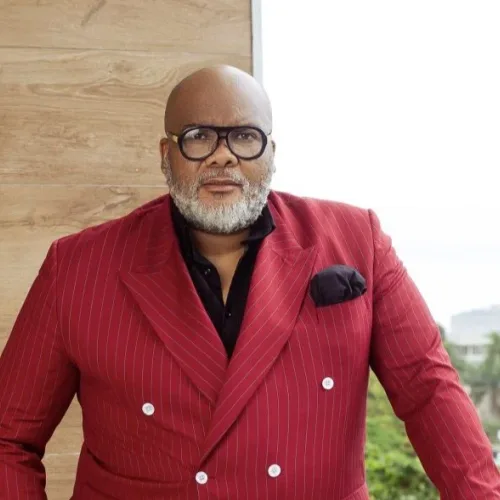
File: Consul-General of South Africa to Nigeria, Prof Bobby Moroe.
The South African Consul-General to Nigeria, Prof Bobby Moroe, has dismissed reports that President Bola Tinubu snubbed a South African delegation during a recent diplomatic engagement, describing the claims as false.
He also warned that misinformation could undermine relations between both countries.
The clarification follows the recent visit of a special delegation from South African President Cyril Ramaphosa to Nigeria over renewed concerns about xenophobic attacks on Nigerians in South Africa.
Tinubu had reportedly declined to receive the delegation, directing the team to meet instead with the Minister of State for Foreign Affairs, Amb Sola Enikanolaiye.
The development sparked reports that the Nigerian President had snubbed the South African delegation.
Speaking in an exclusive interview with The PUNCH in Lagos on Wednesday, Moroe said reports claiming that South Africa’s Minister of International Relations and Cooperation was snubbed by Tinubu misrepresented what transpired.
The envoy noted that narratives on social media often distort realities on the ground in both Nigeria and South Africa.
He said, “You saw my article on the danger of falsehood. This was after the report on the manner in which our Minister of International Relations was treated and that he was snubbed.
“I did indicate and emphasise that it was not a snub. If anything, it was a great opportunity to engage with the Minister of State for Foreign Affairs.”
Moroe added that perceptions created by social media often differed from the realities in both countries.
“It is very difficult to control perception, especially with the advent of social media and mainstream media.
“Go to social media and check what is being said there, then visit places like Lekki, Ikoyi and other parts of Lagos.
“You will walk freely without hindrance, but the impression created online is that the situation is highly volatile. It is only volatile on social media, and I think the same applies in South Africa.
“You look at how people portray the altercations between Nigerians and South Africans, but as a visitor, tourist or businessman, if you arrive in South Africa, you can move freely in many cities without harassment, whether you are Nigerian or not.
“Yet, the negative narrative persists. We have to be careful about fake news. Fake news is real, and it destroys relationships,” Moroe said.
Nigeria and South Africa maintain one of Africa’s largest bilateral relationships, with strong ties in trade, investment, diplomacy and migration.
However, the relationship has repeatedly come under strain following recurring xenophobic attacks on foreign nationals in South Africa, particularly Nigerians, prompting diplomatic protests and public outrage in Nigeria.
Despite the challenges, Moroe stressed the need for continued engagement between countries rather than allowing misinformation and isolated incidents to define their relationship.
He said, “As a diplomat, my responsibility is to strengthen relations between South Africans and Nigerians, and we will never be tired of doing that regardless of the circumstances.
“These are two critical economies, and the entire continent looks up to us as examples. If there is a challenge within a family, family members do not walk away because the problems will remain. Engagement is ongoing, and we look forward to strengthening these relationships.”
Comments
Start the conversation about this story.