





World Breastfeeding Week, observed annually from August 1 to 7, was marked in Ikorodu West Local Council Development Area (LCDA), Lagos, with a renewed call for communities to support mothers beyond the delivery room.
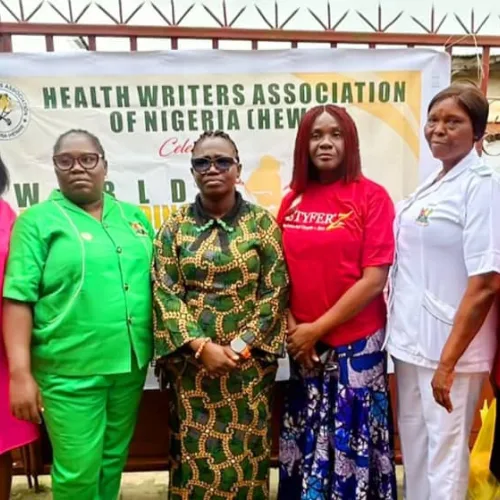
The event, organised by the Health Writers Association of Nigeria (HEWAN) in collaboration with the Lagos State Health District II, at the Majidun Primary Health Care Centre, brought together health professionals, mothers and community stakeholders to highlight the foundations of successful breastfeeding.
While breastfeeding campaigns often focus on infants, speakers at the event argued that the health of a baby starts with the health of the mother.
Addressing the mothers in her keynote address, HEWAN President, Vivian Ihechu, explained the essence of the World Breastfeeding Week, which informed the association’s decision to organise the sensitisation programme for mothers.
She explained that breastfeeding lowers long-term risks of breast and ovarian cancers, type 2 diabetes and high blood pressure, while fostering a deep emotional bond through skin-to-skin contact.
“This is precisely why governments, international bodies and NGOs constantly champion breastfeeding. It is a powerful public health strategy that reduces infant mortality, cuts family medical bills, and builds a healthier, stronger nation,” she stated.
Delivering her address, the Medical Officer of Health, Ikorodu West LCDA, Dr Opeyemi Osunyomi, said breastfeeding extends beyond feeding a child and requires proper maternal nutrition, emotional well-being, hygiene and family support.
“A mother’s nutritional status directly affects the quality and quantity of breast milk,” she said, encouraging women to rely on balanced diets prepared from affordable, locally available foods.
According to her, “Fish, eggs, vegetables, fruits, carbohydrates and other locally sourced foods can provide the nutrients required for healthy breastfeeding when consumed in the right proportions.”
She described breast milk as “one of the greatest gifts a mother can give her child,” stressing that colostrum—the first milk produced after childbirth—is “a baby’s first natural vaccine” because it is rich in antibodies that protect newborns against infections.
She warned against the cultural practice of discarding colostrum, describing it as “the most nutritious and protective form of breast milk.”
Beyond nutrition, Dr Osunyomi highlighted the importance of emotional health, noting that stress can interfere with successful breastfeeding. She urged mothers to seek support instead of struggling alone.
“Do not suffer in silence,” she advised. “Share your concerns with trusted family members, friends, religious leaders or healthcare professionals.”
She also challenged the notion that childcare rests solely on mothers, encouraging fathers to participate actively from infancy to strengthen emotional bonds with their children.
The medical officer further cautioned against self-medication during pregnancy and breastfeeding, warning that some drugs and herbal preparations could endanger both mother and baby. She urged women to seek professional medical advice whenever they are ill.
Continuing the conversation on breastfeeding, Co-Founder of She Arises Foundation, Mrs Ifeoma Ibe, described breastfeeding as a powerful tool for building lifelong emotional bonds between mothers and their children.
According to her, breastfeeding should begin immediately after delivery because newborns are naturally wired to suckle.
“Breastfeeding is more than feeding a baby; it is an opportunity to hold your child close, maintain eye contact, speak words of love, pray over them and make them feel safe and secure,” she said.
Mrs Ibe reiterated the recommendation for exclusive breastfeeding during the first six months of life, warning against giving babies water or other foods. “Breast milk contains over 80 per cent water alongside all the nutrients a baby needs for healthy growth and development,” she noted.
Drawing from her personal experience, she shared how she continued breastfeeding after returning to work, describing breast milk as a unique source of comfort and security for her child.
She also encouraged mothers to eat balanced meals prepared from affordable local foods and to seek professional or family support whenever they experience breastfeeding challenges rather than struggling in silence.
Chief Nursing Officer and Matron of Majidun Primary Health Care Centre, Mrs Janet Ota, urged mothers to embrace exclusive breastfeeding, describing it as a cost-effective practice with lifelong health benefits for both mother and child.
She noted that breast milk is naturally designed for infants, making it easier to digest than artificial formula while providing complete nutrition during the first six months of life.
“Breast milk is cheap, easily digested and helps to build the baby’s natural immunity,” she said.
Mrs Ota explained that exclusive breastfeeding also benefits mothers by helping the womb contract after childbirth and lowering the risk of certain cancers.
She further stressed that breastfeeding should begin within 30 minutes after delivery and be complemented with routine immunisation.
“Exclusive breastfeeding and complete immunisation must go together so that the baby develops mentally, physically and grows into a healthy child,” she said.
Please follow and like us:
Comments
Start the conversation about this story.