





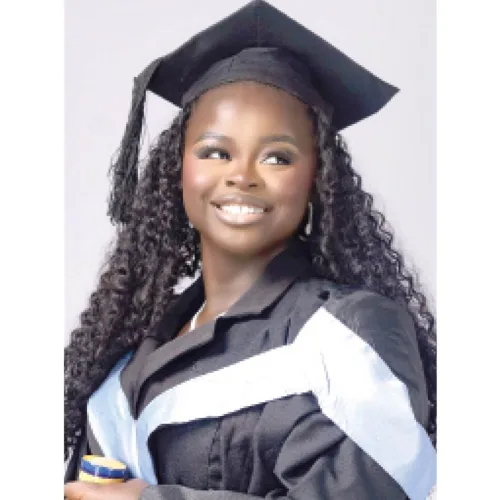
Uchenna Gloria Ignatius graduated with a First Class from the Department of History and International Studies at Adeleke University, Osun State, for the 2025-2026 session. Finishing with a Cumulative Grade Point Average (CGPA) of 4.95 on a scale of 5.0 made her the best graduating student in the department and faculty. In this interview by TEMITOPE OKEDIYA, she speaks on her academic journey, among other things.
What was your childhood education and interests like?
Growing up, I was naturally curious. I enjoyed learning, asking questions, and trying to understand why things happened the way they did. That curiosity eventually developed into a deep interest in history and the relationships between nations. My parents and teachers encouraged me to value education, and those early lessons shaped the person I am today.
My journey through school was rewarding, but it was not always easy. There were moments of pressure, demanding academic schedules, and responsibilities that sometimes seemed overwhelming. Yet, every challenge taught me something valuable about perseverance and self-belief.
University became a place where I discovered the strengths I never knew I had. Beyond the classroom, I learned how to lead, communicate effectively, and work with people from different backgrounds. Serving my classmates and faculty while maintaining my academic performance required sacrifice, but it also became one of the most fulfilling parts of my journey. Looking back today, I am grateful for every experience — the successes, the setbacks, and the lessons they brought. They all contributed to the person I have become and prepared me for the opportunities ahead.
Looking back, how would you describe your university journey and experience?
Looking back, my university journey was much more about earning a degree; it was about discovering my potential, serving others, and growing into a better version of myself. I had the privilege of serving as the course representative of my class throughout my time in school and later as the academic director of my faculty. Those experiences taught me that leadership is about listening, responsibility, and making a positive difference. Graduating as the class valedictorian remains one of the proudest moments of my life because it represents years of determination, discipline, and faith. I believe learning never ends, and I look forward to using my knowledge and experiences to contribute meaningfully to society.
Why study History and International Studies, and not another course?
History has always fascinated me because it helps us understand the present by learning from the past. When I discovered History and International Studies, I realised it was the perfect combination of my interests. I wanted to understand how historical events influence politics, diplomacy, economies, and international relationships. Throughout my studies, I came to appreciate that history is far more than dates and events. It is about people, decisions, and the consequences that shape nations. The programme challenged me to think critically, research carefully, and communicate ideas clearly.
Choosing this course has strengthened my passion for research, public service, and international affairs. It has given me a broader perspective on Nigeria’s place in the world and inspired me to pursue opportunities where I can contribute to national development through knowledge, leadership, and informed decision-making.
What is your final-year project about and its findings?
My final-year project examined Nigerian-British economic diplomacy, 1960–1999, exploring how the economic relationship between both countries evolved after Nigeria gained independence. The study focused on major government policies, diplomatic engagements, trade relations, and the economic realities that shaped bilateral cooperation over nearly four decades. Beyond understanding historical events, I wanted to examine how those developments continue to influence contemporary economic and diplomatic relations.
Conducting the research required extensive reading, critical analysis, and careful evaluation of historical sources. It challenged me to think objectively and appreciate the importance of evidence in historical research. Perhaps the most rewarding part of the project was discovering how decisions made decades ago still influence present-day realities.
The research strengthened my analytical and writing skills while deepening my interest in diplomacy, economic history, and public policy. It also reinforced my belief that history provides valuable lessons for addressing today’s national and global challenges.
How did you balance academics with extracurricular activities?
Balancing academics with leadership responsibilities required discipline and careful planning. I understood from the beginning that if I wanted to succeed in both areas, I had to manage my time wisely. I created schedules, set priorities, and made sure my academic work was never neglected. Whenever leadership responsibilities increased, I adjusted my study routine rather than abandoning it. I also learned the importance of resting, staying organised, and avoiding unnecessary distractions.
Rather than seeing extracurricular activities as obstacles, I viewed them as opportunities to develop skills that the classroom alone could not provide. They improved my confidence, communication, teamwork, and problem-solving abilities while complementing my academic growth.
What habits contributed to your academic success?
If I had to choose one habit that made the greatest difference, it would be consistency. I learned early that success is built gradually through daily effort rather than occasional bursts of hard work. Instead of waiting until examinations approached, I made studying a regular part of my routine. I also developed the habit of planning my time carefully. Because I was actively involved in student leadership, I knew I had to be intentional about balancing my responsibilities without compromising my academics. I did not joke with attendance. You would find me in every lecture room. I take notes when I am supposed to. I listened attentively to my lecturers and asked questions when I was confused.
Another habit that helped me was staying curious. I enjoyed reading beyond lecture notes, asking questions, and exploring different perspectives. Finally, I learned not to be discouraged by temporary setbacks. Every disappointing result became motivation to work harder rather than a reason to give up.
Those simple habits — consistency, discipline, curiosity, and perseverance became the foundation of my academic success.
Any awards or notable achievements for your stellar academic or leadership endeavours?
Leadership became one of the defining parts of my university experience. I served as the course representative throughout my undergraduate years and later as the academic director of my faculty. These positions gave me the opportunity to represent students, solve problems, and contribute to academic development within the faculty.
Academically, graduating as the class valedictorian remains my greatest achievement. It was a deeply humbling experience because it reflected years of commitment, discipline, and resilience rather than a single moment of success. Over the course of my four-year stay in school, I received many academic and social awards, including the most influential and popular female awards.
More than the awards themselves, I value the trust that my classmates and lecturers placed in me. Their confidence inspired me to give my best and reminded me that true leadership is measured by service and positive impact.
Describe one memorable experience during your university journey.
One moment I would never forget was standing before my classmates, lecturers, family, and friends to deliver my valedictory speech on graduation day. As I looked across the audience, I realised that every person present had been part of the journey in one way or another. It was more than giving a speech. It was an opportunity to celebrate years of hard work, friendships, sacrifices, and shared dreams. I found myself reflecting on how quickly the years had passed and how every challenge had prepared us for that moment.
Walking off the stage, I felt a deep sense of gratitude. It reminded me that success is never achieved alone. Behind every achievement are people who encourage, support, teach, and believe in you. That moment would remain one of the most meaningful memories of my university life.
What challenges did you face and how did you overcome them?
Like many students, I experienced moments when balancing everything felt almost impossible. Combining academics with leadership responsibilities meant there were days filled with lectures, meetings, assignments, and deadlines, all at once. At times, the pressure was exhausting. There were also moments when I questioned whether I was doing enough or whether all the hard work would eventually be worth it. Those moments tested my confidence, but they also strengthened my resilience.
Instead of allowing those challenges to discourage me, I became more intentional about managing my time and setting priorities. I learned to plan, remain organised, and seek guidance whenever I needed it. Equally important was the encouragement I received from my family, friends, lecturers, and my faith in God, which constantly reminded me to keep moving forward.
Today, I realise that the difficult moments were just as important as the successful ones. They taught me patience, discipline, and the importance of remaining focused even when the finish line seemed far away. Those lessons will continue to guide me long after graduation.
ALSO READ: Oloolu festival: Palace speaks on TikToker’s alleged ordeal after recording procession
What are your career aspirations?
As I begin this new chapter, I hope to build a career that combines research, leadership, and public service. I am particularly interested in diplomacy, policy development, and international relations, where I believe historical knowledge can contribute to solving contemporary challenges.
I also plan to pursue postgraduate studies to expand my expertise and continue developing as a researcher. Ultimately, my goal is to contribute to Nigeria’s development while representing excellence, integrity, and professionalism in whatever role I occupy.
Success, to me, is not simply about personal achievement. It is about using knowledge and experience to create opportunities, inspire others, and leave a meaningful impact.
What advice would you give younger students?
Never underestimate the power of consistency. You do not have to be the smartest person in the room to succeed, but you must be willing to keep showing up, learning, and improving every day. Take your studies seriously, ask questions, seek mentorship, and never allow temporary setbacks to define your future. There will be difficult days, but those moments are often preparing you for greater opportunities.
Beyond academics, build good relationships, develop leadership skills, and be willing to serve others. University is not only about earning a certificate; it is about becoming the kind of person who can make a positive difference wherever life takes you.
Above all, believe in yourself. Sometimes, your greatest competition is simply becoming better than you were yesterday.
Comments
Start the conversation about this story.