





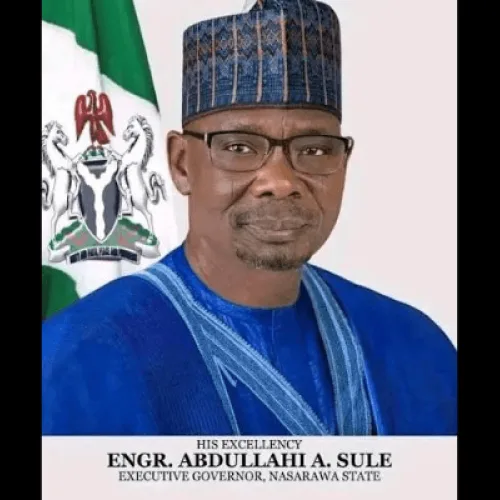
Abdullahi Sule, the Nasarawa State Governor, disclosed that the removal of the petrol subsidy and other federal reforms implemented by President Bola Tinubu’s administration have significantly boosted the state’s monthly federal allocation. The monthly revenue surged from an initial range of between N3.8bn and N4.5bn to an average of between N14bn and N16bn.
This substantial financial increase has enabled the state government to execute approximately N90bn worth of infrastructure projects entirely without commercial bank loans. Governor Sule made these remarks while hosting journalists on a project inspection tour, urging the media to hold state governments accountable by thoroughly evaluating what leaders achieve with their incoming public resources.
Infrastructure funding and transparency
Governor Sule emphasised that the administration’s financial expansion has created a vital opportunity for state governors to demonstrate transparency and accountability. By maintaining an open approach to project costs, the state allows citizens and media practitioners to compare public expenditure directly against incoming federal allocations.
The governor detailed the financial scale of several key projects that make up the N90bn portfolio, which include: flyover and associated infrastructure: N6.7bn, Abanga township road dualisation: N7.1bn, Chemdam Road dualisation (4.5 km): N5.6bn, Amba Bridge and stormwater channel: N3.3bn and Keffi flyover: N11.4bn.
Sule highlighted a successful real estate venture in the Karu area, where a N270m investment yielded a N500m profit-sharing return for the state. He contrasted these achievements with his early tenure in 2019, when the state struggled to secure a modest N5bn bond against a total monthly allocation of approximately N60bn and a N90bn budget.
Sectoral investments beyond major roads
While acknowledging high-profile infrastructure like flyovers, Governor Sule urged journalists to inspect social and economic developments that directly impact residents’ daily lives. Key areas of development extend to agriculture, healthcare, and technical education.
To bolster food security, the state has allocated about 10,000 hectares specifically for commercial rice production. In the education sector, Sule—an engineer and former oil and gas executive—stressed the importance of vocational training. The state is actively developing skills acquisition centres to provide practical training in electrical installation, machinery fitting, carpentry, and agricultural mechanisation for both youths and older retirees.
The state also expanded tertiary healthcare across its three senatorial districts by incorporating a teaching hospital, a Federal Medical Centre, and a newly constructed state specialist hospital.
Mining sector growth and federal alignment
The governor credited the Federal Government’s policy push for local mineral processing as a primary catalyst for private-sector investments in Nasarawa’s mining industry. By requiring mining companies to process minerals locally, the state successfully attracted international interest, establishing what Sule describes as the largest lithium mining facility in Africa.
Read also: Nigeria firms risk losing relevance without digital overhaul, Jacob says
Reflecting on his independent political stance, Sule defended his choice to commend President Tinubu’s reforms, noting that he previously criticised proposed tax reforms until the presidency invited state engagement and adjustments. He concluded that leaders should be encouraged when performing well, while constructive media criticism remains essential to keep governments alert.


Comments
Start the conversation about this story.