





Governments, development partners, funders, innovators and healthcare implementers have made 10 major commitments to accelerate digital health transformation and strengthen healthcare delivery across Africa.
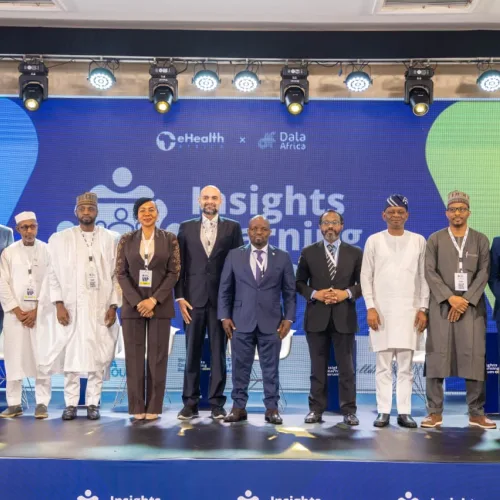
The commitments were made at the close of the Insights Learning Forum (ILF) 2026, held in Abuja and hosted by eHealth Africa and the Dala Africa Group.
The two-day forum, which attracted more than 400 delegates, focused on the theme, “Insights. Partnerships. Inclusion. Interoperability. Investment,” and ended with a Commitment Session designed to move digital health conversations from promises to measurable action.
The commitments target key areas including increased financing for scalable health innovations, stronger primary healthcare systems, improved maternal, newborn, child and adolescent health services, support for women-led enterprises, wider access to quality healthcare and ethical health data sharing to promote interoperable digital health systems.
Participants also pledged to strengthen Africa’s innovation ecosystem by supporting local partnerships, young innovators and entrepreneurs, improving knowledge sharing, reducing fragmentation in digital health programmes and ensuring that policy discussions translate into measurable outcomes.
Representing the Coordinating Minister of Health, the Director-General of the National Institute for Pharmaceutical Research and Development (NIPRD), Dr Obi Adigwe, said the work being done by partners such as eHealth Africa demonstrated the power of collaboration in strengthening Nigeria’s health system.
“Our focus now is to build on this momentum by fostering stronger partnerships, accelerating innovation and creating an ecosystem where digital health solutions can thrive and deliver lasting impact,” he said.
The Minister of State for Health and Social Welfare, Dr Iziaq Adekunle Salako, reaffirmed the Federal Government’s commitment to building resilient and digitally enabled health systems, stressing the need to move from pilot projects to scalable solutions and from fragmented interventions to integrated systems.
“Innovation is the engine of transformation, and digital health is its nervous system,” Salako said.
The National Coordinator, Sector-Wide Approach (SWAp) Coordination Office, Dr Muntaqa Umar-Sadiq, said sustainable health transformation could not be achieved through isolated projects, but required strong institutions capable of coordinating investments, aligning partners and ensuring accountability.
Similarly, the Executive Director of the National Primary Health Care Development Agency (NPHCDA), Muyi Aina, said technology, partnerships and data-driven decision-making were critical to building responsive and inclusive health systems capable of reaching underserved communities.
Executive Director of eHealth Africa, Atef Fawaz, said the Forum was established to provide a platform for governments, development partners, innovators, researchers and implementers to work together on common health challenges.
“We want Africa to think and act as one. We need to look beyond geographical boundaries and work together to solve common challenges,” Fawaz said, stressing that future editions of the Forum would review what was promised, delivered, what worked and what lessons could be learned.
Chairman of the Africa HealthTech Summit and Chair of the Africa Digital Health Network, Jean Philbert Nsengimana, also called for stronger continental integration to help African startups and innovators overcome donor dependency, fragmentation and weak pathways into public health delivery systems.
The Director of Partnerships and Programmes at eHealth Africa, Ota Akhigbe, said the Commitment Session was deliberately designed to ensure that the Forum produced practical and measurable outcomes.
She said the focus was on “quality rather than quantity,” urging participating organisations to make meaningful commitments capable of advancing Africa’s digital health transformation.
The organisers said progress on the commitments would be reviewed annually at future editions of the ILF, establishing an accountability mechanism aimed at ensuring that the pledges translate into concrete improvements in Africa’s health systems.
Please follow and like us:
Comments
Start the conversation about this story.