





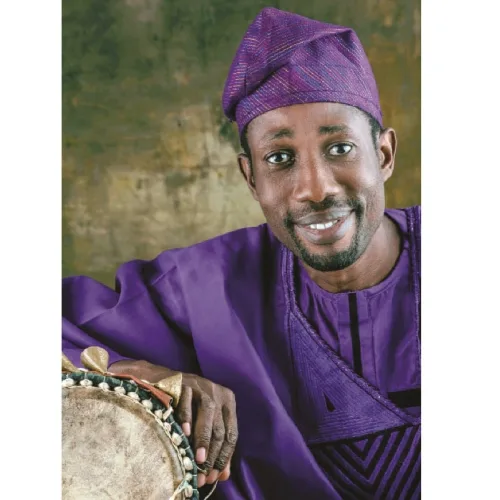
For many years, indigenous African drums were deemed unsuitable for Christian worship by numerous believers. However, Peter Olalekan Adedokun, founder of Drumsvoice of Jesus, has challenged this perception by incorporating traditional drums into praise, worship, and evangelism. In this interview by SEYI SOKOYA, the master drummer shares the divine inspiration behind his ministry, challenges, and vision for preserving Africa’s cultural heritage while advancing the gospel.
YOUR approach to gospel ministry is unique. What inspired the creation of Drumsvoice of Jesus?
I began playing indigenous drums professionally in 1997 and reached the level of a master drummer. In 2012, I felt compelled to change the belief held by many that indigenous drums should not be used in Christian gatherings. I started bringing the drums, particularly the Bata drums, to churches. That is when people began calling me ‘Bàtá.’
The ministry was fully established when I travelled to the United States, where the Spirit of God guided me on how to use the talking drums to convey messages that people could understand at any moment, essentially, singing to the drums. The name given to me was “The Drumsvoice of Jesus,” and the technique I use is call-and-response.
God Almighty created the heavens and the earth, as well as the trees and animals used to make the drums. He is also the one who created us and granted us the knowledge and wisdom to create musical instruments. Therefore, I see no issue with using these instruments to praise the one who created everything.
Why did you choose the name Drumsvoice of Jesus?
The name was inspired by God while I was in my room in the United States. It represents the various types of drums and signifies unified voices. The Drumsvoice conveys the message of Jesus, which is the gospel.
What is the core vision and mission of your ministry?
The vision and mission of the ministry are to praise and worship Almighty God using traditional drums, songs, and dances in churches, crusades, outreach programmes, and other Christian and gospel-oriented events.
What role does culture play in your approach to gospel evangelism?
As I mentioned earlier, I am a master drummer and continue to actively practice my craft to this day.
Culture plays a significant role in my approach to gospel evangelism in many ways. Many people appreciate my use of different traditional drums in ministry. These drums are integral to our cultural identity and heritage, which we must protect from fading into obscurity.
I can communicate effectively through this cultural language, and my presence with the drums allows many people to relax and focus on our messages. We have received numerous testimonies and positive feedback as a result.
How do you balance preserving African cultural heritage with biblical principles?
God has truly helped me. I have been able to set boundaries between my faith and my work. The Bible guides me daily to discern the truth and to do what is right in the sight of God, not only when I am engaging in ministry but at all times, even in my secular jobs.
I have also been able to convince people who dislike traditional drums and other musical instruments that these elements are part of our identity and heritage, which we must embrace, protect, and preserve from extinction.
ALSO READ: Sanwo-Olu inspects vandalised bridge, assures Lagosians of structural safety
Why do you believe music and traditional drums are effective tools for spreading the gospel?
Whenever people see us with traditional drums, they recognise something that belongs to them. They connect with their culture, and as a result, about 80 per cent of their attention has already been captured. This connection makes it easier for us to communicate our messages effectively through the language, rhythms from the drums, and accompanying dance steps.
What was the greatest testimony or transformation you witnessed through this ministry?
Glory be to God for His faithfulness. I have received numerous testimonies from individuals who have experienced our ministry’s impact. These include testimonies of healing, freedom from depression and anxiety, and many more.
Some people have also told me that our ministry encouraged them to start embracing traditional musical instruments.
God has used the ministry to help me, my family, and our members in many ways-physically, materially, financially, and in terms of health.
How has Drumsvoice of Jesus influenced young people and local communities?
By providing proper encouragement to young people and community members, I tutor them on the different types of rhythms suitable for churches and those that are not appropriate for church settings.
In addition, I share my experiences with them and train them in various drumming patterns and techniques. I also guide them in overcoming challenges they may face in their drumming journeys.
Have you received criticisms for using cultural instruments in gospel ministry? How have you responded?
Yes, I have been criticised several times.
Sometimes, I choose to remain quiet. However, when it’s time to respond, I humbly share the story behind the establishment of the ministry. I explain its mission and introduce myself as Peter Olalekan Adedokun, a master drummer dedicated to promoting and preserving African indigenous drums, drumming, and rhythms.
What were the biggest challenges you faced when establishing the ministry?
One of my greatest challenges in setting up the ministry was the concern over whether people would accept this new approach in churches, especially since many people were opposed to using traditional drums and musical instruments.
Another challenge was recruiting members who were willing to learn, understand the vision, and interpret it properly.
Additionally, I faced difficulties in helping members grasp my new rhythmic patterns, styles, and formations.
Getting invitations for ministrations was also a major challenge, but above all, God has been so faithful and manifesting Himself at every point of the challenges.
How do you sustain the ministry financially and administratively?
This is one of my greatest challenges because I do not charge people for ministrations, and many churches and hosts take advantage of this.
Nevertheless, I can say that God is faithful. Whenever we prepare for ministrations, I ensure I have extra funds to sort among my members. This is not only makes them happy but also encourages them to stay committed to the ministry. When we receive financial appreciation, I share that with my members as well.
Above all, God has sent helpers, starting from my church and extending to others who have been connected to the ministry. They periodically assist us financially and sometimes even buy uniforms for my members, although nobody has ever purchased one for me as the group leader! (laughs).
What lessons have you learned from your journey as the founder?
I have learned to entrust everything to God before taking any step.
I have also learned how to handle and manage people of different age groups, genders, knowledge levels, abilities, and experiences.
Moreover, I have gained insights into how to navigate various situations. What to do when feeling stranded, disappointed, disrespected, or when receiving false promises or fake credit alerts after a ministration without any funds actually entering the account.
I have even learned how to deal with more popular gospel artistes who may look down on me.
How do you mentor the younger generation within the ministry?
I guide them through prayer and teach them the importance of studying the Word of God and maintaining a robust prayer life in ministry.
I also lecture them on the value of good character.
I take the time to train them in various styles and genres of traditional drumming and teach them how to play new instruments they have not handled before joining the ministry.
Lastly, I encourage them to prioritise their education, as it is extremely important.
What advice would you give to aspiring gospel cultural ministers?
Aspiring gospel cultural ministers should not begin their journey solely for financial gain. Instead, they should prioritize their relationship with God in everything they do.
They must stay resilient and not allow discouragement to affect them. Maintaining focus and continually working on personal development is crucial.
Remember, God knows the outcome even before the beginning of any endeavor.
Are there any upcoming projects people should look forward to?
Yes! The 10th edition of the Drumsvoice of Jesus annual praise programme, entitled, “Diverse Praise to God,” will take place on September 6, in the city of Ibadan. At this event, various gospel music, dance, and drama ministers will come together to praise God in different ways, languages, and styles.
Additionally, if we receive the necessary financial support, we plan to conduct outreach programmes in different markets and villages, as well as online live praise ministrations.
What are your plans and vision for Drumsvoice of Jesus over the next five to ten years?
My prayer for Drumsvoice of Jesus is that in the next five to 10 years, the ministry will be able to support and financially sponsor many emerging ministries. We also aim to recommend and support churches, helping to birth several new ministries from Drumsvoice of Jesus.
I want Drumsvoice of Jesus to be recognised and to minister both nationwide and globally.
Do you have plans to expand beyond Nigeria to other African countries and the diaspora?
Yes, by God’s grace. We have been approached by several churches interested in bringing us to their countries, although funding has caused some delays. I am confident that this will become a reality soon, by God’s grace.
What has been your most memorable moment in ministry?
I have experienced many memorable moments in the ministry. These include testimonies following our services, individuals giving their lives to Christ, receiving financial support from fellow believers, being granted a hall free of charge for our praise concert, and even winning a complimentary trip to Jordan for a pilgrimage tour, to name just a few.
What message do you have for Christians, gospel music lovers, and young people passionate about using their talents for God?
I encourage them to make God their top priority. Patience, prayer, and studying the Word of God are essential.
They should view their talents as contributions to God’s Kingdom and remain steadfast in the face of discouragement. Continuous learning, improvement, and self-upgrading are important.
It is also vital to be born again and be part of a community of believers; finding a church to fellowship with is crucial. A plant without roots withers quickly and easily.
Comments
Start the conversation about this story.