






The wait has continued to drag on for an Iranian deal with Oman on the Strait of Hormuz, with the Islamic Republic warning the US that any pact wouldn’t lead to an immediate reopening of the crucial energy chokepoint.
With a deal remaining elusive, the situation in the region stayed volatile. Iranian-backed Houthi rebels on Sunday claimed they’d struck Saudi Aramco’s Jazan oil refinery in the kingdom. Saudi authorities earlier reported a fire at the facility.
An agreement on a temporary maritime transit route for ships entering and leaving the Persian Gulf is “very close,” Iranian Foreign Minister Abbas Araghchi said Saturday. Yet Tehran also renewed a list of demands for Washington, suggesting any respite for oil and gas supplies may be limited.
“The opening of the strait is subject to other conditions, including compensation for the US’s violations of the Islamabad Agreement,” Araghchi said, referring to a now-lapsed memorandum of understanding signed in June. That lasted less than a month before collapsing over disputes about control of Hormuz.
The status of the Strait of Hormuz has become a key factor in the conflict the US and Israel launched on Iran in late February, and it’s unclear how Washington will respond to any agreement.
US President Donald Trump has demanded the resumption of open navigation via Hormuz for months, regularly threatening fresh attacks on Iran if it fails to reopen the waterway.
Vice President JD Vance on Saturday suggested there’d been recent progress, but it’s not clear if the final result will be satisfactory.
The question is whether Iran will be able “to give the things that are necessary for us to be happy, for us to feel like we’ve gotten what we need out of this particular engagement,” he told Fox News.
Washington has repeatedly suggested it’s part of negotiations over the management of Hormuz, which Iran disputes.
Oman, within whose territorial waters the strait also lies, said talks were progressing in “a positive and constructive atmosphere.” In a post on X, authorities called for a halt on actions in the strait to give space for diplomatic efforts.
Besides compensation, Tehran’s demands include that the US lift its naval blockade on Iranian ports, withdraw military forces from around Iran, removes sanctions and releases frozen assets, according to Mohammad Bagher Zolghadr, a hardliner who heads the Supreme National Security Council.
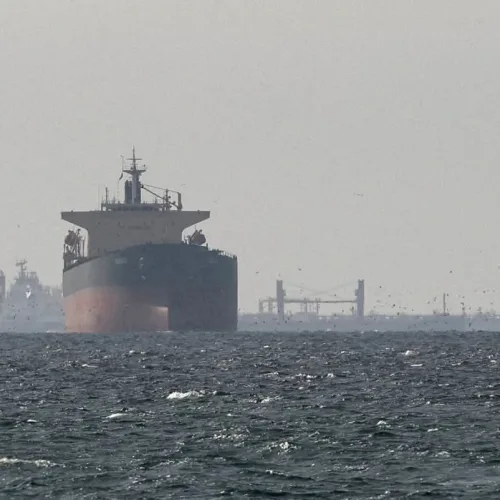
Traffic through the chokepoint has been largely blocked since the start of the war, but some ships have continued to ferry cargoes as part of a shuttle program involving US military help.
As talks stretch on, shippers attempting to make the crossing face ongoing risks.
Abu Dhabi National Oil Co. said missiles targeted one of its vessels while transiting early Saturday, the United Arab Emirates’s state-run WAM news agency reported. The attack caused no injuries and the situation has been brought under control, it added. Three other ships from the UAE’s biggest oil producer were attacked last week.
Oil prices swung between gains and losses last week, with Brent eventually settling above $83 a barrel as traders weighed the prospects of a deal that’s expected to clear the way for the restoration of millions of barrels of supply from the Persian Gulf.
Tensions have flared in the southern Red Sea in recent weeks, with the Houthi rebels in Yemen announcing a blockade on Saudi Arabia’s ports, a key alternative export route for the kingdom’s oil.
The Houthis on Sunday claimed they’d struck the Jazan refinery with a drone in response to Saudi moves in Yemeni airspace.
The Saudi energy ministry earlier said a fire there was extinguished and no one had been injured, without giving any details on the cause. Saudi Aramco wasn’t immediately available to comment.
The blaze would be at least the second in the past month at the Aramco facility. Satellite images showed a fire at a tank in the 400,000 barrel-a-day complex in late July after the Houthis claimed to have attacked.
Any Hormuz deal will need the approval of Iran’s Supreme Leader Mojtaba Khamenei. Iranian officials have said it takes time to reach him. There’s been no indication whether Khamenei has given his assent to current plans.
Comments
Start the conversation about this story.