





The attack on the National Institute for Policy and Strategic Studies (NIPSS) in Kuru, near Jos, Plateau State, nearly two months ago, in which three security operatives were killed, has raised fresh concerns over the changing nature of insecurity in the state. Attackers are increasingly turning their guns on those deployed to protect communities and critical institutions.
Suspected gunmen stormed the institute in June 2025 and engaged security personnel in a fierce exchange of gunfire. Two soldiers and a police officer attached to the institute security detail were reportedly killed, although their names had not been disclosed at the time of filing. The swift response of security forces prevented the attackers from penetrating deeper into the facility.
The NIPSS attack came amid a string of recent deadly incidents in Riyom Local Government Area, where security operatives and community vigilantes have also come under attack. Barely 24 hours before the killing of three vigilantes at Jol, suspected terrorists reportedly ambushed a joint security patrol at Danwal in Ganawuri District, killing security personnel and carting away their service rifles. These incidents have intensified fears that Plateau’s protracted security crisis is entering a dangerous phase in which frontline defenders are becoming prime targets.
Calls for Federal Government Intervention
NIPSS management assured participants, staff, residents and other members of the community that there was no longer any threat to their safety after the incident was brought under control. However, the broader question remains: what happens when the people expected to protect citizens become targets themselves?
That concern was central to the reaction of Riyom Local Government Area Executive Chairman Bature Shuwa, who warned the Federal Government that the pattern of attacks was becoming increasingly dangerous. Shuwa made the call after visiting the Jol community, where three biological brothers serving as local vigilantes were killed during a night attack while on community patrol.
Describing the killings as heartbreaking and unacceptable, the council chairman said the worsening security situation in Riyom had reached an alarming level and demanded immediate federal intervention.
Read also: Sahel, Lake Chad ambassadors converge in Borno over insecurity, cross-border, intel sharing
“The attack on Jol is yet another painful reminder of the security challenges confronting our people. Government cannot continue to fold its arms while innocent citizens are killed and communities are left in grief,” Shuwa said.
Military Operations and Ripple Effects
Shuwa noted that attackers are no longer targeting only farming communities but are actively hunting down security personnel and local vigilantes. This warning coincided with reports that troops of Sector 6 under Operation Enduring Peace arrested 19 suspects in Tongoron, Riyom, during a clearance operation following the joint patrol ambush.
The military operation followed an attack along the Ganawuri-Sabon Gida Road, where four security operatives from two formations had mounted a snap roadblock. Two failed to return to their duty posts and were later found dead. The victims were a police inspector and a Nigerian Air Force lance corporal, whose service rifles were taken.
This series of attacks occurs against the backdrop of a security crisis that has persisted across Plateau for more than two decades, marked by communal violence, reprisal killings, displacement, and the destruction of farmlands. For a state whose rural economy depends heavily on agriculture, prolonged insecurity has become a severe economic crisis. Fear of attacks forces farmers to abandon their fields, reducing food production and driving up prices.
Deeper Political and Structural Concerns
While the three tiers of government have sustained military operations and provided logistical support to security agencies, deep-seated challenges remain. Federal efforts include cordon-and-search operations, while state and local administrations have enhanced intelligence gathering and supplied patrol vehicles, such as the Toyota Hilux handed over by Shuwa to the Riyom Divisional Police Officer.
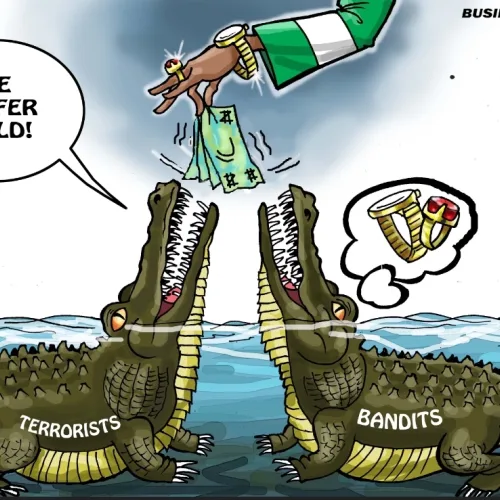
Nevertheless, Federal University of Lafia Professor of Economic History Wilfred Uji believes the crisis extends beyond isolated attacks by faceless criminals. Uji argued that an inner conspiracy aims to collapse the security architecture and pointed to a lack of political will among the ruling national class to stop armed groups. He also criticized the reintegration of former militants into the military, which he said compromises national security.
“There is an inner conspiracy to collapse the security architecture and take over. Dangerous because Nigeria still remains under existential threat but real and imaginary. It can be stopped if we can identify and isolate the bandits with their sponsors,” Uji said.
“The Nigerian military is well trained and equiped to handle the crisis but there is clearly a lack of political will by the ruling national class to stop these so called bandits who are crested and sustained by the same national ruling political class.
Read also: Nigerian diplomats urge Tinubu to back Goodluck Jonathan for UN Secretary-General
Ultimately, if trained security operatives and community vigilantes can be hunted down, the vulnerability of unarmed civilians becomes even more alarming. The question remains whether authorities can move beyond temporary military operations to decisively end the cycle of violence and restore public confidence.


Nathaniel E. Gbaoron is the Plateau State correspondent for BusinessDay and a seasoned journalist with a decade of experience covering sub-national affairs across Taraba, Adamawa, Nasarawa, Benue, Plateau, and other states. He holds both National Diploma (ND) and Higher National Diploma (HND) in Mass Communication from Fidel Polytechnic, Gboko. Over the years, he has participated in numerous media trainings and workshops spanning various areas of reporting, strengthening his expertise in economic and political reporting, community-level governance, development stories, and conflict-sensitive journalism. He is a member of Correspondent Chapel in Plateau state, a member of the Nigeria Union of Journalists (NUJ), he is also a Rotarian and a member of Plateau Club 1921.
Comments
Start the conversation about this story.