





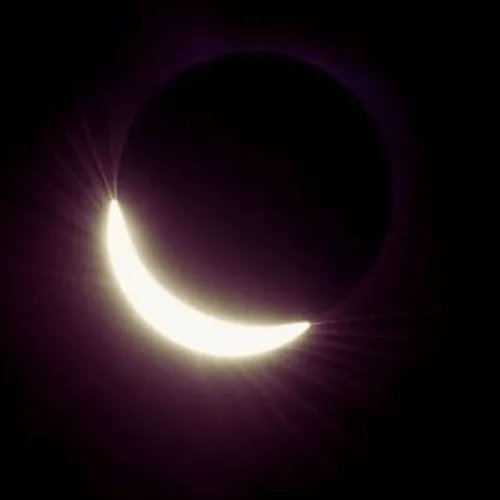
On Wednesday, the moon’s inner shadow, or umbra, will cross Greenland, Iceland, northern Russia, parts of the Atlantic Ocean, and Spain, while a small corner of Portugal catches the edge.
Millions of people across North America, Europe, and northwestern Africa will experience a partial eclipse. This celestial event marks Europe’s first total solar eclipse since 1999. Mainland Spain has not witnessed a total eclipse since 1905, and Iceland has not seen one since 1954, generating immense international interest in science and tourism.
Observers positioned directly in the path of the eclipse’s totality will on August 12, experience complete darkness for roughly two minutes and 18 seconds, though most locations will see less than two minutes. For viewers in the western regions of the path, particularly across mainland Spain, the eclipse occurs late in the evening just before sunset. This timing creates a rare opportunity to capture a dramatic sunset eclipse on the horizon. The eclipse coincides with the peak of the Perseid meteor shower.
Because the event occurs during a New Moon, dark night skies will provide exceptional conditions for viewing meteors during the same week. A rare morning alignment of several planets will also be visible. Viewers can look directly at the Sun without protection only during the brief window of absolute totality. At all other times, viewing partial phases requires certified solar filters, such as ISO 12312-2 compliant eclipse glasses. Experts warn never to view the Sun through cameras, binoculars, or telescopes without a specialized front-mounted solar filter.
For individuals outside the viewing path, space agencies and scientific institutions, including NASA, will host live video streams to track the shadow’s progress in real-time. The August 12, 2026 total solar eclipse holds no direct physical connection to Nigeria and will not be visible locally. While parts of northwestern Africa will experience a minor partial phase, West Africa generally lies outside the optimal viewing band. Nevertheless, from a scientific communications perspective, the event represents a significant milestone for astronomy outreach, digital media engagement, and cross-border data sharing.
August 12, 2026, is a genuine non-event for Nigerian skies. However, local stargazers will not have to wait long for a domestic spectacle: February 6, 2027, brings a rare “ring of fire” annular eclipse directly overhead, followed by a full total eclipse in 2034.


Temiloluwa, the Online Editor of BusinessDay, is a transformative editorial leader with over 10 years of experience driving digital growth and innovation in media. He leads initiatives in leveraging technology to enhance storytelling and build high-performing teams. Temi is passionate about harnessing tech to inform, engage, and empower communities, with a demonstrated history of creating award-winning solutions that bridge the gap between media and technology.
Comments
Start the conversation about this story.