





Nigeria continues to stand as a global leader in cocoa production, with rich harvests flowing from the vibrant farming communities of Ondo, Cross River, Osun, and Oyo States.
However, a significant opportunity remains untapped within our agricultural landscape: the majority of this exceptional cocoa is still exported as simple raw beans.
When we sell only raw beans, farmers and local agribusinesses capture just a small portion of the crop’s potential value.
At the same time, our own local bakeries, cosmetic brands, and beverage makers often rely on expensive imported cocoa butter and powder to meet their needs.
Stepping into small-scale processing is a rewarding way to unlock much higher profit margins. You don’t need a massive industrial plant to begin this journey. By mastering post-harvest techniques, choosing the right basic machinery, and prioritizing quality, you can successfully produce commercial-grade cocoa powder right in your community.
Here is a thoughtful, step-by-step blueprint to help you transform raw cocoa beans into premium, high-margin cocoa powder.
Fermentation and drying: The flavor foundation
The path to exquisite cocoa powder begins well before the roasting stage. In their raw state, unfermented beans are quite bitter and lack the inviting chocolate aroma that customers expect from a quality product.
Fermentation (5 to 7 Days)
After harvesting, the cocoa pods are opened and the fresh beans, still coated in their white pulp, are prepared for fermentation. The beans are placed in perforated wooden boxes lined with clean banana leaves and left to ferment for five to seven days.
During this period, they should be turned every 48 hours to ensure proper aeration and even fermentation. Naturally occurring microorganisms generate heat, raising the temperature to about 45°C–50°C.
This process kills the seed embryo and produces the flavour compounds that give cocoa its distinctive chocolate taste and aroma.
ALSO READ: How to build cheap window net frame to stop insects
Sun-Drying (7 to 10 Days)
Once fermentation is complete, the beans are transferred to raised wooden drying platforms or clean mats and spread out under direct sunlight for seven to ten days. They should be turned regularly throughout the drying period to ensure even moisture loss and to prevent mould from developing.
Proper drying is essential to preserving bean quality. The ideal moisture content is between 7% and 8%, which allows the beans to be stored safely without compromising quality. Beans that are dried beyond this range become brittle and are more likely to break during handling, while beans with excessive moisture are vulnerable to mould growth and deterioration during storage.
Roasting, winnowing and milling
With your beans dried to perfection, you are ready to begin the transformation into cocoa components.
Roasting
Once the cocoa beans have been properly dried, they are ready for the next stage of processing, where they are transformed into the key components used to produce cocoa powder. This stage involves roasting, winnowing and milling, each of which plays a vital role in determining the quality of the final product.
Roasting is one of the most important steps in cocoa processing because it enhances flavour, loosens the outer shell for easy removal, and sterilises the cocoa nibs.
The beans are typically roasted at temperatures between 120°C and 140°C for 20 to 35 minutes using a rotating roaster or a professional convection oven. The exact roasting time depends on the bean variety, moisture content, and the desired flavour profile.
As roasting progresses, the beans gradually develop their characteristic chocolate aroma while the shells become dry and brittle. Properly roasted beans will crack easily under slight pressure and release a rich, pleasant cocoa fragrance without any burnt or smoky smell. Achieving the correct roast is essential, as under-roasted beans retain undesirable flavours, while over-roasting can destroy the delicate flavour compounds that contribute to high-quality cocoa.
Winnowing
Once roasting is finished, cool the beans quickly to stop the cooking process. Now, it is time to separate the outer shells from the valuable inner nibs. Gently crack the beans using a mechanical cracker to expose the nibs.
Using an airflow winnower, allow the suction to lift away the light husks, leaving you with clean, high-quality cocoa nibs.
Milling (From nibs to cocoa liquor)
It is fascinating to note that cocoa nibs are naturally composed of about 50% to 55% healthy fats, known as cocoa butter. Pass these clean nibs through a pin mill or a stone melanger to start the grinding process.
As the friction generates gentle heat, the cocoa butter melts, beautifully transforming the solid nibs into a silky, dark liquid known as cocoa liquor or cocoa mass.
Extracting butter and perfecting the powder
The final stage in cocoa processing involves separating the cocoa butter from the cocoa solids to produce fine cocoa powder. This process not only yields cocoa powder but also produces cocoa butter, a valuable by-product widely used in the chocolate, cosmetics and pharmaceutical industries.
The process begins by transferring the warm cocoa liquor into the cylinders of a hydraulic press.
As mechanical pressure is applied, the natural cocoa butter is extracted through fine metal filters, leaving behind a dense, solid mass known as cocoa press cake. The extracted cocoa butter is prized for its smooth texture and versatility, making it a premium ingredient in high-quality chocolates and luxury skincare products.
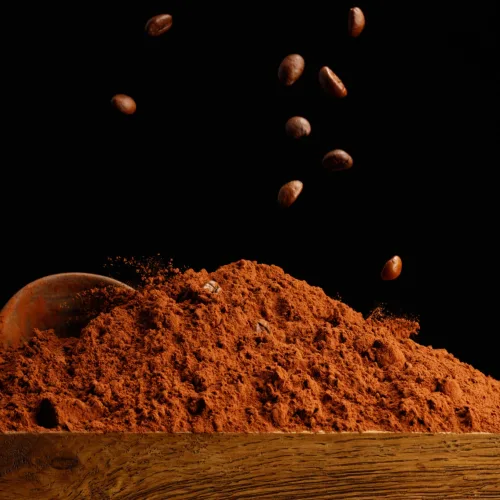
After pressing, the cocoa press cake is allowed to cool completely until it becomes firm enough for further processing. It is then broken into smaller, manageable pieces using suitable crushing equipment such as a kibbler or hammer mill. These pieces are subsequently ground with a high-speed pulveriser to produce a fine, uniform cocoa powder.
To achieve a smooth, professional-grade product, the ground powder is passed through a vibrating sieve with a mesh size of between 100 and 200. This final sieving stage removes coarse particles and ensures a consistent, silky texture suitable for commercial packaging and consumer use.
Quality, presentation and building your brand
To establish a trusted name in the industry, it is important to maintain high standards of quality and care throughout your production process.
For moisture control, always ensure your final powder has less than 5% moisture to prevent clumping and keep it fresh for longer.
Also, seal your finished powder promptly in airtight, moisture-barrier pouches or food-grade jars. Storing them in a cool, dry place preserves the flavor beautifully.
Using food-grade stainless steel tools and keeping detailed hygiene logs will not only ensure a safe product but also make your NAFDAC registration and other certifications much smoother.
By starting your own small-scale cocoa processing venture, you are doing more than just manufacturing; you are adding value to our local harvest and creating two premium products.
With dedication to the craft of fermentation, roasting, and pressing, you can truly thrive as a producer right from the farm gate.
Comments
Start the conversation about this story.