





In today’s increasingly competitive business world, leaders face constant pressure to grow steadily while keeping the cost of winning new customers low.
However, a common and expensive problem often occurs within large companies: Marketing celebrates hitting its view targets, Sales is frustrated with the quality of new leads, and Customer Success struggles to keep clients from leaving.
When revenue growth slows down, management teams often think the problem is a lack of talent or a small budget. They usually respond by spending more on advertising or giving sales teams higher targets. More often than not, however, the real issue is structural: important data, context, and sales opportunities are getting lost in the gaps between disconnected departments.
To fix this friction, forward-thinking businesses are moving away from isolated departments and adopting Revenue Operations (RevOps). Instead of letting Marketing, Sales, and Support manage their own separate tools and reports, RevOps creates a single operational system designed to improve the entire customer experience from start to finish.
For business leaders, performing a RevOps audit is the first step toward stopping internal data leaks and building a more predictable growth engine.
Mapping the customer lifecycle to eliminate friction
A major reason large companies lose revenue is that no single leader oversees the entire end-to-end customer journey. Marketing tracks how leads are found, Sales tracks deals that are finished, and Operations handles the billing.
When a customer is handed off between these stages, critical information often gets lost or delayed.
A thorough CRM audit begins by mapping every interaction a customer has with a brand, from the moment they first discover the business online to signing a contract and renewing their service over time. It examines how prospective customer information is collected across digital and offline channels, how lead profiles are enriched with firmographic data such as company size and industry before outreach, and how qualified leads are seamlessly transferred from the marketing team to sales.
The audit also assesses how customer information is shared with the customer success team to support retention, strengthen relationships, and create opportunities for renewals and additional sales.
Identifying delays in these steps such as a long wait before a sales rep calls a new lead, reveals immediate operational gaps that lower the chances of making a sale.
Standardising corporate definitions and SLAs
In many growing companies, departments literally speak different business languages. If Marketing thinks a “lead” is anyone who downloads a file, but Sales thinks a “lead” is a decision-maker with a ready budget, the organization will constantly struggle with mixed messages.
RevOps brings clarity by establishing shared definitions and formal Service Level Agreements (SLAs) across all teams:
Marketing Qualified Lead (MQL): A prospect matching the ideal customer profile who has demonstrated explicit buying intent.
Sales Qualified Lead (SQL): An MQL that sales representatives have vetted and formally accepted for active deal management.
Marketing Qualified Lead (MQL): A potential customer who fits our target profile and has shown a clear interest in buying.
Sales Qualified Lead (SQL): An MQL that the sales team has checked and accepted as a real opportunity to work on.
Shared Commitment (SLA): A binding promise, like Marketing providing a specific number of checked leads every month, and Sales calling them within four hours of receiving them.
When leadership enforces these unified definitions, automated workflows ensure that sales teams focus only on the most valuable opportunities that are ready for a deal.
ALSO READ: New acquisitions push First HoldCo market cap above N6.6 trn as shares hit N148.35
Tech stack rationalisation and data governance
As businesses expand, they often accumulate multiple software tools across different departments. Marketing may adopt its own campaign platforms, Sales may use separate customer management systems, while finance relies on different record-keeping applications. Without proper oversight, software costs increase, data becomes fragmented, and collaboration suffers.
Tech stack rationalisation involves reviewing and streamlining these systems to eliminate redundant applications, strengthen data security, and ensure all business tools work together efficiently.
As part of an operational audit, organisations should assess whether sales, marketing and customer support platforms exchange information seamlessly so that updates made in one system are automatically reflected across the others. They should also standardise how data is collected and stored to prevent inconsistencies that can undermine reporting and automation.
Maintaining a clean database by identifying and removing duplicate records is equally essential, as it creates a single, accurate view of each customer and helps prevent conflicting communications.
A well-integrated technology ecosystem not only improves data quality and governance but also reduces administrative workloads, speeds up business processes and enables teams to make faster, more informed decisions.
Establishing single source of truth for boardroom visibility
When internal data is messy, management meetings are often spent trying to fix conflicting reports. Marketing shows success with new campaigns, while Sales shows a drop in the value of new deals.
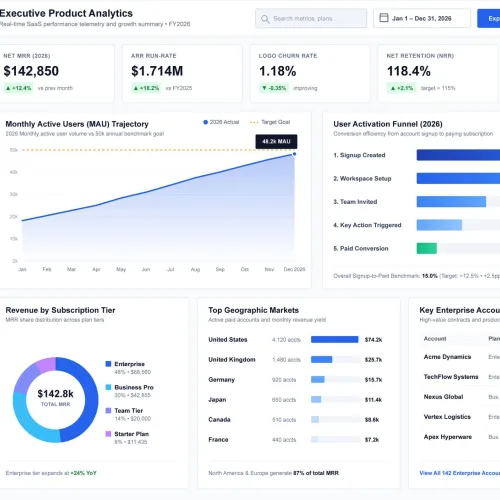
RevOps replaces confusing spreadsheets with one central dashboard that tracks the business’s most important health metrics:
Customer Acquisition Cost (CAC): Total sales, marketing, and operational spend divided by new accounts acquired.
Pipeline Conversion Velocity: The average time and conversion percentage of deals moving through each funnel stage.
Cost to Get a Customer (CAC): The total amount spent on sales and marketing divided by the number of new accounts won.
Sales Speed: The average time it takes for deals to move through each stage of the sales process.
Customer Value Over Time (LTV): The total profit a customer brings in for as long as they stay with the business.
Having one source of truth allows leaders to decide where to put resources based on verified performance data rather than departmental guesses.
The strategic path forward
Switching to a Revenue Operations model is not a temporary fix; it is a long-term commitment to working better. In an era where profit margins are under constant watch, businesses cannot afford to let money slip through the cracks of unaligned systems and disconnected teams.
By performing regular check-ups, using shared language, cleaning up software tools, and keeping data organised, business leaders can turn separate departments into a single, powerful machine for growth.
Comments
Start the conversation about this story.