






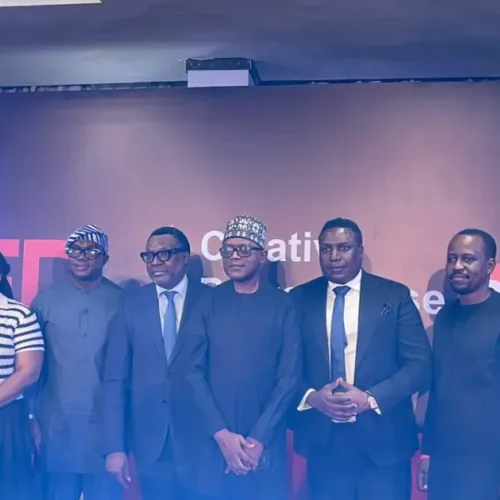
L–R: Director General of the Rivers State Tourism Development Agency, Yibo Koko; Chief Executive Officer of Narrative Landscape Press, Anwuli Ojogwu; alongside other speakers and dignitaries at the QEDNG Creative Powerhouse Summit held in Lagos on Tuesday.
Nigeria’s creative sector requires stronger institutional partnerships across industry, policy, finance, and technology to fully unlock its economic potential, the Chief Executive Officer of QEDNG, Olumide Iyanda, said.
Speaking on Tuesday at the second edition of the QEDNG Creative Powerhouse Summit in Lagos, Iyanda emphasised that driving sustainable expansion requires moving past discussions of systemic bottlenecks to focus on actionable commercial opportunities.
“We are bringing creative professionals together with policymakers, financiers, and business leaders,” the veteran media executive and Founder of Mighty Media Plus Network Limited, the parent company of QED. NG and QedTV told PUNCH Online.
“We are not looking at problems; we are looking at opportunities, growth, and what we can do to make the industry better.”
The country’s creative economy spans film, music, advertising, publishing, theatre, cultural tourism, technology and digital content, with the sector increasingly seen as a source of jobs, entrepreneurship and international visibility for the country.
Iyanda said the importance of the industry extends beyond its direct economic contribution, arguing that Nigeria’s creative output also shapes how the country is perceived internationally.
“The creative sector in Nigeria contributes significantly to not just the economy, but how Nigeria is seen and projected globally,” he said.
The remarks came as the second edition of the QEDNG Creative Powerhouse Summit, themed “Creativity, Culture and Nigeria’s Next Chapter,” broadened the conversation around the creative economy to include investment, innovation, public policy and collaboration.
The summit featured participants from film, music, advertising, publishing, technology, law, cultural tourism and content creation. Executive Chairman of SmartCity Resorts Plc, Sir Demola Aladekomo, served as chairman, while Ife Adebayo, national coordinator of the Investment in Digital and Creative Enterprises programme at the Bank of Industry, delivered the keynote address.
The event builds on the inaugural summit held in 2025 under the theme “Financing as Catalyst for a Thriving Creative Economy,” which focused on the difficulty creative businesses face in securing funding and the need for investors and policymakers to develop financing models suited to the industry.
The latest edition shifted the emphasis towards the broader economic opportunities that could emerge from closer ties between creative professionals, investors, government and businesses.
“Our own is just that we want to be at the intersection of the conversation regarding that industry for its growth and for expansion,” he said.
The push for greater investment comes as Africa’s most populous nation seeks to diversify economic activity and create new sources of employment and enterprise beyond traditional sectors. Creative businesses, however, often operate across informal and rapidly changing markets, making access to capital, intellectual-property protection, infrastructure and predictable policy important to their ability to scale.
The QEDNG summit’s focus on partnerships reflects the growing view that private investment alone may not be sufficient to build a larger creative economy, with government policy, financing institutions, technology companies and industry players also required to support businesses as they move from small-scale operations to commercially sustainable enterprises.
Comments
Start the conversation about this story.