





Nigeria is tearing up two decades of ad hoc dealmaking in its offshore oil patch, betting that a single, rules-based framework will do what years of one-off negotiations could not and pull as much as $50 billion into deepwater fields that have sat untouched since the price crash of the 2010s.
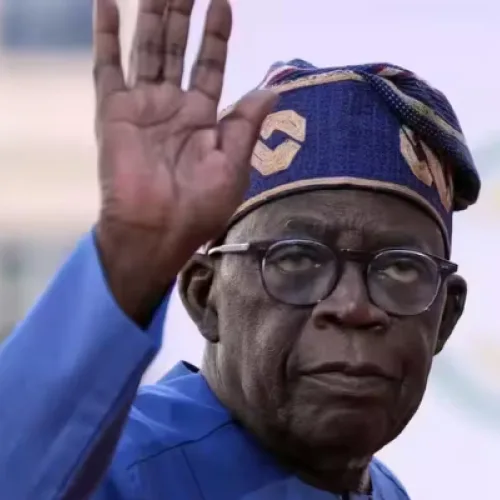
President Bola Tinubu approved the new regime on August 11, replacing the project-by-project haggling that has defined Nigeria’s relationship with international oil companies since the country’s last major deepwater sanction.
The mechanism, formalised as the Deep Offshore Oil and Gas Projects Incentives (Tax Remission) Order, 2026, sets fixed eligibility criteria and implementation timelines that apply across the sector rather than being negotiated field by field.
The shift matters because Nigeria has spent the better part of ten years losing capital to rivals. Angola, Namibia and Mozambique have all courted the same pool of supermajors chasing pre-salt and ultra-deepwater prospects, while Nigeria’s output slid from a peak above 2 million barrels a day to closer to 1.6 million.
Executives at Shell, ExxonMobil and TotalEnergies have long complained that Nigeria’s fiscal terms shifted too often to justify multibillion-dollar, multi-decade commitments.
The first project expected to move under the new order is Bonga South West, the roughly $10 billion deepwater development Shell has weighed sanctioning for nearly 20 years. Shell’s own public estimates for the full Bonga Southwest-Aparo complex have run as high as $20 billion, a gap that underscores how fluid the numbers remain this early in the process.
Wael Sawan, chief executive officer at Shell, raised the project directly with Tinubu earlier this year, an exchange the presidency said became the catalyst for building a framework that could apply well beyond one field.
“The countries that attract long-term investment are not necessarily those with the greatest natural resources,” Tinubu said in a statement released by his office. “They are the ones that provide the greatest certainty.”
Tinubu said this reform reflects his determination to build an investment environment defined by clear rules, strong institutions and enduring partnerships.
“We are creating the conditions for capital to flow, for Nigerian businesses to grow, for our people to prosper and for our natural resources to deliver lasting national value,” Tinubu said.
Experts said approving an incentive is not the same as securing a final investment decision, and Shell’s board still has to sign off on Bonga South West’s economics, project design and partner alignment before steel gets ordered.
Nigeria has been here before. Fiscal incentives unveiled in 2024 and cost-efficiency credits introduced in 2025 were both pitched as the reform that would unlock stalled projects, and the deepwater pipeline mostly stayed where it was.
Government officials are framing this order as different in kind, not just degree, because it is meant to function as standing policy rather than a bespoke concession tied to one company’s leverage.
The framework also leans on Nigeria’s long-standing local content push, as projects that qualify will be required to maximise work done inside the country, especially where it is commercially and technically feasible.
“Projects qualifying under the framework will maximise execution within Nigeria wherever commercially and technically feasible, strengthening domestic engineering, fabrication, marine logistics, technical services and project management,” said Olu Arowolo-Verheijen, the President’s special adviser on oil and gas.
She added, “The objective is not only to increase investment and production, but also to create skilled jobs, deepen local supply chains and position Nigeria as Africa’s regional hub for deep offshore project execution.”
Nigeria has cast this as a way to grow a domestic deepwater services industry that has largely watched contracts go to yards in Singapore, South Korea and the Gulf.
The order was drafted through what the presidency described as an extensive inter-agency process, pulling in the Federal Ministry of Justice, the Federal Ministry of Finance, the Federal Ministry of Petroleum Resources, the Nigeria Revenue Service, NNPC Limited, the Nigerian Upstream Petroleum Regulatory Commission, the Nigerian Content Development and Monitoring Board, investing partners and other industry stakeholders whose collaboration, technical expertise and commitment helped shape the framework.


Comments
Start the conversation about this story.