





By Dayo Johnson, Henry Umoru, Ikechukwu Nnochiri & Luminous Jannamike
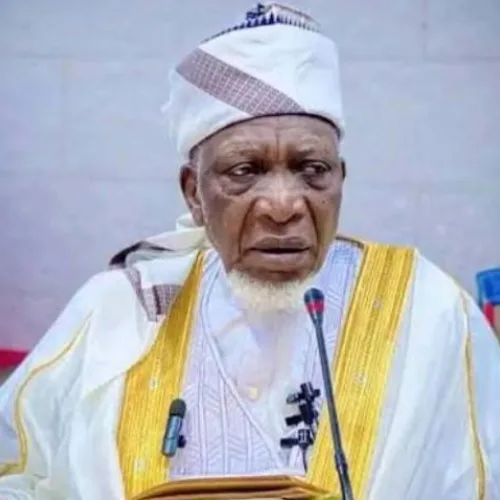
The National Human Rights Commission, NHRC, Christian Association of Nigeria, CAN, the Pentecostal Fellowship of Nigeria, PFN, the Vice Presidential Candidate of Nigeria Democratic Congress, NDC, Rabiu Kwankwaso, and former Minister of Aviation, Femi Fani-Kayode, yesterday took Islamic cleric, Sheikh Yahaya Jingir, to task over inciting statements against Christians in the country.
They also asked government to arrest the cleric and prosecute him to serve as a deterrent to other religious leaders in the habit of doing same.
The cleric had, in the presence of two governors in Kano last weekend, not only justified the Muslim-Muslim ticket of the All Progressives Congress, APC, for the 2027 elections, but also said Muslims should dominate Christians because they were more in number.
NHRC asks FG to arrest, prosecute Sheikh Jingir for hate speech
However, the National Human Rights Commission, NHRC, which expressed anger over the cleric’s declaration, yesterday urged the Federal Government to immediately arrest and prosecute him for hate speech and incitement.
The commission, in a statement by its Executive Secretary, Chief Tony Ojukwu, SAN, said it condemned in strong terms “the hateful and inciting remarks” it said were made by the cleric in a viral video on Sunday.
The NHRC said it watched with grave concern as the cleric openly canvassed religiously exclusive politics, ahead of the general elections and used derogatory language referring to “infidels” while urging supporters to obtain voters’ cards to “show their limit.”
The rights body described the statements as a direct attack on the principles of equality, non-discrimination, and peaceful coexistence guaranteed under the 1999 Constitution, as amended, and Nigeria’s international human rights obligations.
“The commission finds these remarks to be hate speech and incitement to religious hatred and potential violence. At a time we are preparing for another general election, such utterances are reckless and dangerous. They serve no purpose other than to divide Nigerians along religious lines and set citizens against one another.
“We cannot afford to look away. If we fail to speak and act now, we embolden both Christian and Muslim clerics and other influential persons to make worse statements in the coming months. That path leads only to crisis,” the commission stated.
Consequently, it called on the Inspector-General of Police, the Director-General of the Department of State Services, DSS, and other relevant authorities to immediately arrest and prosecute Sheikh Jingir for hate speech and incitement.
The commission implored religious leaders, traditional rulers, and politicians to refrain from divisive rhetoric, even as it urged Nigerians to reject identity politics and to hold leaders accountable based on competence, service delivery, and respect for human rights.
“Prosecution must proceed irrespective of status or political affiliation in order to serve as a deterrent to others who may seek to exploit religion for political gain during this election period.
“The commission will continue to monitor compliance and will engage with security agencies, INEC, and civil society to ensure that the 2027 elections are free from hate and violence,” the statement further read.
Political choice is not the threat, religious division is — CAN
On its part, the Christian Association of Nigeria, CAN, warned that divisive religious rhetoric, rather than Nigerians’ political choices, pose greater threat to the country’s unity.
The association said Nigerians should be free to support different candidates and political parties, but cautioned against turning those choices into a religious contest capable of deepening the country’s existing fault lines.
In a statement by its Media Office, CAN described as troubling remarks by the Islamic cleric, particularly the labelling of fellow Nigerians as “unbelievers” and the suggestion that elections should be viewed through the prism of religious numbers.
“CAN has no quarrel with anyone’s political choice, preferred candidate or political persuasion. Every Nigerian has the right to support whoever they choose within the bounds of the law,” the statement said.
The association stressed that Nigeria belongs to citizens of different faiths, adding that nobody should be made to feel unwelcome in the country because of religious belief.
“No Nigerian should be made to feel like a stranger in their own country because of their religious belief,” it said.
It also cautioned religious leaders to be mindful of the influence they wield, especially during politically charged periods, urging them to use their platforms to promote peace, tolerance and responsible citizenship.
“Religious leaders command considerable influence and should therefore be careful with the words they use, especially in a politically charged season,” the statement added. On elections, CAN said voters should be guided by the quality of leadership, character, competence and performance, rather than religious mobilisation or claims of superiority.
“Elections are about choosing leaders. They should be decided by the quality of leadership, character, competence, performance and the confidence candidates are able to earn from Nigerians—not by religious mobilisation or claims of religious superiority,” it said.
“The issue is not who Nigerians choose politically. The danger lies in turning political choices into a religious battle,” it warned.
CAN said the country needed voices capable of building bridges across religious lines, rather than widening existing divisions.
Govt should come hard on religious extremists —PFN
Reacting in a similar manner, PFN President, Bishop Wale Oke, advised politicians to avoid ethnic and religious biases and focus instead on competence.
“Politicians should not play the ethnic card in choosing who leads us. They should not play the religious card.
“If the presidential candidate is a Muslim, is it not fair to have the vice-presidential candidate as a Christian so that both faiths will be represented in the Villa? If the presidential candidate is a Christian, the vice president should be a Muslim to balance it.
“Because Nigeria is a secular state, there is no need for it to be altogether Muslim or altogether Christian. Don’t favour a religion against another. Be neutral. Nigeria must recover equitably. Everybody should have what belongs to him, no matter the religion he practices.”
On insecurity, Bishop Oke condemned violence perpetrated in the name of religion and called for decisive government action.
He added: “There are radicals who are bent on turning Nigeria into a caliphate state. But the constitution guarantees freedom of religion and freedom of worship.
“To use violence and kinetic means to unlawfully take lives in the name of religion — that is satanic, that is wrong. And the government should come hard on that.
“Kidnapping is criminal. Taking children from school is criminal. Beheading is criminal. If anybody is doing that in the name of religion, he is a criminal, whether he is from the Christian side or from the Islamic side.
“It is not the generality of Islam. It is the radicals among them. The Muslim community should identify those radicals and hand them over to law enforcement agencies.
“If you can persuade me to change from being a bishop into becoming a Muslim, and you succeed, God bless you. If I persuade you to convert to Christianity, God bless me. Let it be by persuasion. But if it is by violence, no. There is a difference between criminality and religion. The government must not tolerate criminality.”
The cleric also urged Nigerians to seek divine intervention for the country’s myriad challenges, including insecurity and economic hardship.
Divisive statements must be dealt with – Kwankwaso
On his part, the Vice Presidential Candidate of NDC, Senator Rabiu Kwankwaso, condemned the cleric in very strong terms.
In a statement on his verified Facebook page, the former Kano State governor said the people of Kano do not endorse or support the divisive remarks.
Kwankwaso said: “I am deeply concerned by the comments made by Sheikh Sani Yahaya Jingir at an event in Kano last weekend.
“At this critical moment in our nation’s history, statements that promote division and disunity must be firmly discouraged. It is particularly troubling to hear such rhetoric from a religious leader of Sheikh Jingir’s stature and influence.
“Let it be clearly stated: the good people of Kano do not endorse or support these divisive remarks.
Political and religious leaders alike carry a solemn responsibility to uphold truth, foster unity, and advance reconciliation. We must not lend our voices to utterances capable of undermining the very foundation of our nationhood.
“The 2027 general elections will be an opportunity for Nigerians to reward good governance with resounding support and to reject poor performance at the polls. This administration has earned the latter.’’
Fani-Kayode faults Jingir over Muslim-Muslim ticket remarks
Also expressing angst over the cleric’s statement on his Facebook, former Minister of Aviation, Femi Fani-Kayode, also criticised the reported reaction of Kano State governor, Abba Yusuf, saying he was saddened to see the governor allegedly cheering and celebrating the cleric’s remarks.
He said matters of faith should not be sacrificed for political interests, warning that divisive rhetoric could have consequences for the All Progressives Congress, APC, particularly ahead of the 2027 presidential election.
He said: “We will not keep quiet and watch our faith being dragged all over the floor because of politics. Matters of faith and salvation are far more important than anything we see or get in this world.”
Fani-Kayode stated that Nigeria’s religious diversity required restraint and mutual respect, stressing that political parties seeking national support must avoid rhetoric that could alienate sections of the electorate.
He said the remarks attributed to Jingir could provide ammunition for the opposition and undermine the chances of candidates seeking support from both Christian and Muslim voters in 2027.
FG calls for religious tolerance
The Minister of Information and National Orientation, Mohammed Idris, also yesterday urged Nigerians to set aside religious, ethnic and political differences and unite against insecurity and other challenges confronting the country.
Idris made the call in Abuja on the sidelines of an international conference on “Diversity and Social Peace: A Partnership for a Promising Future,” organised by Jama’atu Izalatil Bid’ah Wa Iqamatus Sunnah (JIBWIS) in partnership with the Muslim World League.
The minister said the diversity of participants at the conference reflected a growing recognition that Nigeria’s stability and development depended on cooperation across religious, ethnic and political lines.
He warned that allowing differences to overshadow the collective fight against insecurity could worsen the situation and make efforts to restore peace more difficult.
He said: “All of us need to come together, think as Nigerians, think as human beings, and work together, irrespective of our differences, so that we can act as one,” Idris said.
He stressed that religious and ethnic divisions should not be allowed to provide opportunities for those seeking to exploit the country’s fault lines.
“There is no time for differences. If, in our fight against insecurity, we allow religious differences, it will only exacerbate the problem. The need for us to come together as one person is important.”
Fani-Kayode further stated that Jingir did not represent the official position of the APC or the views of the majority of Nigerian Muslims, adding that the cleric should be cautioned against making statements capable of inflaming religious sentiments.
He also rejected the description of Nigeria as a Muslim country as, according to him, the country is a secular and multi-religious state comprising Christians and Muslims.
According to him, the decision of some political actors to support a Muslim-Muslim presidential ticket should be based on the competence, character, capacity and electoral strength of the candidates rather than their religious affiliations.
Fani-Kayode said Nigerians should focus on issues, policies and personalities rather than religion in choosing political leaders.
He urged Jingir to apologise to Christians and the Church in Nigeria and called on him to embrace what he described as “the path of peace, civility and reconciliation.”
Fani-Kayode also urged the Department of State Services, DSS, to invite and caution the cleric, saying inflammatory rhetoric should not be allowed to escalate religious tensions in the country.
He said Nigerians, regardless of their faith, should respect one another and work towards peaceful coexistence.
The President should have acknowledged the bishops’ concerns respectfully to foster constructive dialogue. Following Cardinal John’s television appearance, presidential aide Temitope Ajayi should have refrained from public commentary to avoid unnecessary escalation. This would have kept focus on substantive national issues: economic hardship, insecurity, and drifting toward a one-party state, which deserve serious consideration.
Comments
Start the conversation about this story.