





By: Blessing Olami-Gboyega Ogunlade
Nigeria is a culturally diverse nation with many ethnic groups, numerous languages, and rich religious and cultural traditions. While this diversity is a source of strength, it has also contributed to social tensions arising from ethnic, religious, and regional differences. In this context, museums play an important role in promoting peace, inclusion, and national unity. Far beyond preserving artefacts, modern museums serve as centres of education, cultural dialogue, and social integration, using exhibitions to foster understanding and mutual respect among diverse communities.
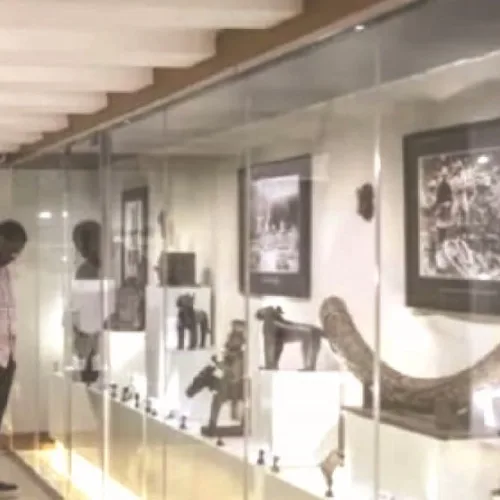
Museum exhibition gallery showcasing cultural artefacts that promote cultural understanding and heritage preservation.
Museum exhibitions tell the stories of people, cultures, and civilizations through artefacts, historical records, artworks, and traditional objects. They help visitors appreciate both the uniqueness of different cultures and the values they share. Nigeria’s museums showcase remarkable heritage such as the Nok Terracotta, Benin Bronzes, Igbo-Ukwu archaeological discoveries, Esie Soapstone figures, Dufuna Canoe, and numerous traditional crafts and textiles. Together, these collections demonstrate that every ethnic group has made valuable contributions to the nation’s history and identity.
Exhibitions also contribute significantly to peace-building by challenging stereotypes and promoting intercultural understanding. Through accurate interpretation of cultural heritage, museums encourage visitors to learn about communities different from their own, thereby reducing prejudice and fostering empathy. Museum spaces provide neutral environments where students, researchers, policymakers, tourists, and community members can engage in meaningful dialogue, strengthening social cohesion and peaceful coexistence.
Museum exhibitions equally strengthen national identity by presenting Nigeria’s cultural heritage as a shared national legacy rather than isolated ethnic histories. They remind citizens that despite cultural differences, the nation has been shaped through centuries of interaction, innovation, trade, and shared experiences. This understanding promotes patriotism while encouraging unity without diminishing cultural diversity.
The National Commission for Museums and Monuments (NCMM) plays a central role in achieving these objectives through its museums, monuments, heritage sites, educational programmes, travelling exhibitions, and community outreach initiatives. Digital technologies, including virtual exhibitions and online collections, have further expanded public access to cultural heritage, especially among young people.
ALSO READ: 2027: Kogi fixes N150m campaign signage fee for presidential candidates
In conclusion, museum exhibitions are powerful instruments for promoting peace, inclusion, intercultural understanding, and national identity.
By preserving and interpreting Nigeria’s diverse cultural heritage, museums build bridges across ethnic, religious, and regional divides while nurturing a shared sense of belonging. As the NCMM continues to modernise museum practice and expand public engagement, museums will remain indispensable institutions for building a peaceful and united Nigeria under the enduring vision of ‘One Nation, One People’ through the Museum.
•Ogunlade is Principal Museum Education Officer, Education department, National Museum, Lagos.
Comments
Start the conversation about this story.