






Some careers end with retirement. Others acquire a second life. Bala Wunti’s may be entering the latter, not simply because of the position he has accepted, but because of the experience he brings to it and what that experience could make possible for Nigeria at a moment when the global energy conversation is changing rapidly.
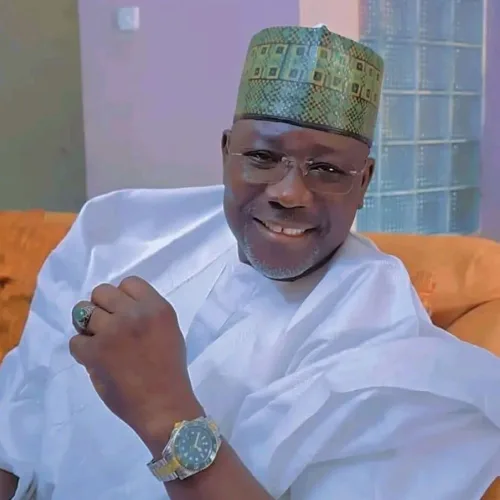
Wunti has been appointed the inaugural Chief Executive Officer of the World Energy Council Nigeria, following Nigeria’s return to the World Energy Council as a National Member Committee. It is a significant development for the country and a fitting new assignment for a man who spent more than three decades moving through different layers of Nigeria’s petroleum industry. His career at NNPC took him through technical, commercial, strategic and executive responsibilities, giving him an institutional memory that is becoming increasingly rare in a sector undergoing profound change. He has seen the industry from within, experienced its cycles, understood its contradictions and participated in the difficult business of trying to make one of Nigeria’s most important institutions work better.
But the real significance of Wunti’s next chapter lies beyond the title of Chief Executive Officer. It lies in the question of what Nigeria should expect from someone who has accumulated that depth of experience and has now been given a platform capable of reaching beyond the boundaries of a single institution.
There comes a stage in a professional life when experience can no longer be regarded simply as a personal accomplishment. It becomes a resource that ought to be converted into ideas, institutions and opportunities for those who come after. For Wunti, the challenge may therefore be less about proving that he understands Nigeria’s energy sector and more about determining what can be done with that understanding on a larger stage.
Nigeria’s energy problem has never been a shortage of experts. The country has produced generations of petroleum engineers, economists, geologists, administrators, policy specialists and executives who understand different parts of the energy system.
The difficulty has often been connecting those fragments of knowledge into a coherent national strategy. Oil production cannot be discussed separately from investment. Investment cannot be separated from regulatory certainty. Energy security is connected to affordability, while affordability is connected to electricity generation, gas infrastructure, industrial productivity and household welfare. At the same time, Nigeria must exploit its considerable hydrocarbon resources while preparing for a global energy system that is increasingly shaped by technology, climate considerations, new forms of finance and changing patterns of consumption.
That complexity makes Wunti’s new position particularly relevant. The World Energy Council is not NNPC, and its Nigerian committee is not another government agency. Its usefulness should instead be measured by its ability to bring different interests and areas of expertise into the same conversation.
The Council’s global work has traditionally provided a platform for governments, industry, academia, investors and other stakeholders to engage around the future of energy. Nigeria’s participation gives the country an opportunity to move beyond being primarily a producer seeking investment and to become a more active contributor to the intellectual and strategic debates that will shape the energy system in the decades ahead.
This is where Wunti’s career becomes more than a biographical detail. His experience cuts across several dimensions of the petroleum industry, including corporate planning, downstream operations, upstream investment and other strategic responsibilities within NNPC.
Such experience does not automatically make anyone a visionary, and it would be unwise to romanticise a career simply because it has been long. But it does provide something that cannot easily be acquired through a short appointment or an impressive academic résumé: an understanding of how policy, institutions, commercial interests and operational realities interact in the real world. That understanding could be particularly valuable at a time when Nigeria needs to make decisions that are neither purely technical nor purely political.
The country is entering an energy era in which old assumptions are becoming increasingly difficult to sustain. For decades, the dominant Nigerian conversation was about how to extract more value from crude oil and gas. That remains important, especially for a country whose public finances and foreign exchange position are still deeply connected to hydrocarbons.
Yet the question has become broader. What should Nigeria’s energy system look like when oil is no longer sufficient to define its economic ambitions? How can gas become a genuine bridge to industrialisation rather than another promise trapped by inadequate infrastructure? How can electricity become reliable enough to support manufacturing and digital industries? How can the country attract the capital required for these transformations while protecting national interests? And how should Nigeria position itself in a global energy conversation in which African development needs are sometimes discussed without sufficient African influence?
These are questions that require more than technical competence. They require people capable of moving between institutions, sectors and countries, understanding the interests of different actors and translating complex realities into positions that can command attention. Wunti’s new platform gives him the opportunity to do precisely that.
The World Energy Council Nigeria can become a place where government officials can encounter industry leaders, where researchers can test their ideas against commercial realities, where investors can better understand the Nigerian environment and where Nigerian policymakers can engage the wider world from a position informed by evidence rather than rhetoric.
There is also a larger reason why this matters. Nigeria has often struggled to preserve institutional knowledge. Every change of administration can create a new vocabulary, a new set of priorities and, sometimes, a disregard for what came before.
Experienced professionals leave public institutions carrying decades of knowledge with them, and much of that knowledge disappears with their departure. The wiser approach would be to create platforms through which experience can continue to serve the public interest without becoming a substitute for renewal. Wunti’s transition from a long career within NNPC to a platform that sits across government, industry and international energy discourse offers one such possibility.
The measure of this new chapter, therefore, should not be how many conferences WEC Nigeria attends, how many dignitaries gather around its table or how frequently its leadership appears in photographs. Its value should be judged by whether it helps Nigeria think more clearly about energy. Can it generate serious conversations about investment and energy security? Can it bring credible evidence into policy debates? Can it help Nigerian businesses understand emerging opportunities? Can it connect local realities with global energy trends? Can it create a stronger bridge between the country’s enormous technical expertise and the policy decisions that determine how that expertise is used?
These are ambitious expectations, but the moment demands ambition. The world is not waiting for Nigeria to resolve its internal contradictions before the next phase of the energy transition begins. Capital is moving. Technology is changing the economics of production and consumption. Countries are reassessing energy security in ways that go beyond the old assumptions of supply and demand. For Nigeria, the danger is not simply that it could lose revenue from a changing energy system. It is that it could lose the opportunity to shape that system while others define the rules.
That is why Wunti’s accumulated experience matters. The most valuable contribution of someone who has spent decades inside the petroleum establishment may not be another explanation of how the industry works. It may be the ability to connect the lessons of the past with the choices of the future. Nigeria needs people who understand where its energy institutions have succeeded, where they have failed and why some reforms endure while others disappear after the headlines have moved on.
Wunti’s new role also provides an opportunity to redefine what it means for a Nigerian energy professional to participate in global energy leadership. Nigeria has often entered international conversations primarily as a country asking for something: investment, technology, financing, market access or a better deal for its commodities. There is nothing wrong with seeking these things. But a country of Nigeria’s size and importance should also be contributing ideas, shaping conversations and helping to define what a fair global energy system should look like for developing countries.
That will require a deeper conversation about Africa’s energy future. Hundreds of millions of Africans still lack reliable access to electricity, while the continent possesses enormous renewable resources and substantial reserves of oil and gas. The tension between development needs and global climate ambitions cannot be resolved by slogans. African countries need the space to develop, but they also need to understand how the global energy system is moving and position themselves intelligently within it. Nigeria, as Africa’s most populous country and one of its largest energy markets, has a responsibility to contribute meaningfully to that debate.
Wunti is now positioned to be part of that conversation. Whether he can turn his experience into lasting influence will depend not only on his own abilities but also on the seriousness with which Nigeria uses the platform that has been created. A national energy council should not become another ceremonial institution. It should become a place where difficult questions can be confronted without political convenience determining every answer, where evidence matters and where disagreements can produce better thinking rather than merely louder arguments.
There is an irony in the way professional success is often measured. We celebrate people for the positions they attain, as though the position itself were the destination. Yet the more consequential question is what a person does after attaining the position. A career of three decades inside an industry is impressive. The more important question is whether those three decades can now be converted into something that outlives the individual.
That is the opportunity before Bala Wunti.
His next chapter should be larger than his résumé, not because his previous achievements are insignificant, but because they have created an expectation. Nigeria has given him, through the World Energy Council platform, an opportunity to help connect its energy experience to the wider world. The country should expect him to use that opportunity fully.
Nigeria does not simply need more people who know the energy industry. It needs people capable of turning knowledge into influence, influence into cooperation and cooperation into a more secure, affordable and productive energy future.
That is what would make Bala Wunti’s next chapter matter.
Sade is the Sadaukin Bauchi
Comments
Start the conversation about this story.