





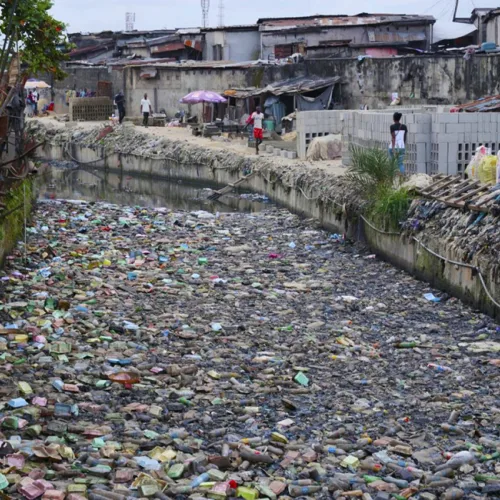
Nigerian youth have become exceptionally good at making institutions listen. The harder challenge is making them change. That gap is visible in Lagos. In parts of Mushin, Ojuelegba, Yaba, Agege and other densely populated areas, heaps of refuse and clogged drainage are not merely environmental nuisances. They are evidence of a deeper question about how cities are planned, waste is collected, infrastructure is maintained and public money is spent.
Lagos is moving enormous quantities of waste. The Lagos Waste Management Authority said it evacuated 418,500 tonnes in May 2026, an average of about 13,200 tonnes a day, through its own operations and licensed private-sector operators. Indeed, persistent waste accumulation and blocked drains remain visible in parts of the city. LAWMA itself identifies insufficient waste compactors, poor road infrastructure, indiscriminate dumping and difficulties in waste collection as continuing challenges.
The contradiction is important. The problem is no longer simply whether Lagos generates too much waste. It is whether the institutions responsible for managing it are delivering what they are supposed to deliver. That is where environmental, social and governance principles can give youth activism a more powerful purpose.
ESG is often presented as a corporate reporting framework. For Nigerian youth, it can be something more useful: a framework for asking who creates an environmental problem, who bears its economic cost, who controls the money allocated to solve it and who is accountable when promised solutions fail. Flooding provides an immediate example.
Lagos is naturally vulnerable because of its low-lying coastal geography, but poor drainage, waste accumulation and inadequate maintenance can turn heavy rainfall into a wider economic disruption. In July, the National Emergency Management Agency assessed flood damage in several Surulere communities, including Orile, Coker, Aguda, Itire, Ikate and Ijesha. It found that intense rainfall, blocked drainage channels and inadequate maintenance of drainage infrastructure contributed to the flooding, which inundated homes and businesses, damaged property and disrupted livelihoods.
The important question for youth advocacy is therefore not only: Why did the street flood? It is: Who was responsible for the drainage? Was maintenance budgeted for? Was the contract awarded? Was the work completed? Who inspected it? How much was paid? What environmental commitments were made? And what happened when those commitments were not met?
That is ESG moving from theory into accountability. The same logic applies to waste. A young activist standing beside a heap of refuse can generate attention. A youth-led group that documents where waste accumulates, identifies the responsible collection area, tracks the relevant government or private-sector contractor, examines service obligations, records collection failures and publishes the evidence is doing something more powerful.
It is converting frustration into an audit trail. That distinction matters because mobilisation after a crisis is different from influencing the decisions that create or worsen the crisis. A hashtag can force an institution to respond. A protest can compel a government to make a promise. But unless that pressure reaches budgets, contracts, regulations and corporate decisions, its effect can disappear when public attention moves on.
ESG creates an opportunity to move upstream.
Environmental advocacy can begin before damage occurs. Youth organisations can examine environmental assessments, planning approvals, waste-management obligations and corporate commitments before projects are implemented. They can then compare promises with outcomes.
The social dimension broadens the argument. Flooding and poor waste management are not merely environmental problems. They affect traders whose businesses are disrupted, commuters whose journeys are delayed, households whose property is damaged and communities whose health is exposed to poorly managed waste.
Young Nigerians are therefore not simply activists. They are consumers, employees, entrepreneurs and increasingly participants in savings and investment markets. That gives them economic leverage.
A company’s environmental and social conduct can influence whether consumers buy from it, whether workers want to join it and whether investors are willing to provide capital. But that leverage depends on information.
Transparency is therefore not just an ESG principle; it is a source of power.
The governance dimension may be the most important of all. Nigeria’s institutional weaknesses are often described as failures of leadership. Many are failures of systems: weak procurement controls, inadequate disclosure, poor maintenance, opaque contracts and limited accountability.
Changing the occupant of an office without changing those systems can leave the underlying incentives intact. Young Nigerians should therefore become as interested in how institutions spend, regulate and disclose as in who runs them.
That means following public budgets and contracts, examining corporate filings, monitoring regulatory decisions and measuring whether projects deliver what was promised. It also means moving beyond Abuja. Local governments and state agencies make decisions about drainage, waste management, roads, markets, primary healthcare and public spaces that shape everyday life.
The technology already exists. What is missing is sustained organisation around the information it can produce. A campaign should not end when a hashtag trends. It should generate evidence, assign responsibility, monitor implementation and return when promised action fails.
This requires youth organisations to apply the same standards internally. Movements built around personalities can mobilise quickly but are vulnerable to fatigue and leadership changes. Durable influence requires transparent finances, documented objectives, defined responsibilities, evidence and succession. The objective is not to replace protest with quieter advocacy. Protest is the entry point. Leverage is what comes next.
A protest can open the door. Budget scrutiny can expose a gap. Legislative engagement can change a rule. Litigation can force accountability. Consumer pressure can affect revenue. Investor decisions can influence capital allocation. Regulatory engagement can alter corporate behaviour. Sustained monitoring can determine whether commitments are actually delivered. That is the machinery of influence.
For Nigerian youth, ESG therefore offers more than a framework for judging whether companies are responsible. It offers a language for connecting environmental problems to money, decisions and accountability. The young person standing beside a blocked drain should not have to stop at documenting the flood. The next question should be: who was supposed to prevent it, what was budgeted, what was delivered and who is accountable? That is the transition Nigerian youth advocacy needs.
The country’s young people have already mastered the politics of visibility. The next frontier is the politics of leverage: following the money, understanding the rules, interrogating the data and remaining engaged after the headlines disappear. The shift is not from protest to silence. It is from protest to leverage. Nigeria’s youth do not necessarily need more ways to make institutions listen. They need better ways to make institutions answer.


Oluwafemi Mayowa OLUSOLA is the Opinion Page Editor at BusinessDay. He writes provocative essays on youth development, governance, and strategic partnerships in Nigeria, highlighting the intersections of education, economic policy, and national transformation through pragmatic and data-driven analysis.
Comments
Start the conversation about this story.