





Nigeria’s once-thriving textile industry is facing a deeper structural crisis as fabrics imported from China, India and Pakistan increasingly dominate the domestic market, leaving local manufacturers struggling to compete and weakening the link between northern Nigeria’s cotton farms and its traditional textile centres.
Suleiman Umar, managing director of Tofa Textile Limited, Kano, said the growing dependence on imported textiles had become one of the clearest indications of the country’s failure to rebuild its cotton-to-textile value chain.
Umar, speaking during the recently concluded Jigawa State Investment Summit, said imported fabrics were increasingly displacing locally manufactured materials in markets across the country.
According to him, the situation has created a paradox in which Nigeria has comparative advantages to produce cotton but has continually import fabrics and finished textile products that could have been manufactured locally.
The problem is particularly visible in northern Nigeria, where Kano, Kaduna, Katsina, Zamfara, Gombe, Bauchi and other states have historically formed part of the country’s cotton-growing and textile-producing belt.
Ali Usman, a textile dealer at Katin-Kuri Textile Market in Kano, told BusinessDay that fabrics from China, India and Pakistan now account for a significant portion of the materials traded by dealers, reflecting the growing dominance of imported textiles in the Nigerian market.
Usman said imported materials appeal to traders and consumers because of their variety, availability and, in many cases, their ability to compete aggressively on price.
The growing presence of imported textiles means that local manufacturers are competing not only against established foreign factories but also against the cost advantages created by large-scale production, cheaper energy and more developed textile supply chains in exporting countries.
Northern Nigeria’s lost advantage
The situation is particularly troubling because northern Nigeria possesses a much larger geographical and agricultural base than neighbouring Benin Republic, which is rapidly positioning itself as a major cotton-processing and textile hub.
The 19 states commonly regarded as northern Nigeria cover about 724,000 square kilometres, more than six times Benin Republic’s approximately 115,000 square kilometres.
The region also contains a substantial cotton-growing belt spanning Zamfara, Katsina, Kano, Adamawa, Gombe, Bauchi, Borno, Kebbi, Sokoto, Yobe, Niger and Kaduna.
Yet the size of this agricultural base has not translated into comparable industrial capacity.
Recent United States Department of Agriculture estimates show the continuing concentration of Nigeria’s cotton production in the North, with Zamfara, Katsina, Kano, Adamawa and Gombe among the leading producing states.
Benin, despite its much smaller geographical size, has pursued a strategy of capturing more value from its cotton by linking cultivation with processing and manufacturing.
USDA data put Benin’s cotton area at about 510,000 hectares for the 2025/26 season, with production estimated at 1.15 million 480-pound bales and an average yield of 491 kilogrammes per hectare.
The contrast illustrates a central weakness in Nigeria’s agricultural-industrial structure: possessing the raw material does not automatically create an industrial advantage.
From cotton producer to textile importer
Northern Nigeria once had a much stronger cotton and textile ecosystem.
Kano, in particular, developed a network linking farmers, cotton traders, ginneries, dyers, weavers, textile mills, garment producers and merchants serving markets across Nigeria and West Africa.
But the system gradually deteriorated as textile factories closed, cotton production declined and imported fabrics gained a stronger foothold in the domestic market.
The decline of manufacturing also weakened demand for locally produced cotton. As factories reduced production or shut down, farmers lost reliable industrial buyers, further undermining incentives to expand cotton cultivation.
The result has been a fragmented value chain in which cotton farmers operate largely independently of textile manufacturers, while Nigerian consumers increasingly depend on imported fabrics.
The industry’s decline has also been linked to unreliable electricity, high production costs, inadequate infrastructure, inconsistent policies, limited access to finance, insecurity, smuggling and competition from imported textiles.
For manufacturers such as Umar, these constraints have created an uneven competitive environment.
A local textile producer must contend with high energy and financing costs while attempting to compete with imported materials manufactured within more integrated industrial ecosystems.
Benin shows what Nigeria is missing
Benin Republic’s Glo-Djigbé Industrial Zone provides a contrasting model.
The industrial zone is designed to bring different stages of manufacturing closer together, allowing locally produced cotton to move from agricultural production into ginning, spinning, weaving, dyeing and finished products.
The economic logic is straightforward: instead of exporting or selling cotton as a low-value commodity, more value is captured domestically by processing it into products that can be sold at considerably higher prices.
That is the gap northern Nigeria needs to close.
The region does not necessarily need to compete with Benin by simply producing more cotton. Its bigger opportunity lies in creating a functioning industrial corridor that connects cotton farms to ginneries, textile mills, garment factories, logistics operators and domestic and export markets.
Such a system would also create jobs beyond agriculture.
Workers would be required in processing, machinery maintenance, transportation, warehousing, packaging, fashion, design, marketing, retail and digital commerce.
Imports reveal the manufacturing gap
The growing dominance of Chinese, Indian and Pakistani fabrics in Nigerian markets should therefore be viewed as more than a trade issue.
It is also an indicator of the country’s industrial capacity deficit.
At Katin-Kuri Textile Market in Kano, the presence of imported fabrics reflects the changing structure of the textile business.
Dealers need consistent supplies and products that meet consumer demand. Where local manufacturers cannot provide adequate volumes, designs, quality or competitive prices, imported materials naturally fill the gap.
This creates a cycle that is difficult to break.
As imported fabrics gain market share, local factories lose customers. As factories lose customers, production falls. Lower production weakens demand for domestic cotton, which further reduces the incentive for farmers and processors to invest.
The country consequently becomes increasingly dependent on foreign producers for products that could potentially be manufactured within Nigeria.
Electricity remains a critical bottleneck
For northern Nigeria’s textile industry to recover, however, simply restricting imports will not be enough.
Manufacturers need to become competitive.
Electricity is central to that equation.
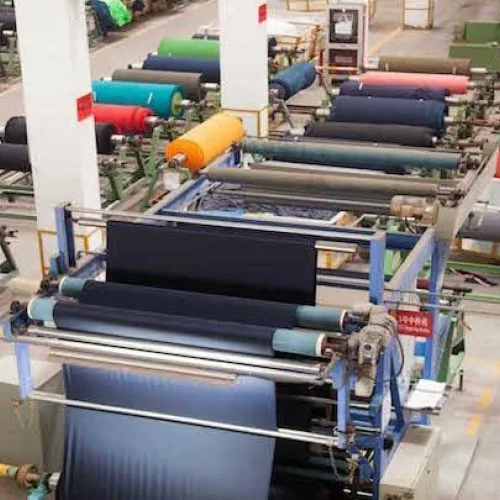
Spinning, weaving, dyeing and other textile processes require reliable power. Where manufacturers depend heavily on expensive alternative sources of electricity, production costs rise and locally produced fabrics become less competitive against imported materials.
Access to modern machinery is equally important.
Many surviving textile operators face the challenge of ageing equipment, limited working capital and expensive replacement parts, making it difficult to match the efficiency of larger overseas producers.
Financing is another major constraint. Textile manufacturing requires substantial capital for machinery, raw materials, energy and inventory, while high borrowing costs can make long-term industrial investment difficult.
The cotton chain must be rebuilt
A credible northern textile revival therefore needs to begin at the farm but cannot end there.
Farmers require improved cotton varieties, extension services, mechanisation and access to inputs.
Ginneries need investment and reliable markets.
Textile manufacturers require modern machinery, affordable energy and long-term financing.
Garment producers need access to quality fabrics, design capabilities and distribution networks.
And all of these components need to be connected to a large domestic consumer market and the wider African market.
This is where northern Nigeria’s size becomes a potentially important advantage.
With its extensive cotton-growing areas and established commercial centres, the region could develop industrial clusters around Kano, Katsina, Kaduna, Zamfara and other producing states.
Such clusters could reduce transportation costs while bringing farms, processors and manufacturers closer together.
A bigger industrial opportunity
The textile opportunity also extends beyond replacing imported fabrics.
A revitalised cotton-to-textile chain could support Nigeria’s broader industrialisation by creating demand for agricultural machinery, industrial equipment, packaging, transport, warehousing, chemicals, energy and financial services.
It could also strengthen rural economies by providing farmers with dependable industrial markets.
For Kano and other northern commercial centres, rebuilding the textile sector could revive an industrial tradition that once connected the region to major West African markets.
But the revival will require a shift in policy thinking.
The focus cannot remain solely on increasing cotton production while allowing most of the value generated from the crop to be captured elsewhere.
The objective must be to move progressively from seed to cotton, cotton to fibre, fibre to yarn, yarn to fabric, fabric to garments and garments to Nigerian and African brands.
Until that happens, Nigeria risks remaining a major consumer of textiles manufactured elsewhere while struggling to create sufficient industrial demand for its own cotton.
Benin Republic’s emerging textile model has therefore exposed a strategic question for northern Nigeria: how can a region with a much larger landmass, extensive cotton-growing areas and a deep textile heritage allow imported fabrics from China, India and Pakistan to dominate its markets?
The answer lies less in the size of the land available for cotton cultivation and more in the ability to rebuild the industrial infrastructure required to turn that cotton into competitive products.
For Umar, the challenge is ultimately about restoring the missing connection between agriculture and manufacturing.
Without that connection, northern Nigeria’s cotton advantage will remain largely theoretical.
With it, cotton could once again become a foundation for manufacturing, jobs, exports and broader industrial development across the region.


Comments
Start the conversation about this story.