





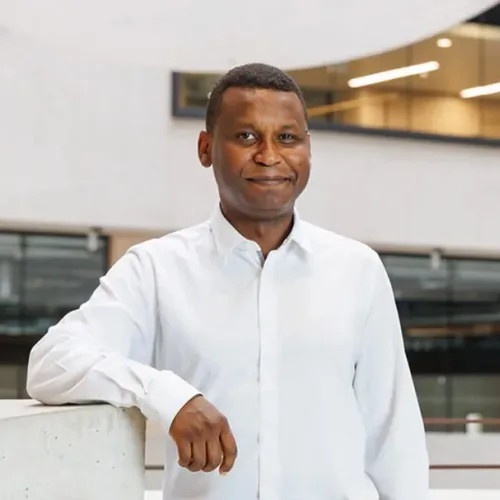
New CEO, Coalition for Epidemic Preparedness Innovations, Prof. Ibrahim Abubakar. CREDIT: State House
Nigerian professor of infectious disease epidemiology, Ibrahim Abubakar, has been appointed the new Chief Executive Officer of the Coalition for Epidemic Preparedness Innovations.
The appointment was announced by CEPI’s board on Friday following an open recruitment process.
Abubakar will join CEPI in March 2027 and formally assume office as chief executive in April 2027.
His appointment has attracted commendation from Nigerians, including President Bola Tinubu, who described him as a distinguished Nigerian epidemiologist and global health expert.
Tinubu said Abubakar’s appointment reflected Nigeria’s growing contribution to global health leadership.
Founded in 2017, the CEPI is a global partnership between public, private, philanthropic and Civil Society Organisations that finance and coordinate the development of vaccines against emerging infectious diseases.
The coalition played a major role in the global response to the COVID-19 pandemic by funding the development of several vaccine candidates that were subsequently deployed worldwide.
With his appointment, Abubakar is set to lead an organisation at the forefront of efforts to develop vaccines and strengthen preparedness against future epidemics and pandemics.
Here are some things to know about the Nigerian epidemiologist and global health expert, according to information obtained from the University College London website:
Academic background
Abubakar qualified as a medical doctor from Ahmadu Bello University, Zaria, in 1992, where he obtained his Bachelor of Medicine and Bachelor of Surgery degree.
He later specialised in public health, earning a Master of Science from the London School of Hygiene and Tropical Medicine in 1999.
In 2001, he obtained a Diploma in Public Health from the University of Cambridge before earning a PhD from the University of East Anglia in 2007.
He was elected a Fellow of the Royal College of Physicians and later became a Fellow of the Academy of Medical Sciences in 2020.
Research interests
Abubakar initially trained in general medicine before specialising in public health medicine.
His research has covered infectious diseases, epidemiology, public health, health services and systems, clinical sciences and migration.
His work has particularly focused on the epidemiology, prevention and treatment of infections, including tuberculosis, hepatitis and HIV, as well as emerging infections and vaccine-preventable diseases.
Academic and leadership career
Abubakar has held several senior academic and leadership positions in the United Kingdom.
Between 2010 and 2012, he was a Senior Lecturer in Infectious Disease Epidemiology at the London School of Hygiene and Tropical Medicine.
He also served as Professor of Health Protection at Norwich Medical School, University of East Anglia, from 2011 to 2012.
He joined University College London in 2012 as Professor of Infectious Disease Epidemiology.
At UCL, he served as Director of the Institute for Global Health from 2016 to 2021. He later became Dean of the Faculty of Population Health Sciences in 2021 and Pro-Provost for Health in 2023.
He also led the UCL Centre for Infectious Disease Epidemiology and UCL-TB, and served as a senior investigator at the MRC Clinical Trials Unit.
Ibrahim was Head of Tuberculosis at Public Health England, where he led work on the UK’s TB control strategy.
Global health roles
Beyond academia, Abubakar has held several influential positions in global health.
He served as chair of the World Health Organisation’s Strategic and Technical Advisory Group for Tuberculosis until 2019 and has also chaired the WHO Global Clinical Trials Forum.
He is the chair of Lancet Migration, and also served on the Global Preparedness Monitoring Board, the UCL Partners Board and the board of Resolve to Save Lives.
Memberships and fellowships
Abubakar has received recognition from several leading medical and scientific institutions.
He was elected a Fellow of the Academy of Medical Sciences in 2020, became a member of the German National Academy of Sciences Leopoldina in 2024 and was elected to the US National Academy of Medicine in 2025.
He was also appointed an Emeritus Senior Investigator at the UK’s National Institute for Health and Care Research.
Comments
Start the conversation about this story.