





The naira ended the week relatively stable across the foreign exchange (FX) market segments as Nigeria’s external reserves climbed to a 17-year high of $52.25 billion, strengthening the Central Bank of Nigeria’s (CBN) capacity to support the local currency and meet the country’s external obligations.
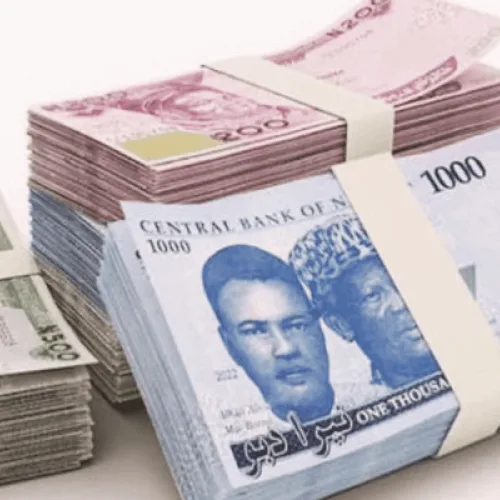
Data published by the CBN showed that the naira appreciated by N8.08 week-on-week, with the dollar quoted at N1,357.61 at the close of trading on Friday, compared with N1,365.69 quoted a week earlier at the Nigerian Foreign Exchange Market (NFEM).
On a day-on-day basis, the local currency steadied at N1,357.61, representing a marginal N0.04 gain from N1,357.65 quoted on Thursday. Over the five trading days, the naira strengthened by N2.53 from N1,360.14/$ recorded on Monday, the first trading day of the week.
In the parallel market, also known as the black market, the local currency also remained stable at N1,420 per dollar. Consequently, the gap between the official and parallel market rates narrowed slightly to 4.64 percent from 4.71 percent previously.
Read also: Osun Decides: Thugs disrupt ADC governorship candidate unit, destroy INEC materials
Total turnover in the interbank segment of the FX market rose by 9.12 percent week-on-week to $1.00 billion on Friday, compared with $919 million recorded on Friday last week. The number of deals also increased by 19.09 percent from 639 on Thursday to 761 deals on Friday.
Although NFEM figures for Friday’s deals and turnover were not available as of the time of reporting, activity moderated during the week, with total turnover declining slightly by 2.23 percent week-on-week to $3.95 billion on Thursday, from $4.04 billion recorded on Thursday last week.
The number of deals, however, increased by 3.17 percent from 1,736 last week to 1,791 deals on Thursday, indicating sustained activity despite the marginal decline in transaction value.
Nigeria’s external reserves, which provide the CBN with the firepower to support the naira and meet external obligations, have maintained a steady growth trajectory, rising to $52.25 billion, their highest level in 17 years. The level represents a 28.32 percent increase from the $40.72 billion recorded in the corresponding period of 2025.
The sustained accretion in reserves comes amid improved conditions in the FX market and growing efforts by the CBN to deepen liquidity and strengthen the transmission of monetary policy.
Within the week, the CBN relaxed restrictions on banks’ access to its discount window, lifted the suspension of tenored repo operations and broadened participation in the Open Market Operations (OMO) market to include non-bank financial institutions, corporates and retail investors.
According to analysts at Quest Merchant Bank Limited, the reforms should improve market liquidity, strengthen monetary policy transmission and deepen participation in the fixed-income market.
“The reforms are likely to deepen activity across the money market and fixed-income markets while signalling growing confidence in FX market stability, reserve adequacy and overall market conditions,” the analysts said.
The reforms could also have implications for yields and investment returns. Broader investor participation in OMO securities could accelerate yield compression over time, potentially reducing treasury income opportunities for banks and moderating the carry attractiveness of naira assets.
On Wednesday, the CBN, through a circular to all banks, introduced a series of reforms aimed at improving the functioning of the financial markets. The measures include easing restrictions on Deposit Money Banks’ access to the discount window and Standing Lending Facility (SLF), resuming tenored repo operations across four to 90 days, and broadening eligible participants in the OMO market to include non-bank financial institutions, corporates and retail investors.
However, the regulator retained restrictions on banks’ participation in OMO auctions on the same day they accessed the discount window.
The most impactful of the reforms, according to Quest Merchant Bank, is the broadening of eligible investors in the OMO market. Going forward, individuals, corporates and non-bank financial institutions will be able to participate in OMO securities through Deposit Money Banks.
The measure effectively expands the investor base for OMO instruments, increases demand for short-dated securities and could exert downward pressure on OMO clearing yields over time. However, the CBN retains discretion over the volume, tenor and frequency of OMO issuances in line with prevailing liquidity conditions and monetary policy objectives, meaning it will continue to exercise significant influence over yield outcomes.
The lifting of discount window-related restrictions also reduces funding frictions for banks. By allowing institutions that access the discount window to continue participating in the FX market and government securities auctions, the reforms reduce the opportunity cost of accessing Central Bank liquidity and give banks greater flexibility to manage temporary funding shortfalls without disrupting their participation in key financial markets.
Additionally, the reintroduction of tenored repo operations across four to 90-day maturities will enhance liquidity management for bank treasuries by providing greater flexibility in funding beyond the overnight market.
This reduces the need for banks to rely exclusively on short-term funding sources and allows for more efficient asset-liability management. The availability of term repos also strengthens the CBN’s liquidity-management framework by enabling more targeted liquidity injections, reducing volatility in money-market rates and enhancing monetary policy transmission across money and fixed-income markets.
“In our view, the circular forms part of the CBN’s broader efforts to deepen domestic financial markets and strengthen the transition towards a more market-based liquidity management framework,” the analysts said.
They added that the reforms would enhance market liquidity, improve monetary policy transmission and support more efficient price discovery across the money and fixed-income markets.
More importantly, the relaxation of discount window-related restrictions signals growing confidence in the resilience of the FX market, the adequacy of external reserve buffers and the CBN’s capacity to maintain orderly market conditions during periods of elevated demand.
Read also: PMI new research reveals widen gap between sustainability ambition and delivery
The reforms could also gradually reduce the market’s dependence on offshore participation by broadening the domestic investor base for OMO instruments. However, as increased demand places downward pressure on yields, the CBN may need to balance its market-development objectives against the need to preserve the attractiveness of naira assets to foreign portfolio investors, particularly in an environment where external financing conditions remain competitive.
“Overall, we view the circular as structurally positive for Nigeria’s financial markets, particularly as it gives the CBN greater flexibility to inject and withdraw liquidity, while improving money-market efficiency and deepening participation across the domestic fixed-income market,” the analysts at Quest Merchant Bank Limited said.


Hope Moses-Ashike is an Associate Editor, Banking and Finance, with more than a decade of experience reporting on Nigeria’s financial system and broader economy. She closely tracks market movements, monetary policy decisions, company disclosures, regulatory actions, economic indicators, and global developments, and interprets what they mean for businesses, investors, policymakers, and households. Her reporting helps readers understand complex issues such as inflation trends, foreign exchange market dynamics, interest rate decisions, bank performance, and investment risks. She also covers major international events and periodically travels to Washington, D.C., to report on the World Bank/IMF Spring and Annual Meetings. Her dedication to financial journalism has earned her multiple recognitions and invitations to high-level professional development programmes. She is an alumna of the International Visitors Leadership Programme (IVLP) in the United States and holds an Advanced Financial Journalism Certificate from the Press Association Training in London, UK. Her other notable achievements include completing the Lagos Business School CMC Programme, the Bloomberg Media Africa Initiative Programme, and a Master Class in Journalism at Rhodes University in South Africa.
Comments
Start the conversation about this story.