





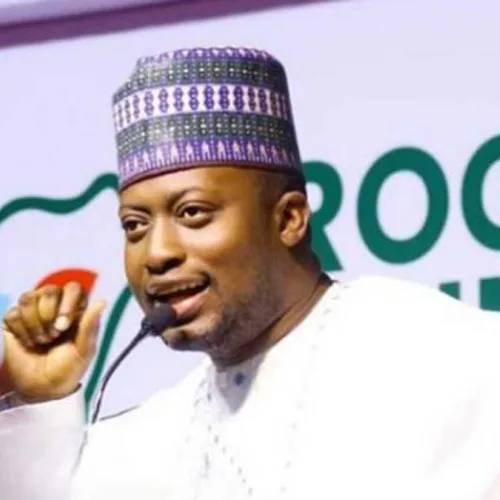
The National Youth Leader of the All Progressives Congress (APC), Dr Dayo Israel, has urged the party to undertake a sincere review of its performance in the 2026 Osun State governorship election, warning that reliance on governors, senators and former political office holders alone cannot guarantee electoral victory.
Israel, in a post-election statement titled “Osun Has Spoken: The Bitter Truth APC Must Hear Before 2027″, acknowledged the defeat of the APC candidate, Bola Oyebamiji, by the incumbent governor and Accord Party candidate, Ademola Adeleke.
According to him, Adeleke polled 511,067 votes to defeat Oyebamiji, who secured 444,815 votes.
He said the margin required the APC to engage in “honest reflection” rather than resort to excuses, blame-shifting or committees whose recommendations might not lead to meaningful changes.
“As painful as the outcome is for members of our party, particularly those who invested their time, resources and emotions in the campaign, democracy requires that we respect the decision of the electorate,” Israel said.
He congratulated Adeleke and the people of Osun State, while commending the APC candidate, members, agents and volunteers who participated in the campaign.
However, Israel said the outcome exposed several lessons the party must address before the 2027 general elections.
The APC youth leader identified President Bola Ahmed Tinubu as one of the three personalities who, in his assessment, defined the election.
He commended the President for allowing Osun voters to make their choice without allegedly deploying the powers of the Presidency to influence the outcome.
“President Tinubu deserves commendation for allowing the people of Osun to make their choice without turning the enormous powers of the Presidency into partisan weapons,” he said.
Israel argued that the President could have used federal institutions and security forces to influence the contest but chose not to do so.
He said Tinubu’s approach was consistent with what he described as the administration’s conduct during other off-cycle elections, including those in Anambra and Bayelsa, where opposition parties retained power.
“President Tinubu may have lost Osun for the APC, but he won something larger for Nigeria: another opportunity to demonstrate that the vote of the Nigerian people must matter,” he said.
Israel also credited Adeleke with understanding the cultural and grassroots dynamics of Osun politics.
He rejected the tendency among some political elites to reduce Adeleke to his dancing, arguing that the governor’s accessibility, singing, dancing and public appearances had helped him establish an emotional connection with voters.
“Governor Adeleke’s dancing was never a weakness. It was a political language. It humanised him, made him accessible, and created emotional proximity with ordinary voters,” he said.
According to Israel, politics involves more than policy and elite discourse, as emotion, identity, presence and a sense of belonging can also influence voters.
He cited former Osun governors Bisi Akande and Rauf Aregbesola, as well as former Rivers State governor Nyesom Wike, as examples of politicians who had used cultural familiarity and public presence as tools of political communication.
“Our party must therefore stop confusing sophistication with electoral value,” he said.
“A candidate may dominate elite discourse and still fail to move a ward. Another may be mocked in elite spaces and still command overwhelming loyalty on the ground.”
Israel identified singer David Adeleke, popularly known as Davido, as the third defining personality in the election.
He said Davido used his influence, networks, music, digital reach and personal credibility to connect Adeleke’s campaign with younger voters.
He said the singer helped bring artistes, influencers and young people into the campaign, alongside emerging political and professional actors.
Israel contrasted this with what he described as the APC’s heavy reliance on governors, senators and former office holders.
“These leaders are important, but we must ask a hard question: how many young Nigerians do they genuinely inspire, mobilise or emotionally connect with?” he asked.
“Who are the Davidos in the APC?”
He called on the party to identify and empower young people willing to deploy their influence, creativity, reputation and networks for the party.
Israel said his assessment was based partly on his experience during the 2022 Osun governorship election.
He recalled travelling across communities, engaging stakeholders and participating in reconciliation efforts involving former party leaders who had broken away from the APC.
He also recalled that he and other members of the party’s National Working Committee travelled to Abuja during the 2022 campaign before returning to the state to continue field operations.
According to him, he was in the situation room at the Osun Government House on election day and received real-time reports from agents across polling units.
He said the party’s field intelligence by midday indicated that the contest was slipping away because of alleged inducement, local tensions and weaknesses in mobilisation.
“We did not lose 2022 because there was no effort. We lost because division, weak reconciliation and fragmented mobilisation overwhelmed that effort,” he said.
Israel argued that some of the lessons from the 2022 election remained unresolved four years later.
The APC National Youth Leader also criticised what he described as the inadequate involvement of the party’s constitutionally recognised National Youth Wing in the 2026 campaign.
He said some individuals had reportedly worked for months before the election but claimed that the National Youth Wing was not meaningfully engaged.
Israel said he personally reached out and offered support but was referred to an individual who promised to contact him, although the call never came.
“This is not about individuals. It is about an institutional culture that sidelines its own structures while relying on ad hoc arrangements during elections,” he said.
He argued that no political organisation could consistently win complex statewide elections while disregarding its own constitutional structures.
Israel also expressed concern that the National Working Committee did not meet after the inauguration of the campaign council to formally review progress, assess strategy or recalibrate its direction.
He described the absence of structured oversight as a strategic weakness.
Comments
Start the conversation about this story.