





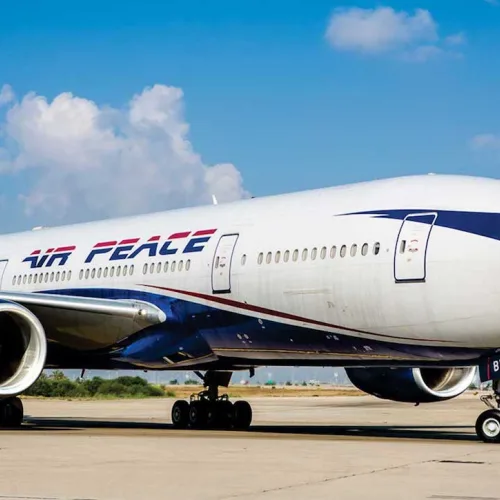
The disclosure by Air Peace that it has lost about $42 million (approximately N58b) in revenue following repeated damage to its aircraft by ground-handling equipment has brought renewed attention to an often-overlooked problem in Nigeria’s aviation industry.
The figure is significant, but it is important to understand what it represents. The $42 million is not the amount spent repairing damaged aircraft.
Rather, according to the airline, it represents revenue lost when aircraft are forced out of service following incidents involving ground-handling equipment.
Air Peace said three of its aircraft suffered major damage in the past 12 months, with two of the incidents occurring this year. The airline also said such incidents have occurred with worrying frequency, averaging about twice a year.
The airline’s spokesperson, Efe Whiskey, said the major ground-handling companies involved were the Skyway Aviation Handling Company (SAHCO) and the Nigerian Aviation Handling Company (NAHCO).
According to him, while the handlers are expected to bear the cost of repairing the physical damage, the airline carries the much larger burden that comes from having an aircraft grounded.
That burden goes beyond lost ticket revenue. When an aircraft is unavailable, an airline may have to cancel or reschedule flights, move passengers to other aircraft, incur additional operational costs and disrupt carefully planned schedules.
There are also expenses associated with towing damaged aircraft, cleaning affected areas, transporting aircraft components for specialised repairs and, in some cases, bringing foreign engineers into the country.
Air Peace said ground handlers had agreed to pay $3.8 million for repairs arising from the most recent incident, while $3.2 million had already been paid for repairs to another aircraft damaged on Boxing Day.
One of the most notable incidents occurred on December 26, 2025, when ground-handling equipment damaged one of Air Peace’s newly acquired Embraer 195-E2 aircraft at the Murtala Muhammed International Airport in Lagos. The incident affected the aircraft’s availability and contributed to operational disruptions.
The latest disclosure therefore raises a bigger question than who should pay for repairs.
It raises the question of whether Nigeria’s ground-handling operations are being managed with the level of discipline, training, equipment and accountability expected in a modern aviation environment.
Aircraft are among the most expensive assets in the aviation business. Even relatively minor contact with ground equipment can result in extensive inspections, repairs and the grounding of an aircraft. What may appear to be a simple accident on the apron can therefore have consequences running into millions of dollars.
The solution cannot simply be to wait for an incident to occur, establish responsibility and pay for the repairs.
There is a need for stronger preventive measures. Ground-handling personnel must receive regular and specialised training, equipment must be properly maintained, and strict operating procedures must be enforced around aircraft. Airlines and ground handlers also need stronger systems for reporting, investigating and preventing recurring incidents.
The regulatory authorities have an important role to play as well. Repeated incidents involving ground equipment should not be treated as isolated accidents. Where a pattern emerges, there should be a thorough review of the operating procedures of the companies involved and appropriate corrective measures.
For Nigerian airlines already operating under enormous financial pressure, keeping aircraft unnecessarily on the ground is a serious business risk.
The $42 million figure reported by Air Peace should therefore not be viewed merely as another airline complaint. It should serve as a warning about the hidden cost of inefficiency across Nigeria’s aviation infrastructure.
An aircraft earns money when it flies. When it is grounded because of preventable damage on the apron, everybody ultimately pays – the airline, its passengers and, by extension, the wider aviation industry.
The objective should not be to determine who pays after another aircraft is damaged.
The objective should be to make sure the next aircraft is not damaged in the first place.
Please follow and like us:
Comments
Start the conversation about this story.