





By Anthony Isibor
FOR Madam Babatunde, bitter leaf is more than an ingredient in a traditional Nigerian meal.
For years, she says, she has used the plant to help manage her blood sugar, alongside her prescribed diabetes medication.
The decision, she says, is partly driven by the rising cost of conventional medicines. “I have used bitter leaf for years,” she said. “It helps me manage my sugar level, but I still take my drugs.”
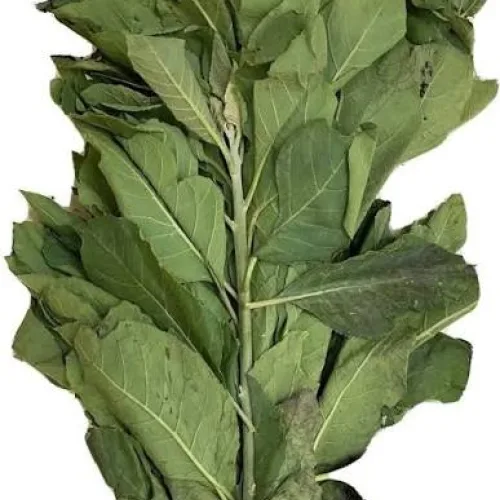
Her experience reflects a practice that is widespread across Nigeria, where bitter leaf, known botanically as Vernonia amygdalina, is eaten as food, prepared as juice or infusion and used in traditional remedies. But bitter leaf is increasingly moving beyond the kitchen and traditional medicine cabinet.
Nigerian researchers have studied its chemical constituents and possible medicinal properties, while pharmaceutical companies have explored ways of converting the plant into standardised capsules and other formulations.
The development raises an important question: Can one of Nigeria’s most familiar medicinal plants be transformed from a traditional remedy into a properly standardised pharmaceutical or nutraceutical product?
The answer appears to be yes, but the process comes with significant scientific, regulatory and safety challenges.
Bitter leaf is known by different names across Nigeria. It is called Ewuro in Yoruba, Onubu in Igbo, Etidot in Efik/Ibibio, Oriwo in Edo and Shuwaka or Chusar-doki in Hausa, among other local names.
Its most familiar use is culinary. It is a key ingredient in ‘ofe onubu’, a vegetable soup, while the leaves are washed repeatedly to reduce their characteristic bitterness before being cooked.
Fresh leaves are squeezed for their juice and used traditionally for ailments including fever and skin conditions. Preparations made from the leaves, roots and other parts of the plant have also been used in traditional remedies for intestinal worms and other conditions.
Scientific interest in the plant has focused on compounds, including flavonoids, alkaloids, tannins and other phytochemicals.
Reviews of the scientific literature have associated Vernonia amygdalina extracts with antioxidant, anti-inflammatory, antimicrobial and blood-glucose-lowering activities, among others.
According to a report in PubMed, a 2025 systematic review identified hundreds of chemical constituents in the plant and concluded that further research is needed, particularly on individual compounds and their mechanisms of action.
That distinction is important because of the evidence that an extract produces a biological effect in laboratory experiments does not automatically establish that eating the leaves or drinking their juice will treat a disease in humans.
However, Nigerians already associate it with diabetes. Many Nigerians use bitter leaf preparations in an attempt to lower blood glucose. That practice has also attracted scientific investigation.
But for patients like Babatunde, the issue becomes more complicated when bitter leaf is taken alongside conventional diabetes medicines.
If bitter leaf itself has blood-glucose-lowering activity, combining large or concentrated quantities with diabetes medication could potentially produce an additive effect.
This is one reason why converting a plant into a pharmaceutical formulation requires considerably more than simply putting dried leaves into a capsule.
A pharmaceutical product needs a defined quantity of active constituents, consistent manufacturing processes, quality control, stability testing, safety assessment and evidence of efficacy.
The amount of a particular compound in one bitter-leaf plant may not necessarily be the same as that in another plant grown in a different location, harvested at a different stage or processed differently.
That variability is one of the central challenges facing herbal medicines.
There is also evidence that Nigeria’s pharmaceutical industry has already taken steps in this direction.
The GS1 Nigeria product registry lists Roveda 750mg Capsules, manufactured by May & Baker Nigeria Plc, with Vernonia amygdalina listed as the ingredient.
The product is classified in the registry under pharmaceutical drugs and carries NAFDAC registration number A7-101481L. The registry gives a direction of use of one or two capsules once daily or as advised by a physician.
The existence of a registered product containing Vernonia amygdalina is significant because it shows that bitter leaf is not confined to traditional preparation. It has entered the formal pharmaceutical product space.
However, it is important to state that the registration of a bitter-leaf product does not mean bitter leaf has been clinically proven to cure diabetes, cancer, hypertension or malaria, nor should the presence of Vernonia amygdalina in a registered product be interpreted as evidence that every traditional claim associated with the plant has been medically established.
May & Baker is not the only Nigerian pharmaceutical company linked to the commercial development of bitter leaf.
Neimeth International Pharmaceuticals Plc listed “Bitter Leaf Capsules” among products in its development pipeline in its 2021 annual report.
The report listed the product alongside medicines and other formulations undergoing stages including formulation, registration and market introduction.
This suggests that interest in converting bitter leaf into a standardised product has existed within Nigeria’s pharmaceutical industry for some time.
There is also academic work pointing in the same direction.
Researchers at the University of Nigeria have investigated capsule formulations containing Vernonia amygdalina and other medicinal plants, including laboratory investigations relating to diabetes.
The broader trend is therefore clear: researchers and manufacturers are attempting to move from traditional plant material to controlled formulations.
There is also a commercial potential which extends beyond medicines. Bitter leaf already supports farmers, traders, processors and retailers.
The value chain includes cultivation, harvesting, transportation, washing, drying, packaging and retailing. Demand for processed bitter leaf products; including powders, teas, juices and herbal formulations, has created opportunities for small businesses.
A properly developed pharmaceutical or nutraceutical industry could potentially add another layer to that value chain. Instead of exporting raw leaves or selling them largely as fresh vegetables, Nigeria could develop expertise in extraction, standardisation, formulation, clinical research and manufacturing.
Perhaps the most important warning emerging from the bitter-leaf research is that natural does not always automatically mean safe.
Bitter leaf has a long history of consumption as food and several animal studies have reported relatively high doses of certain extracts without acute toxicity. However, studies have also reported potentially harmful effects at some doses and with particular extraction methods. A review of toxicity studies concluded that the plant appeared relatively safe at lower concentrations but cautioned that higher concentrations could be harmful, according to ScienceDirect.
This becomes particularly relevant when consumers move from eating bitter leaf as food to consuming concentrated extracts, powders or capsules.
The first concern is dose. A person may eat bitter-leaf soup without knowing precisely how many milligrams of any particular phytochemical they have consumed. A capsule, by contrast, concentrates plant material into a measured dose. Taking more capsules than recommended therefore cannot automatically be assumed to be harmless.
The safety of a traditional food preparation cannot necessarily be extrapolated to a concentrated extract.
‘’Animal studies have produced different toxicity findings depending on the solvent, extraction method, dose and duration. One review reported no major toxicity in mice exposed to aqueous extract doses up to 1,200mg/kg/day for 28 days and ethanol extract doses up to 2,000mg/kg/day, while other studies reported adverse effects at particular doses and durations’’ ScienceDirect.
Another study as published by PubMed Central, PMC, found no acute toxicity in mice at very high doses of one aqueous extract, but such findings cannot be converted directly into a safe human dosage. Animal toxicology results do not provide a simple formula for determining how much a person should take.
‘’If bitter leaf preparations lower blood glucose, taking them together with prescribed glucose-lowering medicines could potentially increase the risk of hypoglycaemia.
There is also the question of where the leaves come from. Plants cultivated beside roads, industrial areas or contaminated soil can accumulate undesirable substances. Processing can introduce additional contamination if hygiene and quality-control procedures are inadequate.
This is one reason formal herbal medicines need testing for contaminants, adulterants, microbial contamination and heavy metals.
Perhaps the biggest problem is that a leaf is not a pharmaceutical dose.
Two batches of bitter leaf may differ in their concentrations of active compounds because of differences in genetics, soil, climate, harvesting, storage and processing.
A pharmaceutical company therefore needs to establish what exactly in the plant produces the intended effect and how much of it should be present in each dose.
The emergence of bitter-leaf capsules in Nigeria should therefore better be understood as the beginning of an effort to translate traditional knowledge into standardised products that can be scientifically evaluated.
For Nigerians such as Babatunde, however, the attraction is immediate.
The plant grows in the country, it is familiar, relatively accessible and has been part of Nigerian food and traditional medicine for generations.
The challenge now is to determine, scientifically and responsibly, ‘’What bitter leaf can actually do, what dose is safe, and who should benefit when Nigeria’s bitter leaf becomes a pharmaceutical product.’’
A.I
Aug. 17, 2026
Tags: Anthony Isibor
Comments
Start the conversation about this story.