





There are moments in history when humanity develops a technology so powerful that the question is no longer simply what the technology can do, but what the technology may ultimately do to humanity itself.
The Industrial Revolution was one such moment. Artificial intelligence is undoubtedly another.
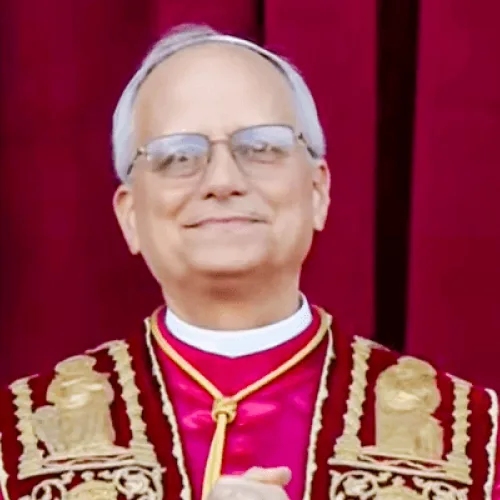
It is therefore highly significant that Pope Leo XIV has chosen artificial intelligence as the subject of his first encyclical, Magnifica Humanitas: On Safeguarding the Human Person in the Time of Artificial Intelligence. The document was signed on May 15, 2026, exactly 135 years after Pope Leo XIII issued his famous social encyclical Rerum Novarum, and was formally presented at the Vatican on May 25, 2026.
The symbolism is deliberate. In 1891, Pope Leo XIII confronted the social consequences of the Industrial Revolution: factories, mass urbanisation, poor working conditions, widening inequality and the growing power of industrial capital. In 2026, Pope Leo XIV argues that humanity faces another transformation of comparable magnitude, perhaps even greater, because artificial intelligence is already influencing decisions that affect economic activity, employment, communication, education, security and even warfare.
The Pope is not calling for humanity to reject artificial intelligence. Quite the contrary. His argument is more profound. Technology must remain the servant of humanity and must never become its master.
The central question raised by Magnifica Humanitas is not whether artificial intelligence is good or bad. It is unequivocal that AI is a tool in the hands of humans. Hence, on a personal note, I have always advocated Responsible Human In The Loop (RHITL).
The real question is, what kind of society will human beings build with it?
AI can diagnose diseases, detect fraud, predict equipment failure, accelerate scientific discovery, improve agricultural productivity, automate repetitive work, enhance financial inclusion and transform education.
But the same technology can also facilitate mass surveillance, manipulate elections, create deepfakes, automate discrimination, displace millions of workers, concentrate economic power and enable weapons systems capable of making life-and-death decisions at machine speed, scope and scale: what I usually refer to in my lectures and training sessions as the 3S of AI.
That is why Pope Leo XIV places human dignity at the centre of the AI debate. This clearly resonates with UNESCO’s AI Readiness Assessment Methodology framework and guidelines on the ethical and responsible use of AI.
His message can be reduced to one fundamental principle: human beings must never become mere inputs into an algorithm.
A human being is more than data. More than a credit score. More than a medical record. More than a consumer profile. More than a productivity statistic. More than a biometric identity. And certainly more than an algorithmic prediction.
The encyclical insists that every human person possesses an intrinsic dignity that cannot be measured by intelligence, economic productivity, social usefulness or technological efficiency.
That distinction could become one of the defining moral principles of the AI age.
Artificial Intelligence is not human intelligence
One of the greatest conceptual errors of our generation may be the assumption that because a machine can perform intellectual tasks better than humans, it therefore possesses something equivalent to human intelligence.
AI can calculate faster than us. It can remember more information than us. It can identify patterns hidden within billions of data points. It can analyse documents, generate computer code, compose music and imitate human conversation. But intelligence alone does not define humanity.
Humans possess conscience, empathy, compassion, moral responsibility, relationships, vulnerability, forgiveness, hope, faith and love.
Machines calculate probabilities. Human beings make moral judgements.
Machines optimise outcomes. Humans must decide which outcomes are worth pursuing.
Machines can learn from errors. Human beings can transform mistakes into repentance, wisdom, forgiveness and personal growth.
This distinction becomes particularly important as increasingly sophisticated AI systems are described using human language such as “reasoning”, “thinking”, “understanding” and “agents”.
We must never confuse simulation of human intelligence with humanity itself.
Read also: Beyond responsible AI: The case for defensible AI
The new concentration of power
Perhaps one of the most important aspects of Magnifica Humanitas is its recognition that artificial intelligence is creating unprecedented concentrations of power.
The world’s most advanced AI systems require enormous quantities of data, specialised semiconductor chips, electricity, data centres, highly trained researchers and huge amounts of capital.
Consequently, a relatively small number of technology companies possess capabilities that were once the exclusive domain of powerful states. In his January 2026 message for World Communications Day, Pope Leo XIV observed that behind the enormous invisible technological forces affecting modern communication lie only a handful of companies.
This should concern governments everywhere.
And Africa in particular.
If artificial intelligence becomes the principal infrastructure of the twenty-first-century economy, countries that do not possess their own AI capacity risk becoming permanently dependent upon foreign technology providers.
Africa must therefore think seriously about:
AI compute infrastructure
Data centres
Sovereign datasets
Large African language models
Cybersecurity infrastructure
AI research capabilities
Talent development
Reliable electricity
Cloud infrastructure
Otherwise, we may wake up one day to discover that the algorithms determining our financial systems, healthcare priorities, education, employment and security were developed thousands of kilometres away by people who may know little about African societies.
AI sovereignty should therefore become part of African economic sovereignty.
Who owns our data?
Data is the crude oil of artificial intelligence.
Without data, modern AI systems cannot learn.
Yet billions of human beings generate extraordinary volumes of data every day through mobile phones, bank transactions, social media, hospitals, schools, internet searches, transportation systems and government databases.
Who owns this data? Who profits from it?
Who determines how it is used?
These questions will become increasingly important.
The encyclical challenges the assumption that data produced through collective human activity should automatically become the commercial property of organisations capable of collecting it. It raises concerns about technological monopolies and the concentration of digital resources.
This has enormous implications for governments, corporations and individuals.
Your face is data. Your voice is data. Your medical history is data. Your purchasing habits are data. Your movements are data. Your financial behaviour is data. Even your relationships may become data.
The AI revolution will therefore require a new social contract concerning information.
The future of work
The workplace may be where artificial intelligence becomes most immediately disruptive.
AI will undoubtedly improve productivity. It will automate thousands of tasks. It will create entirely new industries.
But it will also eliminate certain categories of employment.
The mistake would be to frame this simply as an efficiency question. Corporate leaders cannot merely ask, “How many employees can AI replace?”
They must also ask:
“What happens to those employees?”
“What new skills will they require?”
“What responsibilities does the corporation have toward workers whose jobs are transformed?”
“What happens to society if technological productivity rises while employment opportunities decline?”
The Pope argues that technological development should enhance rather than diminish the dignity of work, and he warns against excessive surveillance and the reduction of workers to rigid machine-directed tasks.
For companies, this means that AI transformation must be accompanied by reskilling, retraining and workforce transition programmes.
Human capital must not become collateral damage in the race for automation.
AI governance is now a board responsibility
This is where the encyclical becomes particularly relevant to corporate Nigeria.
Artificial intelligence can no longer be treated merely as an information technology project. It is now a corporate governance issue.
Boards of Directors must understand the AI systems operating within their organisations. They should know:
What data is being used?
Where is that data stored?
Which AI models are being deployed?
Who supplied the models?
What decisions are being automated?
Are those systems explainable?
Could they discriminate?
Can humans override their decisions?
What cybersecurity vulnerabilities exist?
Who bears responsibility when something goes wrong?
The Pope’s message to an international conference on Artificial Intelligence, Ethics and Corporate Governance in June 2025 already emphasised the responsibility of business leaders to ensure that AI development respects human dignity and contributes to the common good.
Magnifica Humanitas develops this principle much further.
Boards cannot outsource responsibility for artificial intelligence to chief technology officers. Nor can management simply say, “The algorithm made the decision.”
Algorithms do not possess fiduciary duties.
Human beings do.
One of the great misconceptions about artificial intelligence is that computers are naturally objective. They are not.
AI systems learn from historical data. If historical data reflects social prejudice, discrimination or inequality, AI can reproduce those biases at an enormous scale.
Imagine an AI system determining:
who receives a bank loan;
who obtains insurance;
who qualifies for employment;
who receives medical treatment;
who receives a government benefit; or
even who becomes the subject of a security investigation.
If the system is biased, discrimination can become invisible because it appears to have been produced by mathematics rather than human judgement.
This is why high-impact AI decisions must retain meaningful human oversight.
Human-in-the-loop governance is not merely a technical safeguard. It is a moral requirement.
AI, deepfakes and the crisis of truth
Another profound and dangerous trend identified by Pope Leo XIV concerns truth itself.
Artificial intelligence can now generate photographs of events that never occurred, videos of people saying things they never said, voices belonging to people who never spoke, news reports describing events that never happened, academic papers written without research and entire online personalities that do not exist.
In his 2026 World Communications Day message, Pope Leo warned that systems capable of simulating human faces, voices, knowledge and relationships can penetrate deeply into the human information environment.
We are therefore entering a world where the problem may no longer simply be misinformation.
The greater danger may be universal distrust.
If citizens begin assuming that every photograph might be fake, every recording manipulated and every document fabricated, the foundations of democratic society become fragile.
Truth is therefore becoming an infrastructure that society must consciously protect.
Education must change
AI will fundamentally change education.
Already, students can generate essays, solve mathematics problems, write computer programmes, code and summarise textbooks within seconds.
Traditional educational systems built largely around memorisation and examination will increasingly struggle.
Pope Leo has acknowledged this challenge directly, noting in June 2026 that widespread AI use makes student assessment more difficult and requires educators to adapt creatively.
The future of education must therefore place greater emphasis on capabilities that machines cannot easily replace:
critical thinking, curiosity, judgement, creativity, character, collaboration, ethical reasoning and the ability to ask intelligent questions.
AI should make education better. It should not make thinking unnecessary.
AI and warfare
Perhaps nowhere is the moral challenge more frightening than warfare.
AI systems can identify targets, navigate drones, analyse battlefield intelligence and accelerate military decision-making.
Pope Leo XIV has repeatedly warned that artificial intelligence must never absolve human beings of responsibility for decisions, particularly in warfare. Speaking at Sapienza University in Rome shortly before issuing the encyclical, he warned that AI must not worsen the tragedy of conflicts or remove human responsibility from military choices.
The danger of autonomous weapons is obvious. If machines become capable of selecting and attacking human targets without meaningful human intervention, humanity crosses an extraordinary moral boundary.
Someone must remain responsible.
Someone must be capable of saying: No.
Africa cannot remain a spectator
For Africa, the implications of Magnifica Humanitas are particularly important.
AI presents extraordinary opportunities. It could help overcome shortages of doctors through diagnostic systems, improve agricultural yields, extend banking services, detect corruption, improve tax administration, enhance electricity-grid management, modernise public services, transform education and improve national security.
But Africa must avoid becoming merely the source of raw data and the consumer of foreign AI products.
The continent must participate in building the technologies shaping its future.
African governments should therefore begin treating AI infrastructure, compute capacity, cybersecurity, data governance and AI talent as national strategic assets.
Our universities must produce not only AI engineers but also philosophers, lawyers, economists, ethicists and public-policy experts capable of shaping the governance of intelligent machines.
These are some of the concerns that I, through GenAI Learning Concepts Ltd, have been drawing the attention of both the public and private sectors through my AI training, seminars and webinars.
AI must be human-centred
In May 2026, the Vatican also established an Inter-Dicasterial Commission on Artificial Intelligence, specifically recognising both AI’s extraordinary potential and its possible consequences for human dignity and integral development.
That action is important.
The Catholic Church is not standing outside the technological revolution condemning it.
It is entering the discussion.
The message is neither “Stop Artificial Intelligence” nor
Nor: “Allow artificial intelligence to develop without restraint.”
It is something much wiser:
Develop AI, but keep humanity and human agency at the centre.
And perhaps that should become the governing philosophy of the AI age, in line with the UNESCO RAM on AI ethics.
Every bank deploying artificial intelligence should ask it.
Every government should ask it.
Every technology company should ask it.
Every university should ask it.
Every Board of Directors should ask it.
Every AI developer should ask it.
Not merely:
Can we build it?
But:
Should we build it?
Not merely:
Will it increase efficiency?
But:
Will it increase human flourishing?
Not merely:
Can machines perform this decision?
But:
Should human beings surrender this decision to machines?
Pope Leo XIV’s Magnifica Humanitas may eventually be remembered as one of the great social documents of the Artificial Intelligence era.
Just as Rerum Novarum helped the world think morally about industrial capitalism more than a century ago, Magnifica Humanitas challenges the twenty-first century to think morally about intelligent machines.
Artificial intelligence may become the most consequential technology mankind has ever created.
But no matter how intelligent our machines become, humanity must remain in command.
For ultimately, technological progress should never be measured simply by how powerful our machines become.
It should be measured by whether those machines help us create a world that is more just, more compassionate, more peaceful and, above all, more human.
Sonny Iroche is the founder and chief executive officer of GenAI Learning Concepts Ltd, an artificial intelligence strategy, governance and executive education company based in Lagos. He is a member of Nigeria’s National AI Strategy Committee and has participated in national and international initiatives relating to artificial intelligence governance, ethics, skills development and responsible adoption. He is also a member of UNESCO’s Technical Working Group on AI Readiness Assessment Methodology and an alumnus of the University of Oxford’s Artificial Intelligence for Business programme.


Comments
Start the conversation about this story.