





What does it take to transform Africa’s energy landscape?
Africa’s energy story is no longer just about generating more power—it is about turning energy into a catalyst for economic growth, investment and opportunity. With hundreds of millions still without reliable access to electricity, the continent faces a significant energy gap, but also an enormous opportunity to build the infrastructure needed to power its next phase of development. Unlocking this potential will require more than capital and technology; it will require bold thinking, strong leadership and the ability to connect energy, investment, policy and infrastructure to create lasting impact.
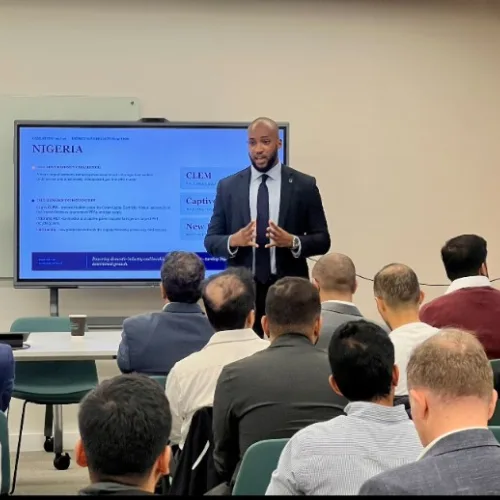
It was against this backdrop that Genesis Energy, a leading African energy infrastructure and solutions company, recently welcomed about 50 students and staff from Imperial Business School’s Saudi Aramco–Imperial MBA cohort for an engaging session titled “Beyond Megawatts: Building an Energy Legacy that Transforms the African Continent.”
Representing Genesis Energy, Project Development Manager Aidan Modebe shared insights into the company’s journey, business model and transformative energy projects across Africa. The conversation explored the realities of infrastructure development, energy access and investment, while considering the opportunities that could shape the continent’s energy future.
And the scale of that opportunity is significant. The International Energy Agency estimates that meeting Africa’s growing energy needs, alongside its development and climate goals, will require energy investment to rise to almost $240 billion annually by 2030. Yet capital is only one part of the equation. This means Africa’s energy future will depend on leaders who can navigate the intersection of infrastructure, finance, policy, technology and commercial viability. It will also require a pipeline of talent equipped to operate across these increasingly interconnected fields.
Cultivating the Next Generation of Industry Leaders
This is where knowledge sharing becomes particularly valuable. For future executives, engaging directly with industry practitioners offers an opportunity to move beyond theory and gain practical insight into how complex energy and infrastructure projects are conceived, financed and delivered. This was evident throughout the session, as students engaged in a strategic Q&A that sparked open conversations, challenged perspectives and offered valuable insight as they prepare to become tomorrow’s leaders.
For industry, these conversations provide an opportunity to exchange perspectives, challenge conventional thinking and contribute to developing the talent that will shape future decisions. The value of such engagements extends far beyond the room. When leading academic institutions and industry practitioners create space for meaningful dialogue, they bridge the gap between the classroom and the realities of markets, infrastructure development and investment—equipping emerging leaders with a deeper understanding of the opportunities and complexities that will shape Africa’s energy future.
However, for Genesis Energy, engaging with institutions such as Imperial Business School reflects a broader commitment to contributing to the ecosystem around Africa’s energy transformation and a continuation of Genesis Energy Group’s long-standing vision: “Lighting up Africa, one community at a time.”
Since its founding in 2005, Genesis Energy has built experience across the African energy landscape, developing projects and business models designed to respond to the continent’s evolving energy needs. Sharing that experience with future business leaders extends the company’s contribution beyond the delivery of energy projects. It creates an opportunity to share practical knowledge, expose emerging leaders to the realities of the sector and encourage the kind of cross-sector thinking that Africa’s energy future demands.


Comments
Start the conversation about this story.