





For affordable-housing interventions, Nigeria has been urged to move from housing-unit targets to system reform.
According to an expert, one of the most powerful affordable-housing interventions Nigeria could make is to identify suitable land, resolve titles, undertake proper planning and provide trunk infrastructure before bringing private developers into projects.
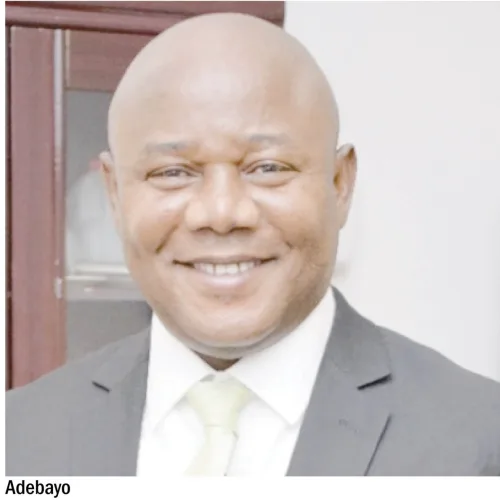
Canvassing for mass and affordable housing for average Nigerians, Executive Director, Housing Development Advocacy Network, Festus Adebayo, pointed out the huge financial outlays for infrastructure remain a contributor to rising housing costs.
He said: “Imagine a developer receiving serviced land with clear title, road access, drainage, electricity, water infrastructure and predictable planning approval.
“Government could then competitively select developers based on the lowest sustainable selling or rental price, rather than simply awarding construction contracts.
“The savings generated by government intervention should be transparently passed to the eventual homeowner,” he said, describing the intervention as a “more intelligent subsidy”
He bemoaned the situation where the government frequently treats roads, drainage, water, transport and electricity as separate from housing.
He said this should not be, pointing out that every naira a developer spent in constructing infrastructure would eventually find its way into the price of the house.
He said government could reduce housing prices without constructing a single apartment simply by providing infrastructure to designated affordable-housing growth corridors.
According to him, housing ministries must consequently work much more closely with ministries responsible for works, transportation, power, water, environment and urban development.
He pointed out that housing should become a coordinated government programme rather than the isolated responsibility of one ministry.
Stating the importance of land reforms and administration, Adebayo posited that Nigeria cannot achieve genuinely affordable housing while land remains expensive, difficult to title and complicated to transact.
He said digitisation of land registries should become a national priority.
READ ALSO: Increased competition in Nigeria’s aviation sector will reduce domestic airfares — Keyamo
“Processing periods for titles and development approvals should be measurable. States should publish timelines and fees. Planning applications should increasingly be processed digitally. Land information should become more transparent,” he said.
He advised the governors to examine ways of making consent and title-registration processes faster without compromising legitimate regulatory oversight.
According to him, every unnecessary month spent waiting for an approval has a financial cost, which will be paid by homeowner, eventually.
He urged Nigerian government to incentivise affordable housing instead of merely announcing it
According to him, Nigeria should develop a clearly defined affordable-housing incentive framework.
He added that developers who genuinely delivered houses within specified affordability bands could qualify for combinations of serviced land, infrastructure support, accelerated approvals and carefully designed tax or development-charge incentives.
However, he said there must be conditions, pointing out that “if government gives land cheaply and provides infrastructure, the resulting homes cannot subsequently be sold at unrestricted luxury market prices.”
According to him, government support should be tied to measurable affordability outcomes.
“That creates a bargain between the public and private sectors:
“Government reduces your development costs; you reduce the cost to the homeowner, “ Adebayo said.
“One of the biggest problems with affordable housing across Africa is the word affordable itself,” noting that a house costing N40 million may be relatively inexpensive in one market segment but completely inaccessible to the majority of Nigerian households.
“ Nigeria therefore needs income-linked definitions of affordable housing.
“Programmes should distinguish between social housing, low-income ownership, rent-to-own, affordable rental housing, cooperative housing, incremental housing and conventional mortgage-financed ownership.
“There is no single housing product capable of serving everybody,” he said.
Warning against duplicating Kenya and Rwanda models, he said that Nigeria should be extremely cautious about assuming that another compulsory housing contribution is automatically the solution to the country’s housing challenge.
According to him, Nigeria already has institutional mechanisms intended to mobilise resources for housing, advising that before creating additional compulsory contributions, policymakers should be able to demonstrate what existing mechanisms have achieved, where the gaps are, how new resources would be governed and precisely how contributors would benefit.
He is of the opinion that Nigeria needs something bigger than another housing construction programme.
“It needs a National Housing Compact bringing together the Federal Government, states, local governments, developers, mortgage institutions, commercial banks, pension funds, institutional investors, building-material manufacturers, professionals, cooperatives and organised communities.
“Government brings land, infrastructure, regulation and incentives. Developers bring expertise and capital. Financial institutions provide appropriately structured long-term finance. Manufacturers work on lowering construction-input costs.
States reform planning and land administration. Communities and cooperatives aggregate genuine demand. Technology provides transparency, while government regulates the entire ecosystem in the public interest,” Adebayo said
Comments
Start the conversation about this story.